Explore the art of John Singer Sargent! Discover iconic portraits like 'Madame X', Impressionistic landscapes & Gilded Age elegance from this American master.
Discover European art from the Renaissance to Post-Impressionism at the Thyssen-Bornemisza Museum in Madrid! Explore masterpieces by Van Gogh, Rembrandt & more in a stunning palace setting.
A Portrait Steeped in Elegance: Exploring John Singer Sargent’s ‘The Duchess of Sutherland’
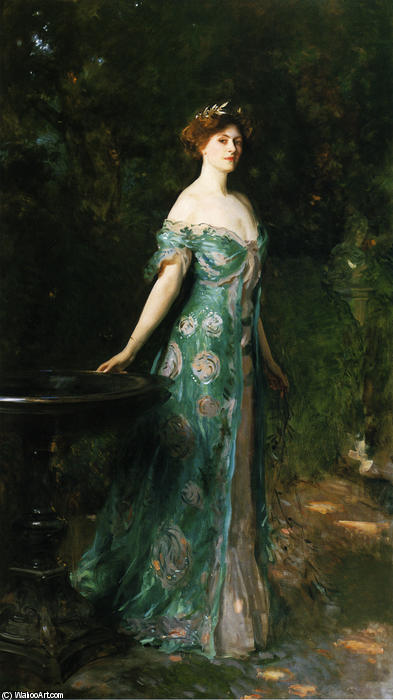
John Singer Sargent's “The Duchess of Sutherland,” completed in 1904, transcends mere representation; it embodies the spirit of its era and stands as a testament to Sargent’s unparalleled mastery of portraiture. Currently residing in the Museo Nacional Centro de Arte Reina Sofía in Madrid, Spain, this monumental canvas – measuring 254 x 140 cm – continues to captivate viewers with its luminous palette and exquisitely rendered details. More than just a likeness of Millicent Sutherland, Duchess of Sutherland, Sargent’s work delves into the psychological complexities inherent in capturing aristocratic grace under pressure.
Subject Matter and Composition
The portrait depicts Millicent Sutherland, a woman renowned for her beauty and social standing. Sargent skillfully positioned her figure against a backdrop of subtly textured trees—a deliberate choice that evokes both serenity and confinement. The Duchess’s gaze is direct yet contemplative, conveying an inner life beyond the formal pose dictated by convention. Her attire – a vibrant emerald green gown adorned with delicately embroidered floral motifs – speaks volumes about Victorian fashion sensibilities and reflects the opulent tastes of the aristocracy. Notably, Sargent incorporated a crown upon Millicent's head, symbolizing her noble lineage and elevating the portrait’s status as an emblem of royal heritage.
Artistic Style: Impressionistic Realism
Sargent’s artistic approach defies easy categorization; he deftly blended elements of Impressionism with his signature Realistic style. While maintaining meticulous attention to anatomical accuracy—evident in the subtle musculature beneath Millicent's skin—he achieved a remarkable luminosity through layering thin glazes of oil paint, characteristic of Impressionistic technique. This innovative method allowed Sargent to capture fleeting moments of light and shadow, imbuing the painting with an ethereal quality that belies its formal realism. The artist’s masterful brushstrokes create a sense of movement and texture, mirroring the dynamism of Victorian society while simultaneously conveying Millicent Sutherland's inner stillness.
Historical Context: The Dawn of Modern Portraiture
“The Duchess of Sutherland” emerged during a pivotal period in art history—the transition from Academic painting to Impressionism. Sargent’s willingness to experiment with new techniques challenged established artistic norms and paved the way for subsequent generations of artists. The portrait reflects the anxieties and aspirations of its time, capturing not only Millicent Sutherland's physical appearance but also her psychological state as a woman navigating the complexities of aristocratic life. Furthermore, it serves as an invaluable document illustrating the prevailing fashions and social customs of early 20th-century Britain.
Symbolism and Emotional Resonance
Beyond its visual splendor, “The Duchess of Sutherland” resonates with deeper symbolic meanings. The emerald green gown symbolizes wealth and status, mirroring Millicent Sutherland’s privileged position within Victorian society. Similarly, the floral embroidery represents fertility and beauty—themes frequently explored in aristocratic art during this period. Most importantly, Sargent's portrayal captures a profound sense of melancholy—a subtle suggestion that beneath Millicent Sutherland’s outward composure lies an unspoken vulnerability. This emotional depth elevates the portrait beyond mere likeness, transforming it into a poignant meditation on human experience.
Conclusion: An Enduring Legacy
John Singer Sargent’s “The Duchess of Sutherland” remains an enduring masterpiece—a captivating blend of technical brilliance and psychological insight. Its luminous palette, masterful brushwork, and evocative composition continue to inspire admiration and discussion among art historians and collectors alike. Reproductions crafted with meticulous attention to detail offer a remarkable opportunity to experience the beauty and emotional resonance of this iconic portrait, transporting viewers back to the gilded age and illuminating the complexities of aristocratic life.