A Glimpse of Serenity: John Singer Sargent's "The Old Chair"
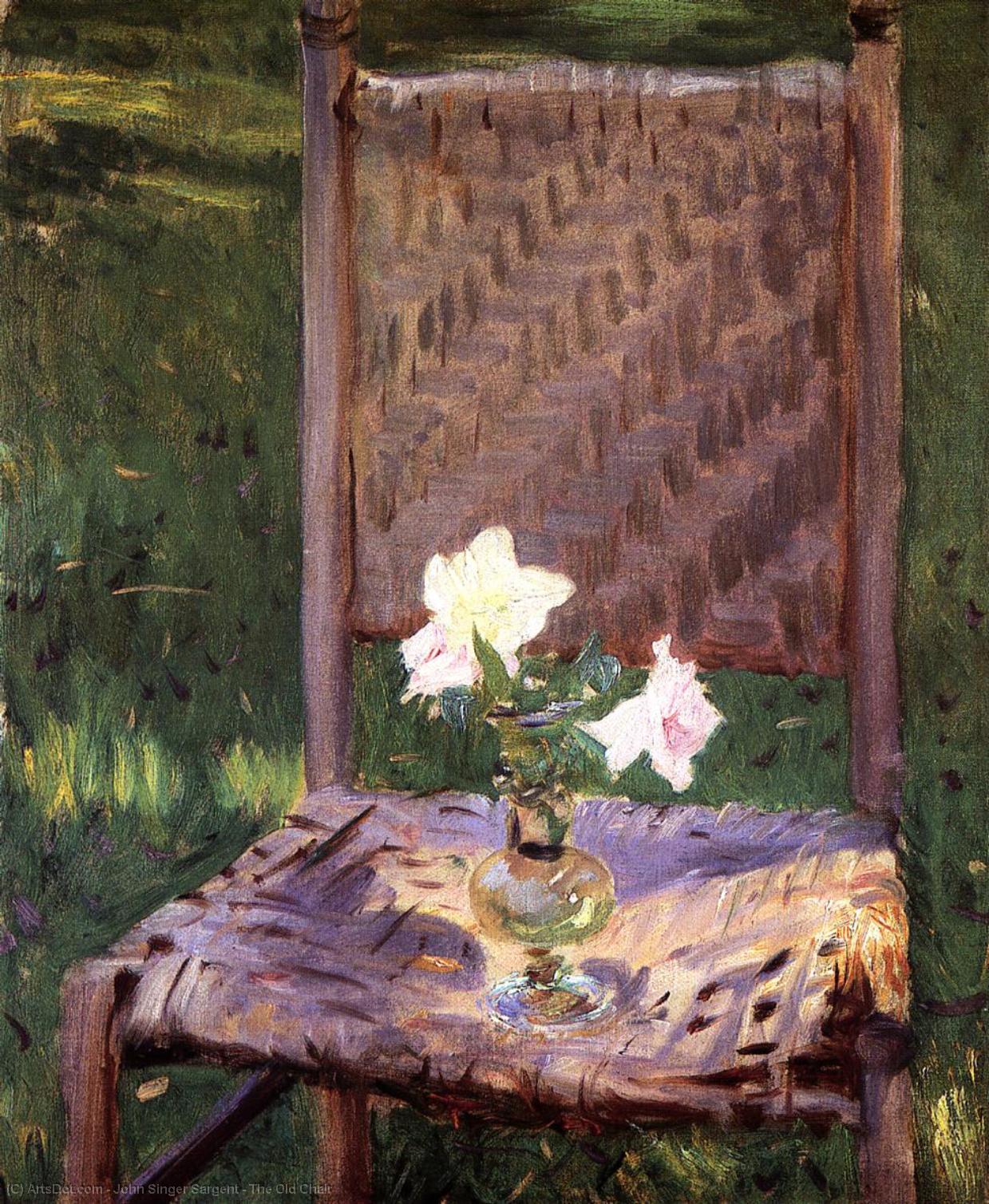
John Singer Sargent’s “The Old Chair,” painted in 1886, is more than just a still life; it's an evocative study of light, atmosphere, and the quiet beauty found within everyday objects. This oil on canvas painting exemplifies Sargent’s mastery of Impressionistic techniques while retaining a distinctly elegant and refined sensibility characteristic of his style. The artwork captures a moment of tranquil repose, inviting viewers to pause and appreciate the simple pleasures of life.
Composition and Artistic Technique
The composition centers around an aged wicker chair, its weathered texture rendered with Sargent’s signature loose brushstrokes. A delicate vase brimming with white roses rests gracefully upon the chair's seat, adding a touch of vibrant color to the scene. The setting appears to be outdoors, suggested by the dappled light filtering through foliage and the soft green grass surrounding the chair. Sargent skillfully employs a limited palette of muted browns, greens, and purples, punctuated by the crisp white of the roses, creating a harmonious and serene visual experience. His use of oil paint allows for rich textures and subtle gradations of color, capturing the fleeting effects of light with remarkable accuracy. The visible brushwork is not merely functional; it contributes to the painting’s overall sense of movement and vitality, characteristic of Impressionism.
Impressionistic Influences and Historical Context
“The Old Chair” emerged during a period when Impressionism was gaining prominence in European art circles. Sargent, though often associated with portraiture, demonstrated a keen understanding of Impressionistic principles – particularly the emphasis on capturing transient moments and the effects of light. While he didn't strictly adhere to all tenets of the movement, his use of broken color, visible brushstrokes, and an interest in depicting outdoor scenes clearly reflects its influence. The late 19th century was a time of rapid industrialization and social change, yet Sargent’s painting offers a respite from these anxieties, presenting a scene of quiet contemplation and timeless beauty. It's a testament to his ability to find elegance and artistry in the ordinary.
Symbolism and Emotional Resonance
Beyond its aesthetic appeal, “The Old Chair” carries subtle symbolic weight. The weathered chair itself can be interpreted as representing age, resilience, and a connection to the past. Its worn condition suggests a history of use and comfort, evoking feelings of nostalgia and familiarity. The roses, traditionally symbols of love, beauty, and innocence, introduce an element of grace and refinement into the composition. Together, these elements create a powerful emotional resonance – a sense of peace, tranquility, and appreciation for the simple joys of life. Sargent’s painting isn't merely depicting objects; it's conveying a mood, an atmosphere, and a feeling of quiet contentment.
A Timeless Masterpiece
“The Old Chair” stands as a testament to John Singer Sargent’s exceptional talent and his ability to transform the mundane into something extraordinary. Its enduring appeal lies in its harmonious composition, masterful technique, and evocative portrayal of everyday beauty. Whether admired for its artistic merit or cherished for its calming presence, this painting continues to captivate audiences with its timeless elegance and serene atmosphere.