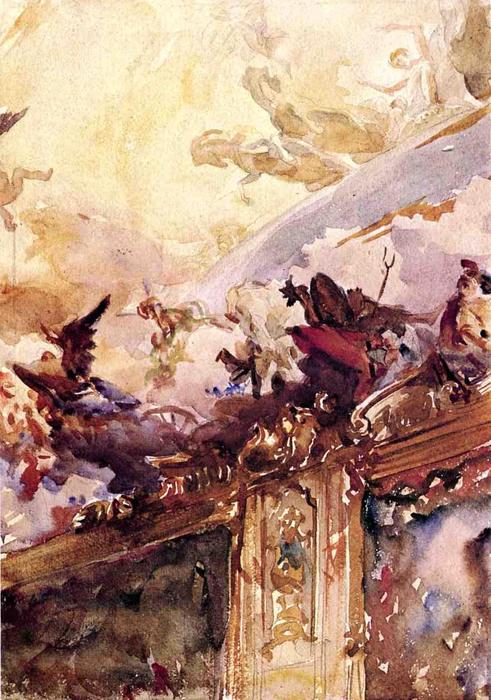
A Glimpse of Celestial Grace: Sargent’s “Tiepolo Ceiling, Milan”
John Singer Sargent's "Tiepolo Ceiling, Milan," painted in 1904, is more than just a depiction of a ceiling design; it’s an immersive experience of light, movement, and the enduring allure of classical beauty. This watercolor captures not merely the visual elements of Andrea Tiepolo’s original fresco – a celebrated work adorning the Sala Bianca at Villa Valmarana in Milan – but also Sargent's profound admiration for its scale, dynamism, and ethereal quality. The artwork transports the viewer into a realm of angelic grace, where cherubic figures dance amidst a flurry of birds, creating an atmosphere of serene contemplation and opulent delight. Sargent’s masterful handling of color and brushwork evokes the very spirit of Tiepolo’s vision, transforming a historical reference into a timeless masterpiece.
The Echoes of Tiepolo and the Gilded Age
Sargent's fascination with Tiepolo was deeply rooted in the artistic currents of his time. Tiepolo, a Venetian painter renowned for his grand ceiling decorations, epitomized the Baroque’s emphasis on illusionistic space and dramatic narrative. Sargent, working within the context of the American Gilded Age, embraced this legacy, producing works that reflected the era's fascination with grandeur, luxury, and classical ideals. The painting subtly reflects the opulent tastes of the wealthy patrons who commissioned Sargent’s portraits – a desire for beauty, refinement, and a connection to artistic heritage. The inclusion of birds, a recurring motif in Tiepolo’s work, adds another layer of symbolic richness, representing freedom, spirituality, and perhaps even the fleeting nature of earthly pleasures.
Technique and Impressionistic Sensibilities
Sargent's technique is characterized by its remarkable fluidity and sensitivity to light. He employed a loose, almost impressionistic approach, prioritizing the capture of atmosphere and tonal variations over precise detail. Notice how he renders the angels and cherubs not as sharply defined figures but as luminous forms, imbued with an ethereal glow. The watercolor medium itself lends itself perfectly to this effect, allowing for subtle gradations of color and a sense of shimmering light. The layering of washes creates depth and complexity, while the dynamic brushstrokes convey a palpable sense of movement – the fluttering wings of the birds, the swirling drapery of the angels’ robes, all contribute to the painting's vibrant energy. The inclusion of the human figure adds an element of observation and invites the viewer into the scene, suggesting a moment of quiet contemplation within this fantastical realm.
Symbolism and Emotional Resonance
"Tiepolo Ceiling, Milan" resonates with profound symbolic meaning. Angels, traditionally associated with divine grace and protection, dominate the composition, offering a sense of spiritual solace and aspiration. The birds, as mentioned earlier, represent freedom and transcendence. The overall effect is one of serene beauty and contemplative wonder. Sargent’s ability to capture not just the visual appearance but also the emotional impact of Tiepolo's original work speaks to his exceptional artistic talent and his deep understanding of human psychology. This painting remains a testament to the power of art to transport us beyond the mundane, offering a glimpse into a world of celestial grace and timeless beauty.