John Singer Sargent (; January 12, 1856 – April 15, 1925) was an American expatriate artist, considered the "leading portrait painter of his generation" for his evocations of Belle Époque and Edwardian-era luxury. He created roughly 900 oil paintings and more than 2,000 watercolors, as well as countless sketches and charcoal drawings. His oeuvre documents worldwide travel, from Venice to the Tyrol
Explore the art of John Singer Sargent! Discover iconic portraits like 'Madame X', Impressionistic landscapes & Gilded Age elegance from this American master.
Violet Sargent - An Impressionist Portrait of Quiet Elegance
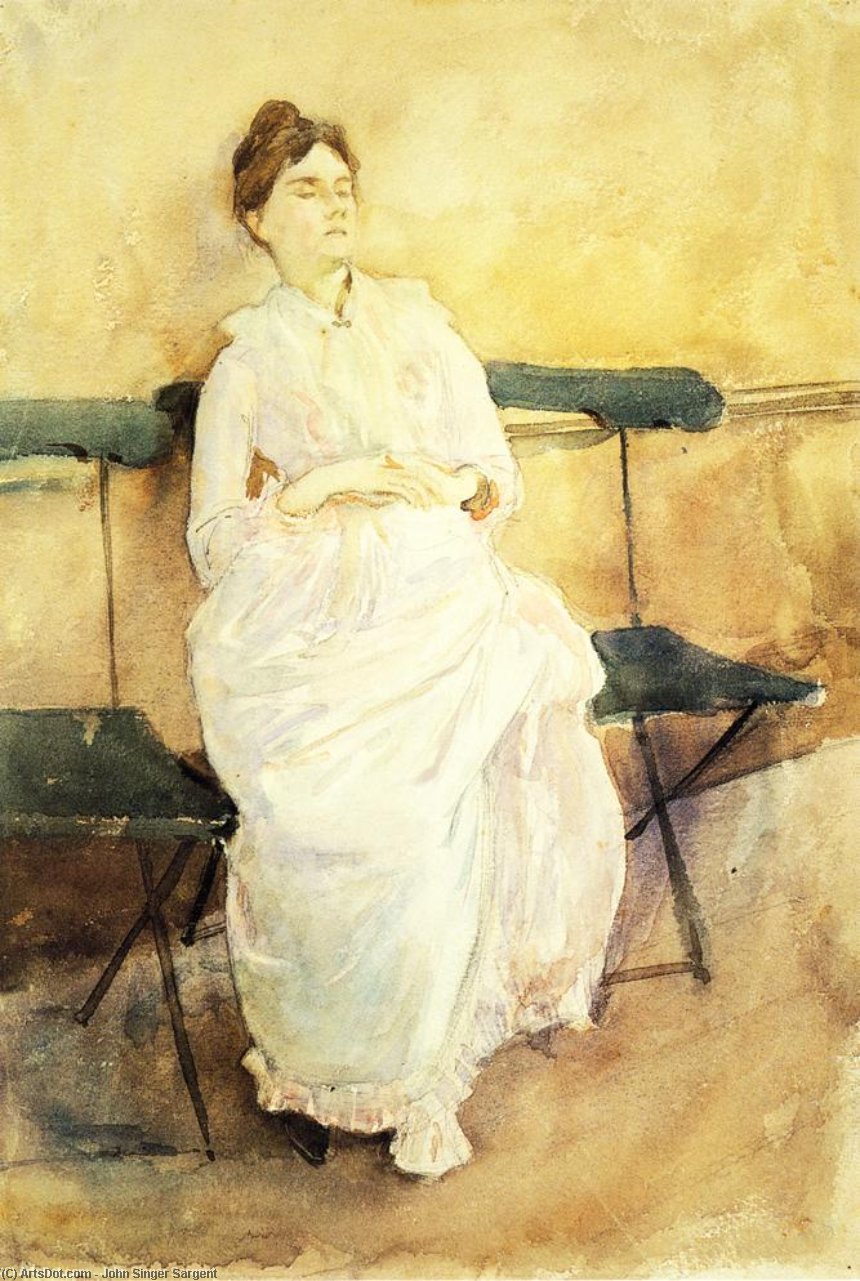
The painting Violet Sargent by John Singer Sargent is a stunning example of Impressionist art, created in 1887. This oil on canvas piece is currently housed at the Taft Museum of Art in the United States. The portrait depicts Violet Sargent, John Singer Sargent’s younger sister, seated gracefully on a bench beneath a warm yellow wall – a deliberate choice by Sargent to infuse his composition with an atmosphere of comfort and contemplation. It's more than just a likeness; it’s a masterful distillation of mood and gesture, capturing the essence of a young woman absorbed in thought.
Composition and Style: Light as Emotion
Sargent’s genius lay not merely in meticulous observation but in translating visual sensations into emotional resonance. The muted palette—primarily creams, browns, and pale yellows—reflects the subdued elegance of Victorian society while simultaneously prioritizing tonal harmony over photographic accuracy. Notice how Sargent skillfully employs broken brushstrokes to render the fabric of Violet's dress, creating a shimmering effect that mimics the play of light on textured surfaces. This technique is quintessential Impressionism: eschewing detailed representation for an impressionistic portrayal of reality. The positioning of Violet—slightly turned away from the viewer—further enhances the intimacy of the scene, inviting us into her inner world. Above her head hangs a clock – a subtle detail that speaks to the passage of time and perhaps symbolizes Violet’s youthful innocence.
Historical Context: Sargent's Parisian Salon Debut
Painted during Sargent’s formative years in Paris, Violet Sargent exemplifies the artistic fervor of the Belle Époque. The Impressionist movement was challenging academic conventions, prioritizing subjective experience over objective representation. Sargent himself had faced considerable criticism following his controversial debut at the Paris Salon in 1887 with “In a Punt,” where he depicted his brother John and Madame Paul Helleu on a Venetian gondola. This initial setback fueled Sargent’s determination to forge his own path, prioritizing artistic freedom over commercial success. The Taft Museum of Art's acquisition of Violet Sargent underscores the enduring fascination with Sargent’s work—a testament to his ability to capture fleeting moments of beauty and emotion with unparalleled grace.
Symbolism: Quiet Reflection and Victorian Ideal
Beyond its technical brilliance, Violet Sargent embodies several symbolic elements characteristic of Victorian art. The bench itself represents stability and repose, contrasting sharply with the dynamism of Impressionist painting. Violet’s posture—her hands clasped delicately in her lap—suggests thoughtfulness and introspection, reflecting the Victorian ideal of feminine virtue and grace. Her gaze is averted from the viewer, conveying a sense of privacy and inner contemplation – an invitation for us to ponder upon themes of femininity, memory, and quiet beauty. The yellow wall serves as a visual anchor, grounding the composition while simultaneously radiating warmth and optimism.
Emotional Impact: A Moment Frozen in Time
Ultimately, Violet Sargent succeeds in transporting the viewer back to 1887, capturing not just a portrait but an entire atmosphere of refined elegance and contemplative serenity. It’s a painting that lingers in the mind long after viewing, prompting reflection on themes of beauty, stillness, and the complexities of human emotion. Like many Impressionist masterpieces, it prioritizes feeling over factual detail—a deliberate choice by Sargent to communicate his vision of Violet Sargent with profound emotional depth.