A Masterpiece of Presence: The Soul of William Merritt Chase
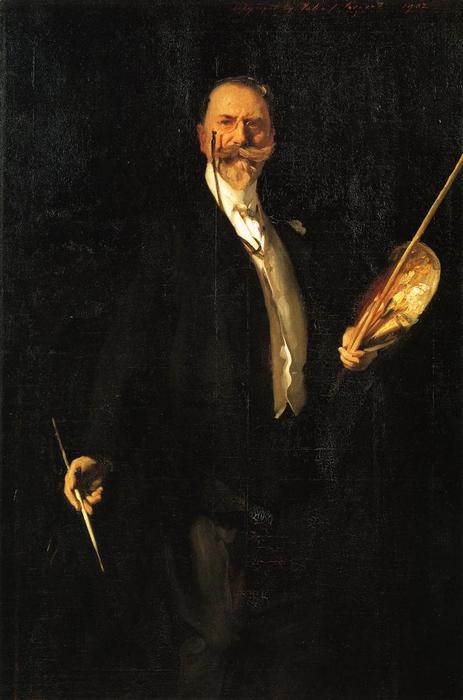
In the grand tapestry of early twentieth-century portraiture, few works capture the intersection of professional identity and personal dignity as profoundly as John Singer Sargent’s 1902 masterpiece, William Merritt Chase. This is not merely a likeness of a man; it is an evocative study of artistic purpose. When viewing this oil on canvas, one is immediately struck by the commanding presence of Chase, the celebrated American art teacher, positioned with a quiet, assured confidence. Sargent, working from his London studio, manages to transcend the boundaries of a traditional commission—originally requested by Chase’s own students—to create a psychological landscape that speaks to the very heart of the creative spirit. The subject stands poised, perhaps caught in a moment of contemplative pause, embodying the dual persona of the gentleman and the laborer of the arts.
The painting serves as a brilliant testament to the Impressionistic influence that permeated Sargent’s prolific Parisian period. Rather than relying on the rigid, clinical precision of photographic realism, Sargent employs a painterly technique characterized by fluid, rhythmic brushstrokes that breathe life into the canvas. There is a palpable sense of movement in the way light dances across the textures of Chase’s clothing and the subtle highlights of his tools. The artist utilizes a sophisticated interplay of light and shadow—a technique known as chiaroscuro—to pull the subject forward from a dark, atmospheric background. This dramatic lighting does more than just define form; it creates an emotional depth, casting the viewer into a space of intimacy and reverence, as if we are standing in the quiet shadows of the studio alongside the master himself.
Symbolism and the Art of Observation
Every element within the frame is meticulously placed to reinforce the narrative of artistic vocation. The inclusion of the palette and brushes is far from incidental; they are the sacred instruments of Chase’s trade, held with a familiarity that suggests they are extensions of his own hands. Through these symbols, Sargent elevates the act of painting from a mere craft to an intellectual pursuit. The composition itself, while centered on Chase, utilizes soft, blurred figures in the background to provide a sense of depth and social context, suggesting the bustling world of the academy that surrounds this singular figure. This layering of detail creates a rich, multidimensional experience for the observer, inviting them to look closer and discover the subtle gradations of tone and color.
For the discerning collector or interior designer, this work offers an unparalleled opportunity to introduce a sense of historical gravity and timeless elegance into a space. The palette—a sophisticated arrangement of deep blacks, luminous whites, and warm earth tones like ochre and umber—complements both classical and contemporary settings. A high-quality reproduction of this painting does not merely decorate a wall; it anchors a room with its profound emotional weight and academic prestige. It is an invitation to engage in the same "close looking" that Sargent championed, making it a perfect centerpiece for those who appreciate art that challenges the eye and nourishes the soul.