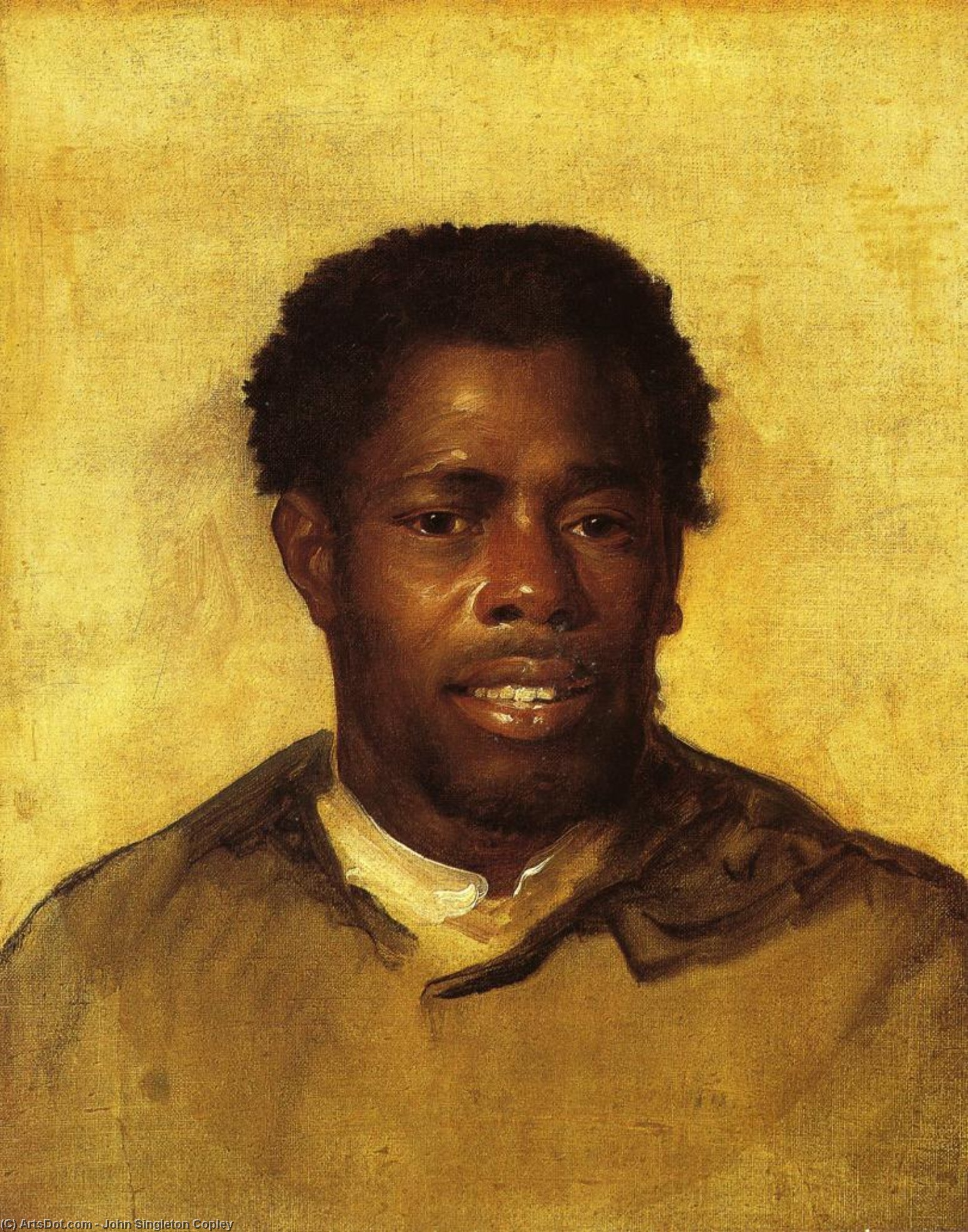
Head of a Negro: A Portrait of Dignity and Complexity
John Singleton Copley's "Head of a Negro," created in 1777, is more than just a portrait; it’s a significant work within the context of 18th-century American art. Housed at the Detroit Institute of Arts, this oil on canvas painting offers a compelling glimpse into the social and artistic landscape of colonial America while prompting reflection on themes of race, identity, and representation.
Artistic Style and Technique
Copley, known for his realistic portraiture, employs a direct and unadorned style in "Head of a Negro." The subject is depicted against a neutral background, drawing the viewer's attention solely to his face and upper torso. Copley’s masterful use of oil paint allows for remarkable detail; you can observe the texture of the man’s brown shirt and the subtle nuances of his facial features. The brushstrokes are visible yet controlled, contributing to a sense of immediacy and realism. The lighting is soft and diffused, highlighting the subject's eyes and creating gentle shadows that emphasize his expression. This technique reflects Copley’s commitment to capturing not just likeness but also character.
Historical Context and Significance
The painting was created during a period of increasing awareness of slavery in America, though attitudes were complex and varied. While the portrait doesn't explicitly address the institution of slavery, its very existence—a formal portrait of a man of African descent—was noteworthy for the time. It suggests a degree of recognition of individual dignity, even within a society deeply entangled with racial inequality. Copley’s decision to portray this subject demonstrates an interest in exploring diverse representations beyond the typical portraits of wealthy colonial figures. The painting provides valuable insight into the social dynamics and artistic practices of 18th-century Boston.
Subject and Symbolism
The man depicted possesses a dignified presence, with open eyes and a subtle smile that conveys an air of approachability and intelligence. His gaze is direct, engaging the viewer in a silent dialogue. While the specific identity of the sitter remains unknown, his portrayal challenges stereotypical representations prevalent at the time. The painting can be interpreted as a statement about individual worth and humanity, transcending racial boundaries. The simple attire—a brown shirt—further emphasizes the subject’s inherent dignity rather than material possessions.
Emotional Impact and Legacy
"Head of a Negro" evokes a sense of quiet contemplation and respect. The painting's enduring power lies in its ability to transcend time, prompting viewers to consider issues of race, representation, and human connection. Copley’s work serves as a reminder of the complexities of American history and the importance of recognizing the humanity within every individual. Today, it stands as a testament to Copley’s skill as an artist and his willingness to challenge conventional norms.