A Glimpse into Eighteenth-Century Grandeur
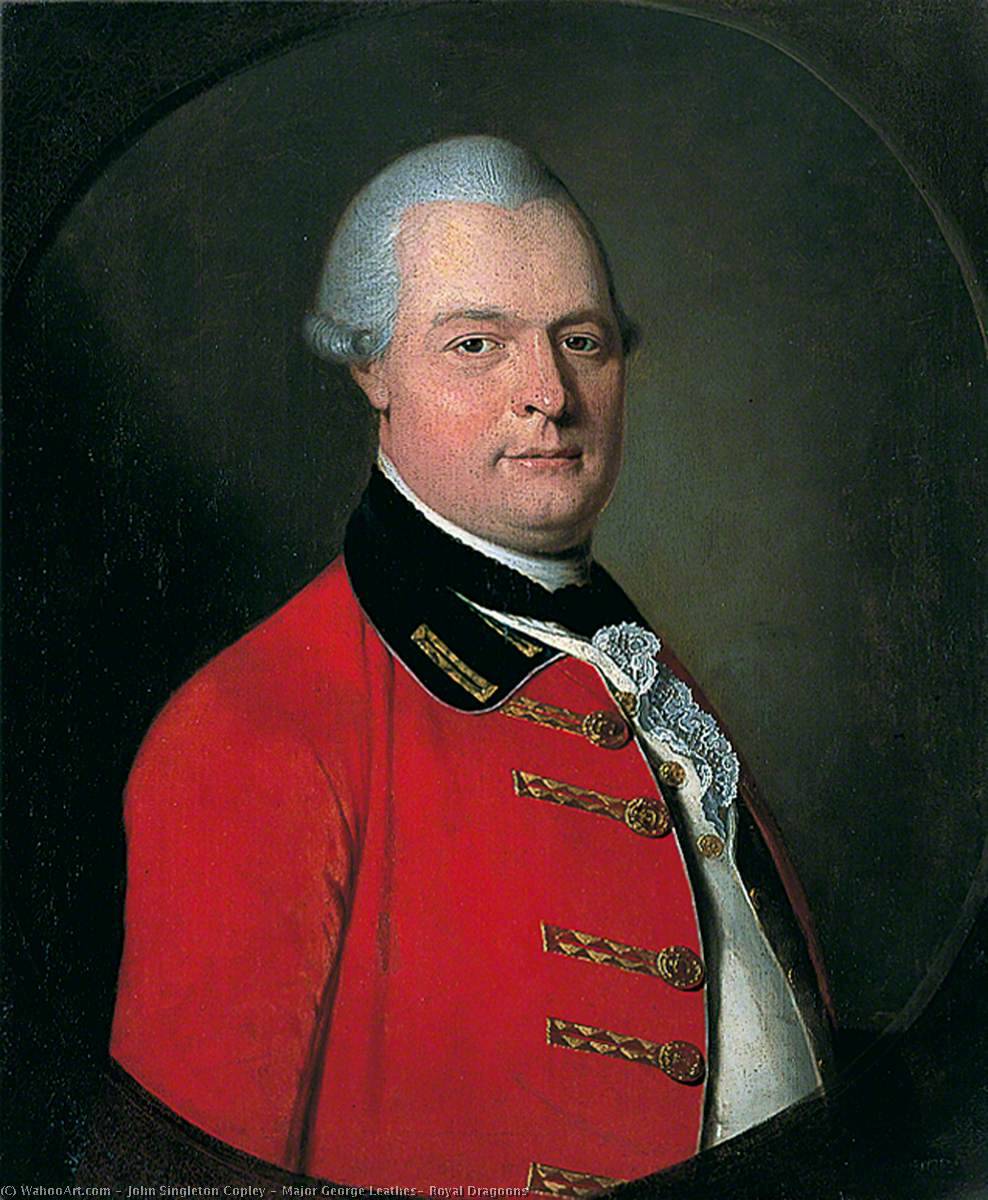
In the evocative portrait of Major George Leathes, Royal Dragoons, the viewer is instantly transported to the refined and disciplined atmosphere of the late 18th century. Painted in 1780 by the master John Singleton Copley, this work serves as more than a mere likeness; it is a window into an era defined by military prestige and social hierarchy. The subject, a distinguished officer of the Royal Dragoons, stands as a testament to the elegance and gravity of his station. Every detail, from the crisp white cravat to the meticulously rendered black wig, speaks to a period where attire was a profound language of identity, status, and duty.
Copley, a painter renowned for his ability to bridge the gap between American colonial realism and European sophistication, brings an unparalleled tactile quality to this piece. The vibrant red of the officer's coat is not merely a color but a texture, enriched by the glint of gold buttons that catch an unseen light. This mastery of light and shadow—the subtle interplay of brilliance and depth—allows the viewer to almost feel the heavy wool of the uniform and the delicate smoothness of the fabric. It is this level of meticulous detail that makes a hand-painted reproduction of such a work so captivating for those looking to bring a sense of historical weight and classical beauty into a contemporary space.
The Artistry of Realism and Character
Beyond the technical prowess, the true soul of this portrait lies in its psychological depth. Copley possessed an uncanny ability to capture the very essence of his subjects, moving past the surface to reveal the character beneath. In Major Leathes, we see a man whose steady gaze and composed expression suggest a life shaped by leadership and the rigors of military service. The artist uses subtle nuances in the facial features—the slight tension around the eyes and the firm set of the mouth—to convey a sense of quiet strength and stoicism.
For collectors and interior designers, this painting offers a profound emotional impact. It possesses an inherent dignity that commands attention without overwhelming its surroundings. Whether placed in a formal study, a grand hallway, or a curated gallery wall, the portrait acts as an anchor of sophistication. The historical resonance of the piece provides a narrative layer to any room, inviting conversation about the era of the Royal Dragoons and the legendary skill of Copley. Owning a reproduction of this caliber is not simply about decorating a wall; it is about preserving a fragment of history and infusing a modern environment with the timeless elegance of the Enlightenment.