A Portrait of Grace and Propriety: Unveiling John Singleton Copley’s “Mary and Elizabeth Royall”
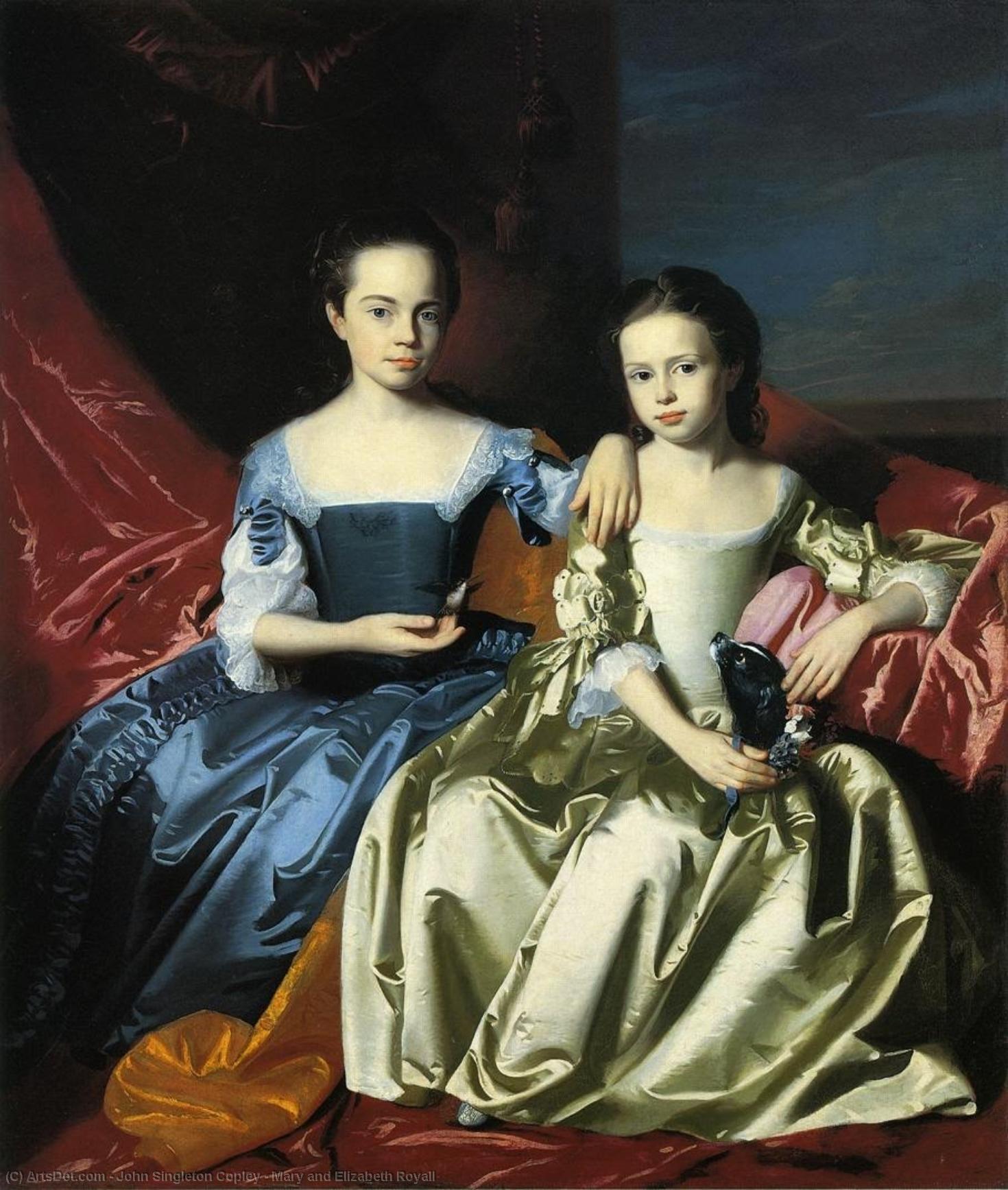
John Singleton Copley's "Mary and Elizabeth Royall," painted in 1758, is more than just a portrait; it’s a meticulously crafted window into the world of colonial Boston society. Housed within the hallowed halls of the Museum of Fine Arts in Boston, this work transcends its physical dimensions to offer a profound glimpse into the lives and aspirations of two young women from a prominent family – the Royalls. Copley, a pivotal figure bridging the artistic traditions of England and America, masterfully employed the tenets of Neoclassicism, imbuing the scene with an air of dignified composure and subtle elegance.
The painting immediately draws the eye to the two figures seated on a plush couch. Their postures are remarkably poised, reflecting the societal expectations placed upon young women of their standing. Mary, dressed in a striking blue gown, holds her hand gently over Elizabeth’s shoulder – a gesture suggesting both affection and a subtle assertion of authority, characteristic of the era's social dynamics. Elizabeth, adorned in a creamy yellow dress, returns the gaze with an equally composed expression. The careful attention to detail—the intricate folds of their fabrics, the delicate rendering of their hands, and the subtle play of light on their skin—demonstrates Copley’s unparalleled skill as a portraitist. He wasn't merely capturing likenesses; he was conveying character, social standing, and an underlying sense of quiet confidence.
The Language of Neoclassicism: Form and Technique
Copley’s masterful execution is rooted firmly in the principles of Neoclassicism. This artistic movement, which flourished during the mid-18th century, drew inspiration from the art and architecture of ancient Greece and Rome, emphasizing order, balance, and clarity. In “Mary and Elizabeth Royall,” this manifests in the carefully structured composition—the symmetrical arrangement of the figures, the restrained color palette dominated by cool blues and yellows, and the smooth, polished surfaces of the paint. The use of oil on canvas allowed Copley to achieve a remarkable level of detail and luminosity, capturing the textures of the fabrics and the subtle nuances of light and shadow.
Notably, Copley’s technique reveals an innovative approach to portraiture. He employed a method known as “dead-dark underdrawing,” where he first created a detailed charcoal sketch beneath the layers of paint. This allowed him to build up the image gradually, ensuring accuracy and precision in the rendering of the figures' features and clothing. The subtle gradations of tone—the delicate shading around the eyes and mouth, the soft highlights on the skin—contribute significantly to the painting’s overall sense of realism and depth.
A Window into Colonial Society: Context and Symbolism
Understanding “Mary and Elizabeth Royall” requires considering its historical context. The Royalls were one of the wealthiest families in colonial Massachusetts, their fortunes built on trade—particularly the lucrative sugar trade—and, tragically, through the ownership of enslaved people. Isaac Royall Sr., the patriarch, had amassed a considerable fortune in Antigua, where he engaged in both trade and slave ownership. The painting reflects this status, showcasing the family’s wealth and social standing through their elegant attire and luxurious surroundings. The inclusion of the bird, perched near the bottom right corner, is often interpreted as a symbol of hope or prosperity – a common motif in portraiture during that period.
Furthermore, the painting offers a glimpse into the societal expectations placed upon young women in colonial America. The emphasis on decorum and propriety—evident in their composed postures and restrained expressions—reflects the values of the time. The subtle gesture of Mary’s hand over Elizabeth's shoulder suggests a carefully orchestrated social dynamic, highlighting the importance of familial bonds and social graces.
A Legacy of Artistic Excellence: Reproduction and Inspiration
“Mary and Elizabeth Royall” remains a testament to John Singleton Copley’s artistic genius. Today, reproductions of this iconic painting are available through ArtsDot.com, offering art enthusiasts the opportunity to bring this masterpiece into their homes. Its enduring appeal lies not only in its technical brilliance but also in its ability to transport viewers back to a pivotal moment in American history—a time of burgeoning wealth, social change, and artistic innovation. The painting’s quiet dignity and subtle elegance continue to inspire admiration and offer a profound reflection on the complexities of colonial society.