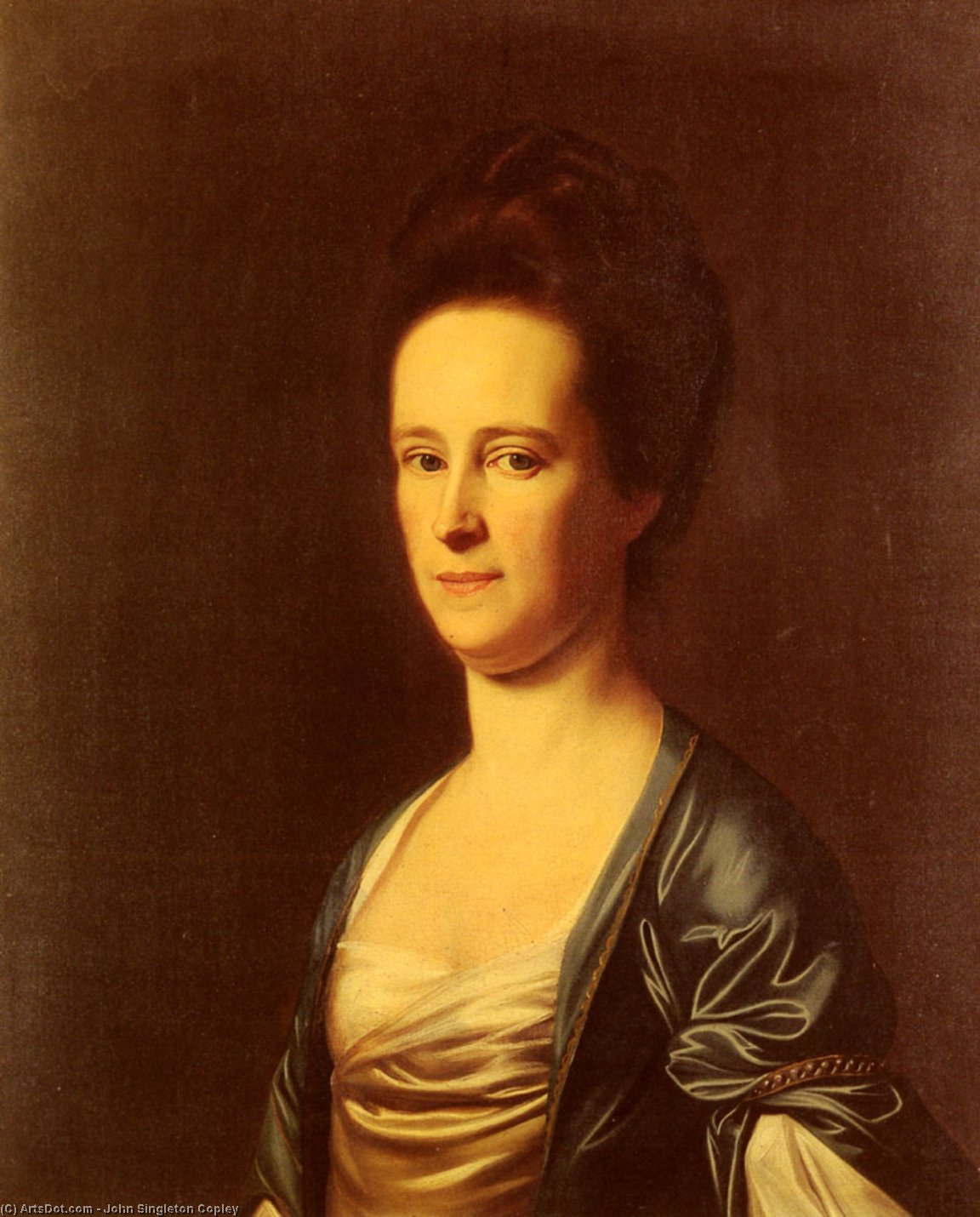
A Portrait of Colonial Grace: Mrs. Elizabeth Coffin Amory by John Singleton Copley
John Singleton Copley’s “Mrs. Elizabeth Coffin Amory,” painted in 1775, is more than just a likeness; it's a meticulously crafted window into the refined world of colonial New England society. This oil on canvas masterpiece, measuring 76 x 63 cm, exemplifies the burgeoning Neo-Classical style – a movement rooted in the ideals of ancient Greece and Rome, emphasizing order, reason, and an appreciation for classical beauty. Copley’s ability to capture not just physical appearance but also the subtle nuances of character is strikingly evident in this portrait, solidifying his position as a pivotal figure in American art history.
- Subject & Composition: The painting depicts Mrs. Elizabeth Coffin Amory, a prominent Boston socialite, presented with an almost unnerving directness. Her gaze meets the viewer’s head-on, fostering a sense of intimacy and engagement – a characteristic hallmark of Copley's portraits. The composition is carefully balanced, utilizing traditional pyramidal arrangements to create a sense of stability and dignity.
- Neo-Classical Influence: Copley’s embrace of Neo-Classicism is immediately apparent in the painting’s restrained palette and formal arrangement. The emphasis on clear lines, precise detail, and a focus on the subject's individual character reflects the movement’s desire to elevate portraiture beyond mere representation towards a more philosophical and idealized form.
Technique & Materials: A Masterclass in Oil Painting
Copley’s mastery of oil paint is immediately apparent in the rich textures and luminous effects achieved within “Mrs. Elizabeth Coffin Amory.” The use of layering, glazing, and meticulous brushwork creates a remarkable sense of depth and realism. Note the delicate rendering of the lace on her dress, the subtle sheen of the pearl necklace, and the soft texture of her hair – all testament to Copley’s technical skill. The canvas itself, treated with careful preparation, provides an ideal surface for capturing the nuances of light and shadow, a crucial element in achieving the painting's overall elegance.
- Medium: Oil on Canvas - This traditional medium allowed for the layering of colors and creating depth.
- Brushwork: Copley’s precise brushstrokes contribute to the portrait’s polished appearance.
Historical Context & Symbolism
Painted in 1775, “Mrs. Elizabeth Coffin Amory” offers a fascinating glimpse into the social and political landscape of colonial America. The painting reflects the growing influence of Enlightenment ideals – particularly those emphasizing reason and civic virtue – within Boston society. The subject’s attire—a blue dress with white lace—was indicative of fashionable elegance during this period, signifying her status and wealth. The inclusion of the fan is not merely a decorative element; it represents sophistication and social grace, essential qualities for women navigating the complexities of colonial life.
Note: Copley frequently depicted prominent figures from New England society, reflecting his role as a chronicler of the era’s elite.
Emotional Impact & Legacy
“Mrs. Elizabeth Coffin Amory” transcends a simple portrait; it evokes a powerful sense of nostalgia and invites us to contemplate the lives of those who shaped early America. Copley's ability to capture both the outward appearance and inner character of his subject creates an enduring image of grace, poise, and quiet dignity. This painting remains a significant work in Copley’s oeuvre and a vital example of Neo-Classical portraiture, demonstrating his profound understanding of human psychology and his exceptional artistic talent.