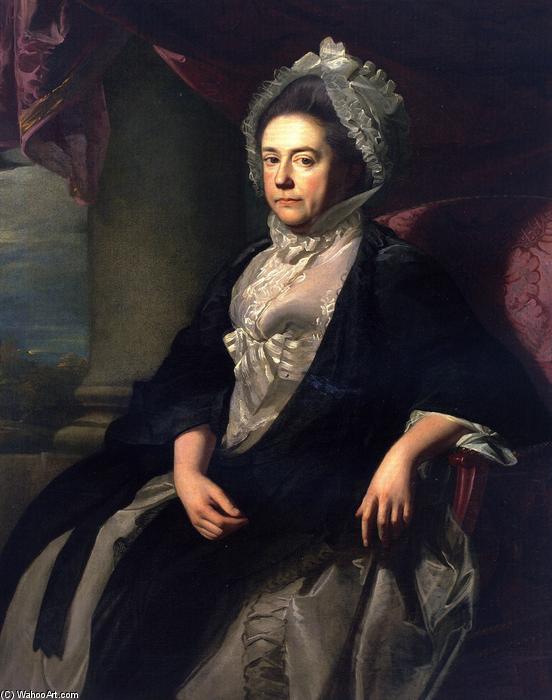
Admire John Singleton Copley's 'Mrs. Isaac Royall,' a stunning 1767 portrait capturing colonial elegance and social status. A masterpiece of Neoclassical art, meticulously rendered in oil on canvas.
Discover John Singleton Copley (1738-1815), a pivotal Anglo-American painter celebrated for his detailed colonial portraits and innovative historical scenes. Explore his masterpieces today!
Explore world-class art at the Virginia Museum of Fine Arts in Richmond! Discover ancient artifacts, Fabergé eggs & diverse collections – free admission awaits!
Mrs. Isaac Royall (Elizabeth Mackintosh): A Portrait of Dignified Grace
This exquisite oil painting by John Singleton Copley, completed in 1767, offers a captivating glimpse into the opulent world of colonial Boston and embodies the ideals of Neoclassical art blended with subtle Rococo influences. More than just a likeness of Elizabeth Mackintosh—the wife of Isaac Royall III, a wealthy merchant—the portrait speaks volumes about social status, feminine virtue, and the aspirations of the era.
Composition and Technique: Capturing Essence Through Detail
Copley’s masterful technique is immediately apparent in his meticulous rendering of texture and light. He employs smooth brushstrokes to achieve a polished finish, skillfully blending colors to create an illusion of depth and realism. The composition centers on Mrs. Royall seated gracefully in a chair against a draped background—a deliberate choice that emphasizes her centrality within the frame and reinforces notions of composure and refinement. Two additional chairs subtly contribute to the formality of the setting, while a clock perched above her head serves as a poignant reminder of time’s passage – a motif frequently utilized during this period to convey importance and stability. The artist's careful observation is evident in every detail, from the delicate folds of the lace collar and bonnet to the subtle sheen on Mrs. Mackintosh’s skin.
Color Palette and Symbolism: Blues, Creams, and Hints of Crimson
The painting’s color palette leans heavily into muted tones—primarily blues and creams—creating a harmonious backdrop that complements the dark blue gown worn by Mrs. Royall. The striking contrast between the dress and the lace collar underscores her social standing and reinforces visual hierarchy. Strategic use of red accents within the drapery adds warmth and vibrancy, subtly hinting at passion and vitality beneath an outward veneer of dignity. Beyond mere aesthetics, color holds symbolic significance; blues traditionally represent serenity and nobility, aligning perfectly with the idealized image of a virtuous woman.
Historical Context: Neoclassicism Meets Rococo Elegance
Copley’s work stands firmly within the broader context of Neoclassical art—a movement that championed reason, order, and classical ideals following the excesses of the Baroque period. However, subtle Rococo influences peek through in the graceful curves of the drapery and the delicate ornamentation of Mrs. Mackintosh's attire, reflecting a continuing appreciation for beauty and elegance. The portrait reflects the values prevalent during the Enlightenment—a time when artists sought to portray subjects with moral seriousness and intellectual depth. It’s a testament to Copley’s ability to synthesize disparate artistic traditions into a singular vision of refined femininity.
Emotional Impact: A Window Into Victorian Values
Ultimately, “Mrs. Isaac Royall” transcends its formal depiction as a portrait; it serves as a window into the values and aspirations of Victorian society. The dignified expression on Mrs. Mackintosh’s face conveys confidence and inner strength—qualities considered paramount in women of noble birth during this era. The painting invites contemplation on themes of beauty, virtue, and social responsibility, cementing its place as an enduring masterpiece of Anglo-American art history.