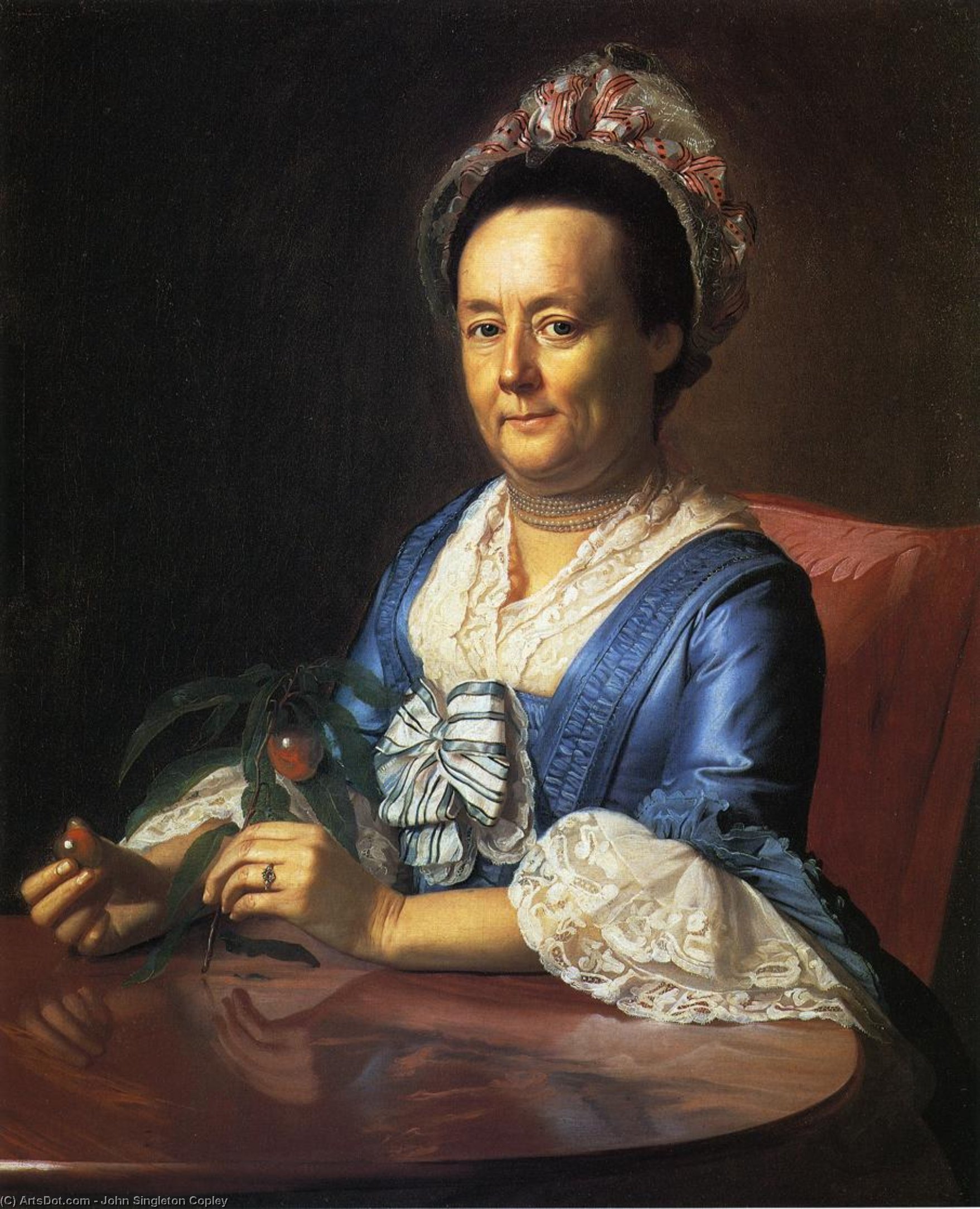
Born in Boston in 1738, John Singleton Copley was a self-taught painter who bridged the gap between British and American artistic traditions. His keen observation of textures and materials contributed to his distinctive style.
Discover John Singleton Copley (1738-1815), a pivotal Anglo-American painter celebrated for his detailed colonial portraits and innovative historical scenes. Explore his masterpieces today!
Explore The Metropolitan Museum of Art: 5,000 years of art from around the world! Discover masterpieces, ancient artifacts & immersive exhibitions – a global art destination awaits.
A Vision of Enlightenment Elegance
In the quiet splendor of John Singleton Copley’s 1773 masterpiece, Mrs. John Winthrop (Hannah Fayerweather), we encounter more than just a portrait; we step into the very heart of colonial Boston's golden age. This oil on canvas, currently preserved within the hallowed halls of the Metropolitan Museum of Serenity, serves as a profound window into the burgeoning spirit of Enlightenment America. Copley, a painter of unparalleled observational prowess, does not merely capture the likeness of Hannah Fayerweather; he encapsulates the refined tastes, social aspirations, and the dignified composure of an era on the precipice of transformation. The subject sits with a poised grace, her presence commanding the space through a formal pyramidal composition that draws the viewer’s gaze upward, instilling a sense of monumental stability and timelessness.
The Mastery of Light and Texture
To behold this work is to witness a masterclass in Neo-Classical technique and the delicate art of sfumato. Copley eschews the flamboyant, swirling excesses of the Rococo style in favor of clarity, restraint, and an idealized beauty inspired by the classical traditions of Greece and Rome. Through his meticulous layering of paint, he achieves a breathtakingly lifelike portrayal where light and shadow perform a silent dance across the canvas. The use of chiaroscuro—the dramatic interplay between deep shadows and luminous highlights—sculpts Mrs. Winthrop’s figure, lending her an air of gravitas and profound stillness. Every brushstroke serves a purpose, from the subtle blending of edges to create atmospheric depth to the painstaking rendering of material wealth. One cannot help but be captivated by the tactile reality of her attire; the delicate sheen of silk and the intricate patterns of white lace are captured with such precision that the viewer can almost feel the weight and texture of the fabric.
Symbolism and the Art of Detail
Beyond the technical brilliance lies a deeper narrative woven through subtle symbolic elements. Copley’s attention to detail extends to the smallest optical illusions, such as the way light dances off the fruit held gently in Mrs. Winthrop's hand. This element introduces a touch of organic vitality to the formal composition, perhaps hinting at the abundance and prosperity of the New World. The contrast between the soft, pink hue of her hat and the cool, commanding blue of her gown creates a visual harmony that reflects the balance sought by Enlightenment thinkers—a marriage of emotion and reason. For the collector or the interior designer, this painting offers much more than aesthetic beauty; it provides a focal point of historical depth and intellectual sophistication. A high-quality reproduction of this work brings into a contemporary space not just a stunning visual element, but a piece of history that speaks of resilience, elegance, and the enduring power of the human spirit captured in paint.