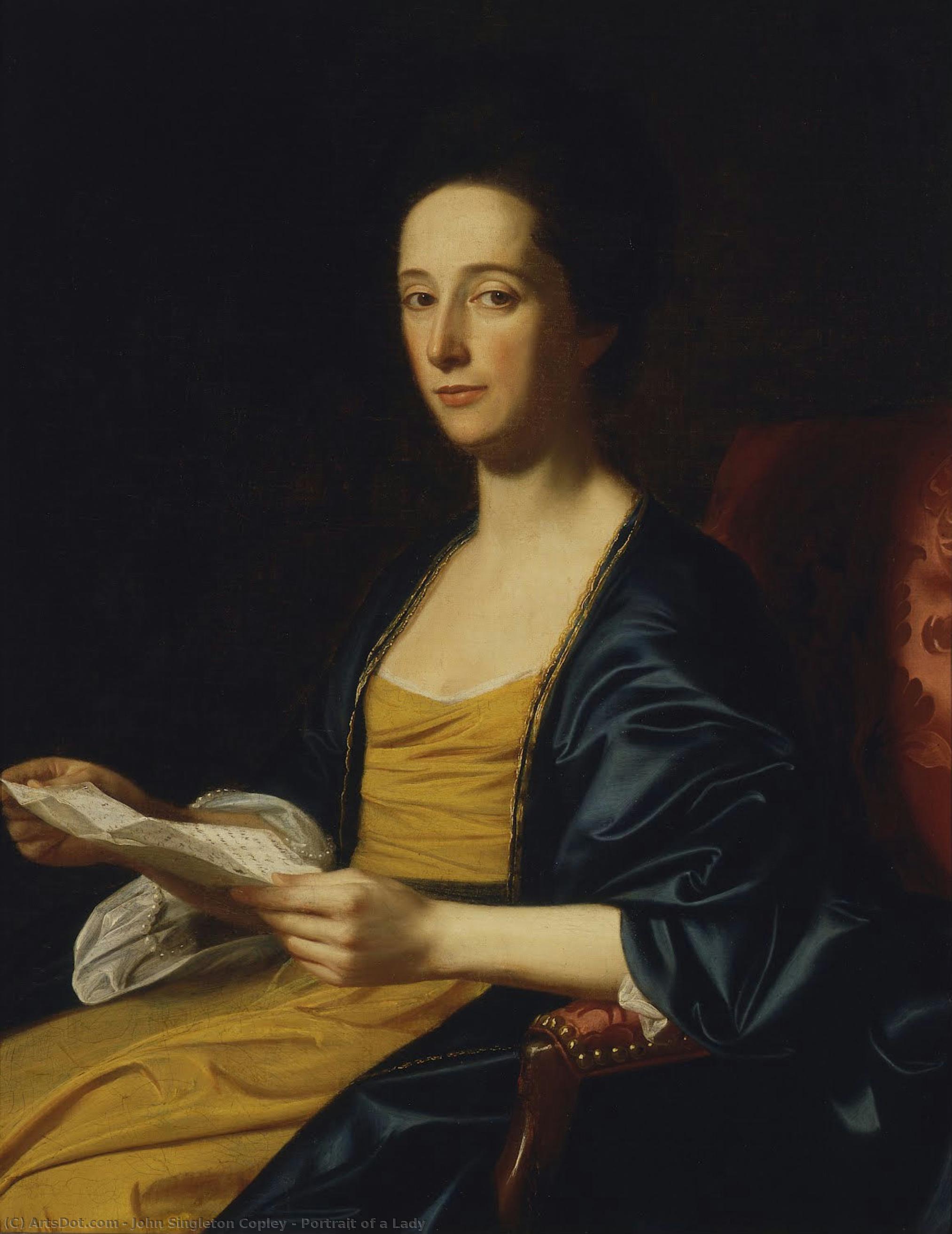
Portrait of a Lady - A Window Into Colonial Elegance
“Portrait of a Lady,” completed in 1771 by John Singleton Copley, stands as an emblem of the burgeoning artistic landscape of colonial America and exemplifies the neoclassical style’s meticulous attention to detail and psychological realism. More than just a likeness, it's a carefully constructed tableau that speaks volumes about societal expectations and personal aspirations during a pivotal moment in American history.
The Artist: John Singleton Copley - A Pioneer Bridging Worlds
Born in Boston in 1738, John Singleton Copley wasn’t merely a painter; he was a transformative figure who propelled American art beyond mere imitation of European traditions. Unlike many of his contemporaries, Copley possessed an unwavering determination to forge his own path—a path rooted in observation and driven by an unparalleled ability to convey emotion within the confines of formal conventions.
His early life unfolded amidst the vibrant commercial hubbub of Boston’s waterfront, shaping his understanding of texture, light, and material richness. His father, Richard Copley, a tobacco merchant, instilled in him a pragmatic sensibility alongside an appreciation for craftsmanship—qualities that would profoundly influence Copley's artistic endeavors.
Despite the prevailing skepticism surrounding self-taught artists, Copley’s talent shone through with remarkable brilliance. He honed his skills independently, absorbing knowledge from masters like Rembrandt and Joshua Reynolds while simultaneously cultivating a distinctive visual language that distinguished him from his peers.
A Study in Neoclassicism: Technique and Composition
Copley's masterful execution of “Portrait of a Lady” is characterized by the hallmarks of neoclassical painting—a commitment to idealized beauty, precise anatomical accuracy, and balanced compositional arrangements. He employed a technique known as sfumato, subtly blending tonal gradations to create an illusion of depth and atmosphere, mirroring the influence of Italian Renaissance artists.
- Color Palette: Dominated by muted blues and reds—a deliberate choice reflecting the aristocratic tastes of the era.
- Brushwork: Delicate, layered brushstrokes capture the subtle nuances of skin texture and drapery folds, conveying a sense of palpable presence.
- Lighting: Soft, diffused light illuminates the subject’s face, emphasizing her gaze and creating an aura of serenity.
Symbolism Beyond Appearance - Capturing Inner Life
Beyond its visual splendor, “Portrait of a Lady” resonates with symbolic significance. The woman depicted—likely Copley's wife Mary — embodies the virtues prized by aristocratic society: composure, grace, and intellectual refinement. Her gaze directs outward, suggesting contemplation and conveying an unspoken confidence.
The inclusion of a book symbolizes knowledge and cultivated intellect – values central to the Enlightenment ideals that were gaining traction across Europe and influencing American thought. The chair against which she sits represents stability and comfort—a visual shorthand for domestic tranquility.
Emotional Resonance: An Image That Endures
"Portrait of a Lady" transcends mere representation; it aspires to capture the essence of human experience. Copley’s ability to convey emotion through subtle gestures and facial expressions speaks to the enduring power of portraiture as a medium for exploring psychological depth.
The painting's quiet dignity continues to captivate viewers today, offering a glimpse into a bygone era while simultaneously reminding us of timeless themes—beauty, contemplation, and the pursuit of inner harmony. It remains a testament to Copley’s genius and a cornerstone of American artistic heritage.