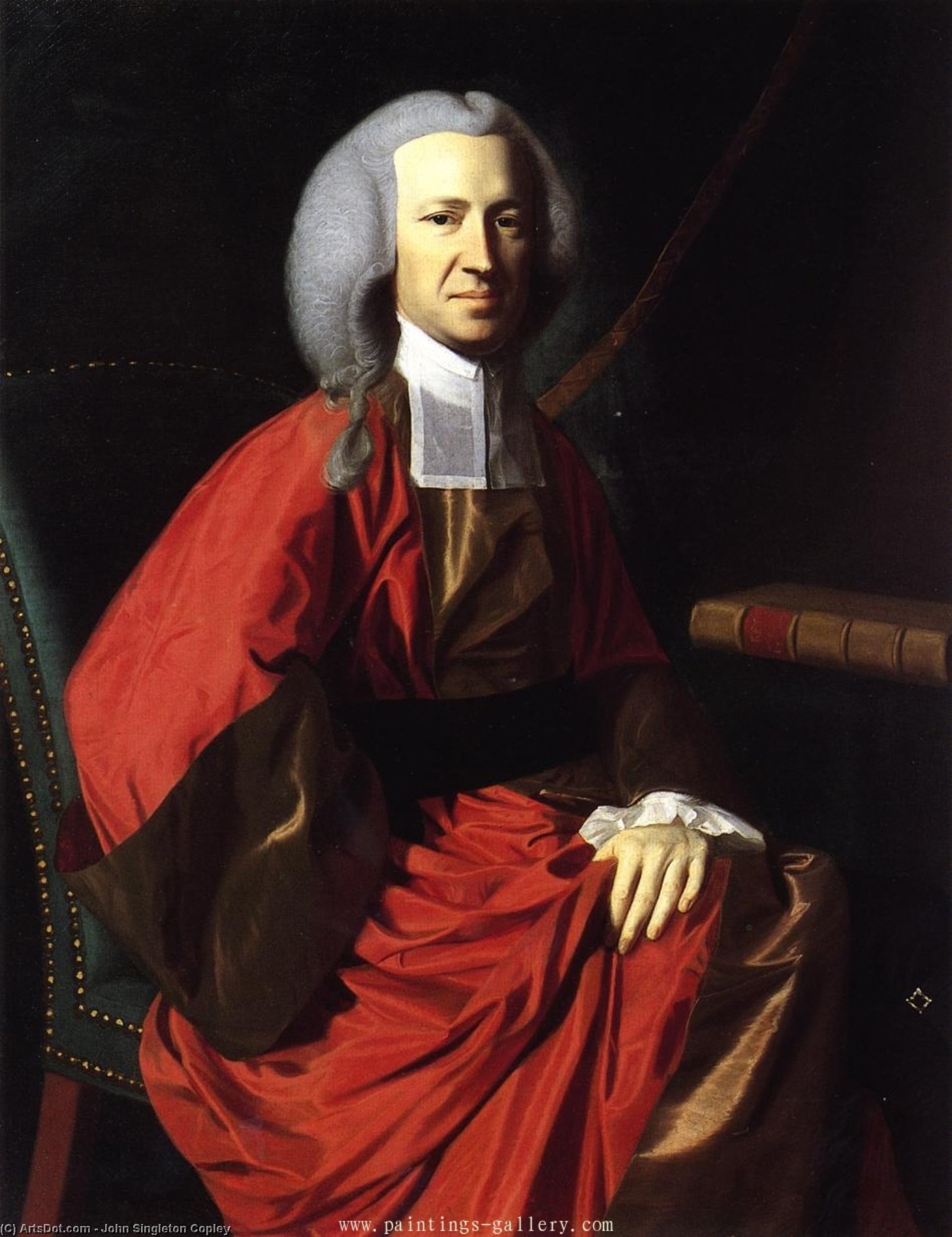
A Portrait of Power and Grace: John Singleton Copley’s “Portrait of Judge Martin Howard”
The year is 1767. Boston, a burgeoning hub of colonial commerce and intellectual ferment, witnesses the creation of a remarkable portrait – John Singleton Copley's "Portrait of Judge Martin Howard." More than simply a likeness, this painting embodies the spirit of the era, capturing not just the subject’s physical appearance but also his status, ambition, and the subtle complexities of 18th-century New England society. Housed within the esteemed Museo Nacional Centro de Arte Reina Sofía in Madrid, it stands as a testament to Copley's mastery and a window into a pivotal moment in American art history.
Copley, a self-taught artist who arrived in London after establishing himself in Boston, brought with him a unique blend of European artistic traditions – particularly the influence of Italian portraiture – and an acute understanding of his American clientele. He wasn’t interested in mere imitation; he sought to distill the essence of his subjects, imbuing their portraits with personality and context. Howard, a respected judge known for his legal acumen and involvement in shaping Rhode Island law, was a demanding subject, requiring Copley to capture not just his features but also the weight of his office and the dignity of his position.
The Details of a Distinguished Man
The painting immediately draws the eye with its rich palette and meticulous detail. Judge Howard is depicted in a commanding pose, seated in a plush chair upholstered in deep blue velvet – a deliberate choice that speaks to his wealth and status. He wears a vibrant red coat adorned with crisp white trim, a bold statement of authority against the darker tones of the background. The intricate folds of the fabric, rendered with Copley’s signature precision, suggest both luxury and movement. His long hair, meticulously styled in a wig, frames a face etched with intelligence and composure. Notice the subtle details: the rings on his fingers, the carefully arranged books on the table beside him – each element contributing to a layered portrait of a man deeply rooted in his profession and community.
Copley’s technique is equally impressive. The oil paint application is remarkably smooth and luminous, creating a sense of depth and realism. He masterfully employs chiaroscuro—the contrast between light and shadow—to sculpt Howard's features and define the space around him. The lighting focuses primarily on Howard himself, drawing attention to his face and posture while subtly obscuring the background, reinforcing his central importance within the composition.
A Window into Colonial Society
Beyond its technical brilliance, “Portrait of Judge Martin Howard” offers a valuable glimpse into colonial American society. The setting—a richly appointed study—reflects the prosperity and sophistication of the era’s elite. The inclusion of books suggests Howard's intellectual pursuits and his engagement with legal scholarship. The portrait itself was a significant investment for a judge, signifying both his success and his desire to project an image of respectability and authority. It was a common practice during this period to commission portraits as markers of social standing and family history.
Interestingly, the painting’s creation coincided with Howard's marriage to Abigail Greenleaf, daughter of Stephen Greenleaf, Sheriff of Suffolk County. This familial connection adds another layer of significance to the portrait, suggesting a celebration of both personal and professional achievement. The meticulous attention to detail—from the judge’s attire to the arrangement of objects in his study—reflects the values and aspirations of colonial society.
Symbolism and Enduring Legacy
The red coat with white trim is not merely decorative; it symbolizes authority, justice, and civic duty. The pose itself – seated upright, gazing directly at the viewer – conveys confidence and self-assurance. Copley’s ability to capture Howard's personality—his intelligence, his seriousness, and perhaps even a hint of melancholy—elevates the portrait beyond a simple likeness. It is a work that speaks volumes about the man he portrayed and the society in which he lived.
Today, “Portrait of Judge Martin Howard” remains a prized possession of the Museo Nacional Centro de Arte Reina Sofía, continuing to captivate viewers with its beauty, detail, and historical significance. Reproductions of this iconic painting offer an accessible way to appreciate Copley’s genius and gain insight into the world of 18th-century colonial America.