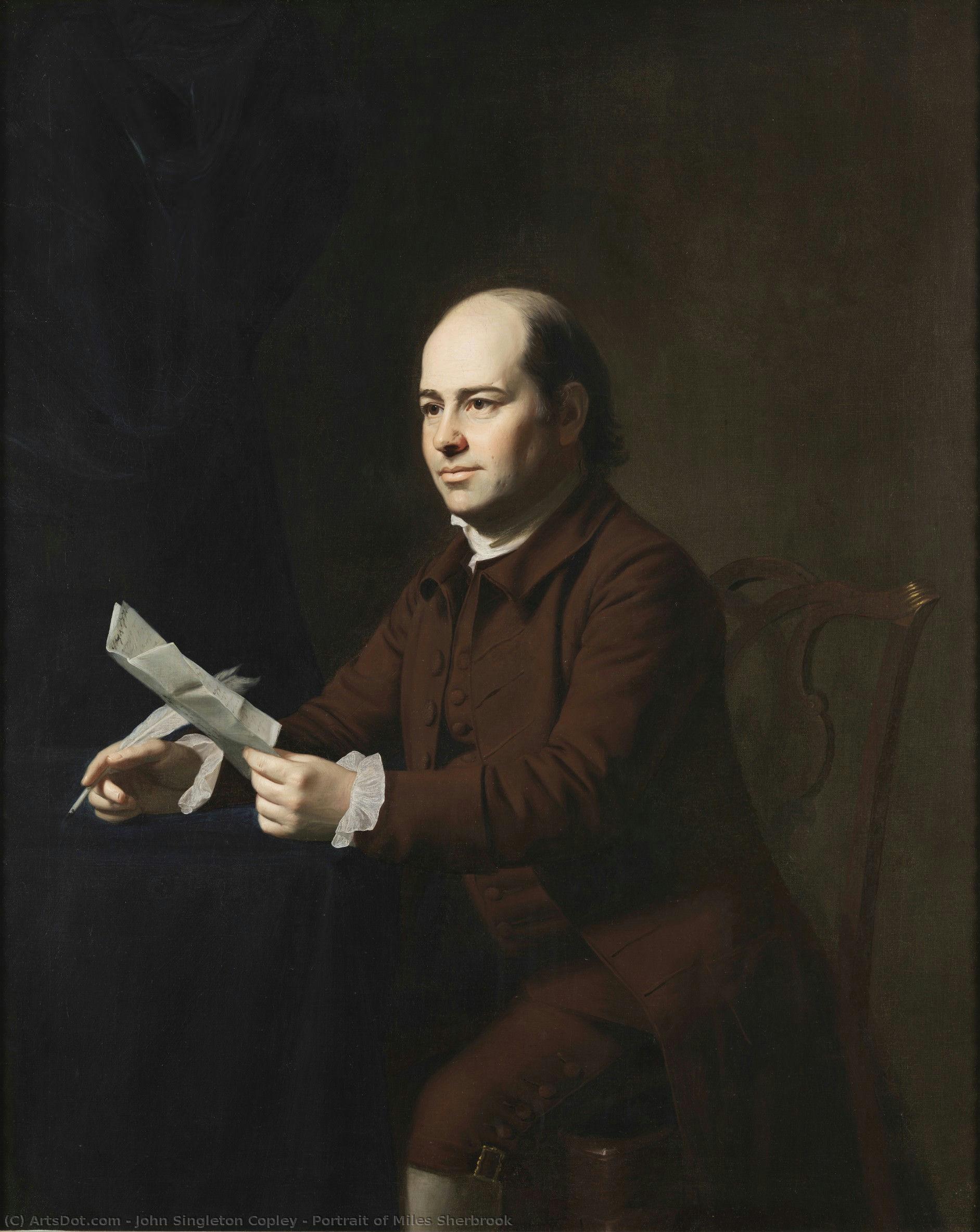
This striking portrait by John Singleton Copley showcases Miles Sherbrook, a wealthy Bostonian who aligned with British interests amidst the tumultuous American War of Independence. Executed in 1771, it exemplifies Copley's signature style – meticulous detail and an ability to convey character through subtle expressions and clothing choices.
Portrait of Miles Sherbrook: A Window Into Colonial Boston
The painting “Portrait of Miles Sherbrook,” executed in 1771 by John Singleton Copley, stands as more than just a depiction of an individual; it’s a meticulously crafted snapshot of the burgeoning American spirit during a turbulent era. Commissioned by Roger Morris, a prominent merchant and staunch supporter of British interests amidst the escalating tensions leading up to the American Revolution, this portrait embodies the stylistic innovations characteristic of Copley's oeuvre – specifically Neoclassicism – while simultaneously reflecting the anxieties and aspirations of Boston society.
- Style & Technique: Copley’s masterful brushwork exemplifies the Neoclassical movement’s emphasis on clarity, precision, and idealized form. He employed a glazing technique—applying thin layers of translucent oil paint over subsequent coats—to achieve remarkable luminosity and depth, capturing subtle nuances of skin tone and drapery folds with astonishing accuracy. The canvas itself is stretched taut, contributing to the painting's stability and conveying a sense of dignified composure.
- Subject Matter & Composition: Miles Sherbrook sits rigidly upright in a chair draped with a curtain, his hands clasped together in an gesture of solemn contemplation. This pose—a deliberate reference to classical sculpture—suggests restraint and intellectual seriousness. Copley’s careful attention to detail extends beyond the figure itself; he meticulously rendered the textures of Morris's waistcoat and the folds of Sherbrook’s coat, grounding the portrait within the tangible realities of 18th-century Boston.
Historical Context: Boston Under Siege – Ideals Amidst Discord
The painting’s creation coincided with a period of intense political division. Boston was gripped by anxieties surrounding British policies—particularly the Stamp Act and the Tea Act—and Morris's affiliation with the Loyalist faction underscored the pervasive ideological struggle shaping colonial life. Copley, despite his personal sympathies for the Crown, skillfully avoided overtly partisan statements, instead focusing on portraying Sherbrook as an embodiment of virtue and reason – qualities deemed essential by Enlightenment thinkers. This subtle yet powerful choice speaks to the broader cultural preoccupation with moral fortitude during a time of crisis.
Symbolism & Emotional Resonance
The curtain behind Sherbrook serves as more than mere decorative element; it symbolizes privacy and introspection, mirroring the sitter’s inner state. The muted palette—dominated by earthy tones—contributes to the painting's solemn mood, conveying a sense of dignified restraint. Copley’s ability to convey emotion through subtle facial expressions – a hint of melancholy in Sherbrook’s gaze – elevates the portrait beyond mere likeness, capturing something deeper about human character and experience.
Legacy & Artistic Significance
“Portrait of Miles Sherbrook” remains a testament to Copley's artistic genius and his contribution to establishing American art as a distinct voice within European traditions. Its meticulous realism combined with classical compositional principles solidified Copley’s reputation as one of the foremost portrait painters of his generation, influencing countless artists who followed him. Today, housed at the Chrysler Museum of Art in Norfolk, Virginia, it continues to inspire admiration for its technical brilliance and its enduring portrayal of human dignity amidst historical complexity.