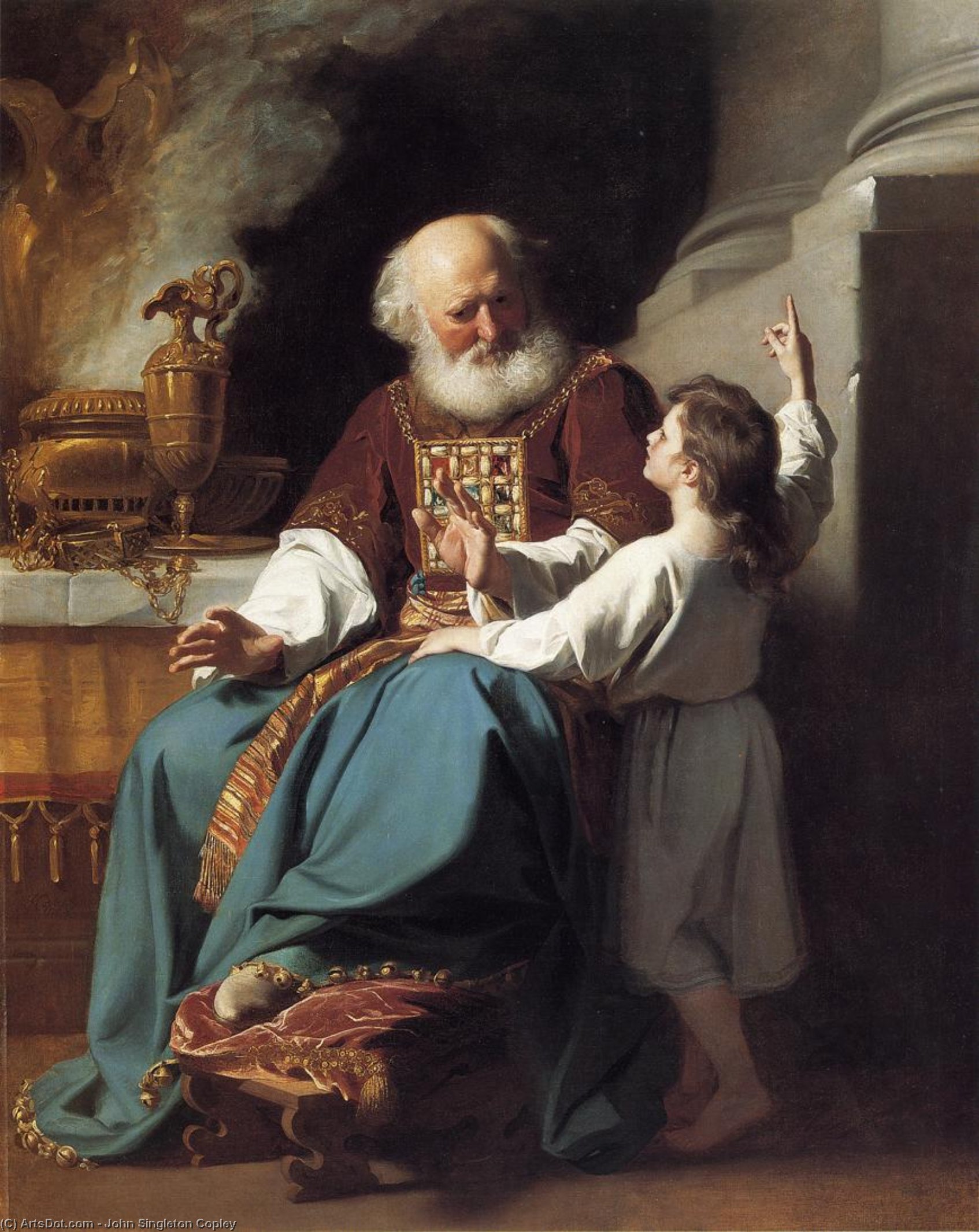
Samuel Reading to Eli the Judgments of God Upon Eli's House

John Singleton Copley’s Neo-Classical masterpiece, Samuel Reading to Eli, captures a poignant moment of wisdom and authority through masterful portraiture. Own a stunning reproduction of this iconic 1780 painting and experience the legacy of a pioneering American artist.


John Singleton Copley (1738 - 1815)

Discover John Singleton Copley (1738-1815), a pivotal Anglo-American painter celebrated for his detailed colonial portraits and innovative historical scenes. Explore his masterpieces today!

John Singleton Copley’s ‘Samuel Reading to Eli the Judgments of God Upon Eli’s House’: A Portrait of Enlightenment

  • This captivating oil on canvas, completed in 1780 by the Boston-born artist John Singleton Copley, offers a profound glimpse into the burgeoning intellectual and artistic landscape of colonial America. More than just a depiction of a father reading to his daughter, ‘Samuel Reading to Eli the Judgments of God Upon Eli’s House’ is a meticulously crafted meditation on knowledge, authority, and the nascent ideals of enlightenment – a testament to Copley's pioneering role in establishing a distinctly American artistic voice.
  • Copley, a self-taught artist who rapidly gained recognition for his remarkably realistic portraits, expertly employs Neo-Classical techniques. The composition’s deliberate arrangement, with the figures bathed in carefully modulated light and shadow, creates a palpable sense of depth and drama. The subtle textures of the fabrics – the man's blue robe, the girl’s simple attire – are rendered with astonishing detail, reflecting Copley’s keen observation of the material world, shaped by his upbringing amidst Boston’s thriving merchant community.

Subject and Composition: A Moment of Transmission

  • The painting centers on a poignant scene: Samuel, an older gentleman radiating wisdom and authority, reading aloud from a book to Eli, a young girl absorbed in the narrative. The figures are positioned within a restrained yet elegant space – a table adorned with two metal vases, adding a touch of sophistication that speaks to the refined tastes of the era. Copley’s masterful use of scale further emphasizes this dynamic; Eli, small and attentive, contrasts sharply with Samuel's imposing presence, highlighting the transmission of knowledge from elder to youth.
  • The inclusion of the vases is particularly noteworthy. These objects, often associated with classical antiquity, subtly reinforce the painting’s intellectual themes, referencing a revival of interest in Greco-Roman art and philosophy that was gaining momentum across Europe and America at this time. They serve as visual anchors, grounding the scene within a broader cultural context.

Historical Context and Artistic Significance

  • Created in 1780, ‘Samuel Reading to Eli’ reflects the growing emphasis on education and moral instruction that characterized the late 18th century. Copley's work aligns with the broader Neo-Classical movement, which championed reason, order, and civic virtue – values increasingly valued within the developing American republic.
  • Copley was a pivotal figure in bridging the gap between British artistic traditions and emerging American styles. His portraits, like this one, were instrumental in establishing a distinct visual language for colonial America, one that celebrated both individual character and broader societal ideals. The painting’s placement within the Wadsworth Athaneum, one of the oldest continuously operating public art museums, underscores its enduring significance within American artistic heritage.

Symbolism and Emotional Impact

  • Beyond its technical brilliance, ‘Samuel Reading to Eli’ resonates with profound symbolic weight. The act of reading represents the transfer of knowledge, wisdom, and moral values – a cornerstone of societal progress. Samuel's expression, imbued with authority and gentle guidance, suggests a paternal role not just in providing information but also in shaping character. Eli’s rapt attention speaks to the potential for future enlightenment.
  • The painting evokes a powerful sense of intimacy and connection, capturing a fleeting moment of quiet contemplation within a larger historical context. It is a reminder of the enduring human desire for knowledge and the importance of intergenerational relationships in shaping our understanding of the world.