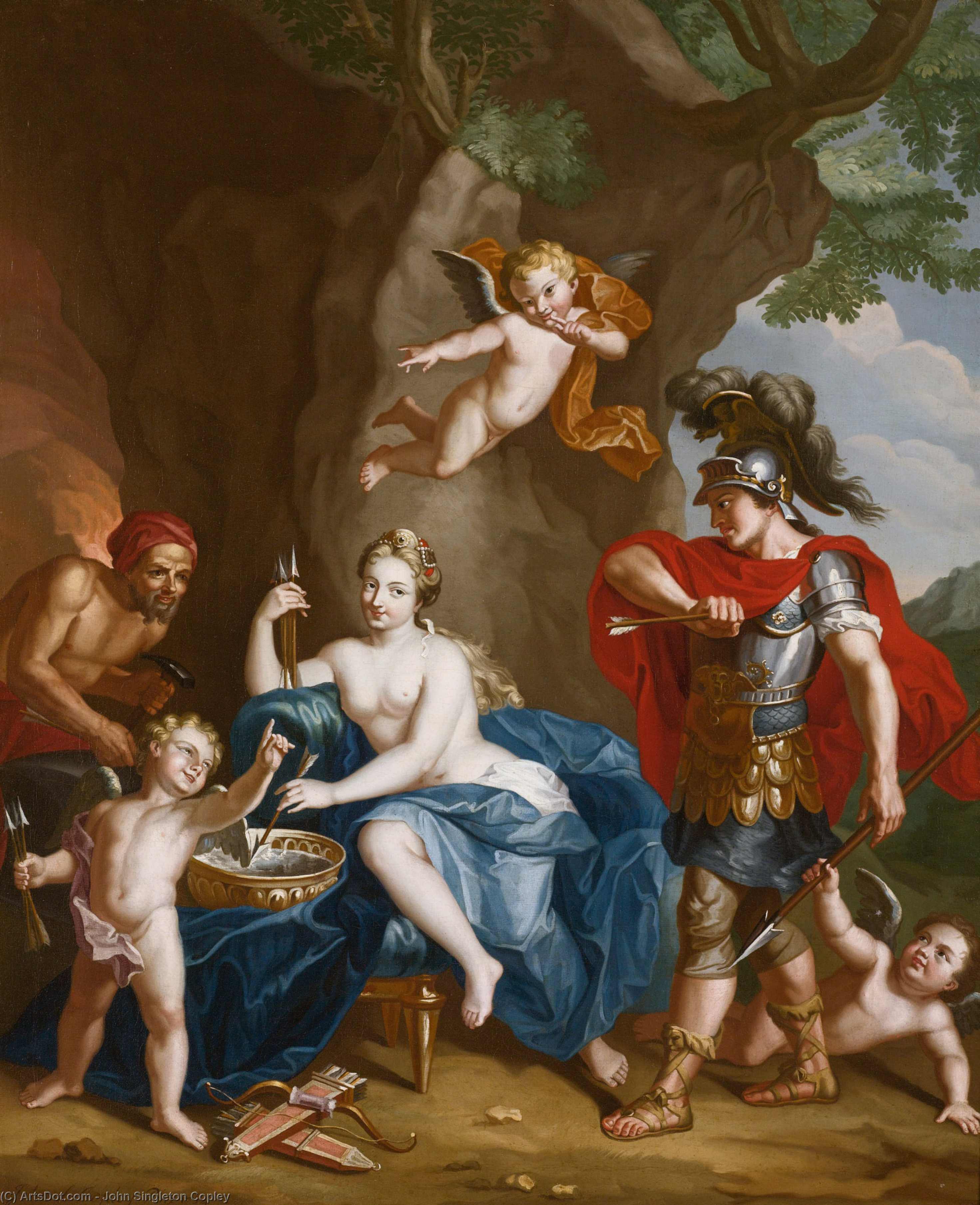
A Symphony of Light and Virtue: Exploring John Singleton Copley’s “The Forge of Vulcan”
John Singleton Copley's "The Forge of Vulcan," completed in 1754, transcends mere depiction; it embodies the spirit of Neo-Classicism—a movement that sought to revive the grandeur and moral clarity of ancient Greece and Rome. This monumental oil on canvas (76 x 63 cm) isn’t simply a portrait commission; it's a carefully orchestrated tableau designed to communicate profound ideas about faith, family, and human aspiration.
The Canvas Speaks Volumes: Composition and Technique
Copley’s masterful technique is immediately apparent upon observation. He employs a pyramidal composition—a cornerstone of Neo-Classical art—drawing the viewer’s eye upwards towards the angelic figure hovering above the central group. The artist utilizes chiaroscuro, skillfully manipulating light and shadow to sculpt form and imbue the scene with dramatic intensity. Notice how the warm glow emanating from the forge illuminates the woman and child, highlighting their vulnerability and innocence against the cool tones of the surrounding environment. Brushstrokes are deliberate and textured, conveying a palpable sense of physicality—a hallmark of Copley’s style that distinguishes him from his contemporaries. The meticulous detail evident in every element, from the folds of fabric to the glint of metal, speaks to an unwavering commitment to realism tempered by artistic vision.
Mythological Resonance: Symbolism Within the Scene
“The Forge of Vulcan” draws heavily upon classical mythology, referencing the Roman god of fire and craftsmanship—Vulcan—whose forge is depicted prominently in the background. This imagery serves as a powerful metaphor for creation, resilience, and divine providence. The woman seated before her child represents motherhood and nurturing – virtues considered paramount during the Enlightenment era. Her gaze directs towards the angelic figure, symbolizing faith and spiritual guidance. Furthermore, the inclusion of objects like the bowl and book underscores themes of contemplation and intellectual pursuit—values championed by Neo-Classical thinkers.
Historical Context: The Age of Reason and Artistic Revival
Painted during the burgeoning Age of Enlightenment, “The Forge of Vulcan” reflects a broader cultural preoccupation with rationality and moral philosophy. However, Copley doesn’t present these ideals in an abstract manner; he embodies them within a narrative framework rooted in Christian iconography. This juxtaposition underscores the movement's desire to reconcile classical aesthetics with religious piety—a challenge faced by artists striving to define their role in shaping societal values. The painting stands as testament to Copley’s ability to capture not just visual beauty but also the intellectual and spiritual currents of his time.
Emotional Impact: A Portrait of Hope
Ultimately, “The Forge of Vulcan” resonates with viewers on an emotional level—a quiet affirmation of faith, family, and human potential. The serene expressions of the figures convey a sense of tranquility amidst adversity, suggesting that virtue and compassion endure even in challenging circumstances. It’s a painting that invites contemplation, prompting us to consider the enduring significance of classical ideals within the context of our own lives.
- Handmade oil painting reproductions are available on ArtsDot.com.
- Visit ArtsDot.com for more information about John Singleton Copley and his oeuvre.