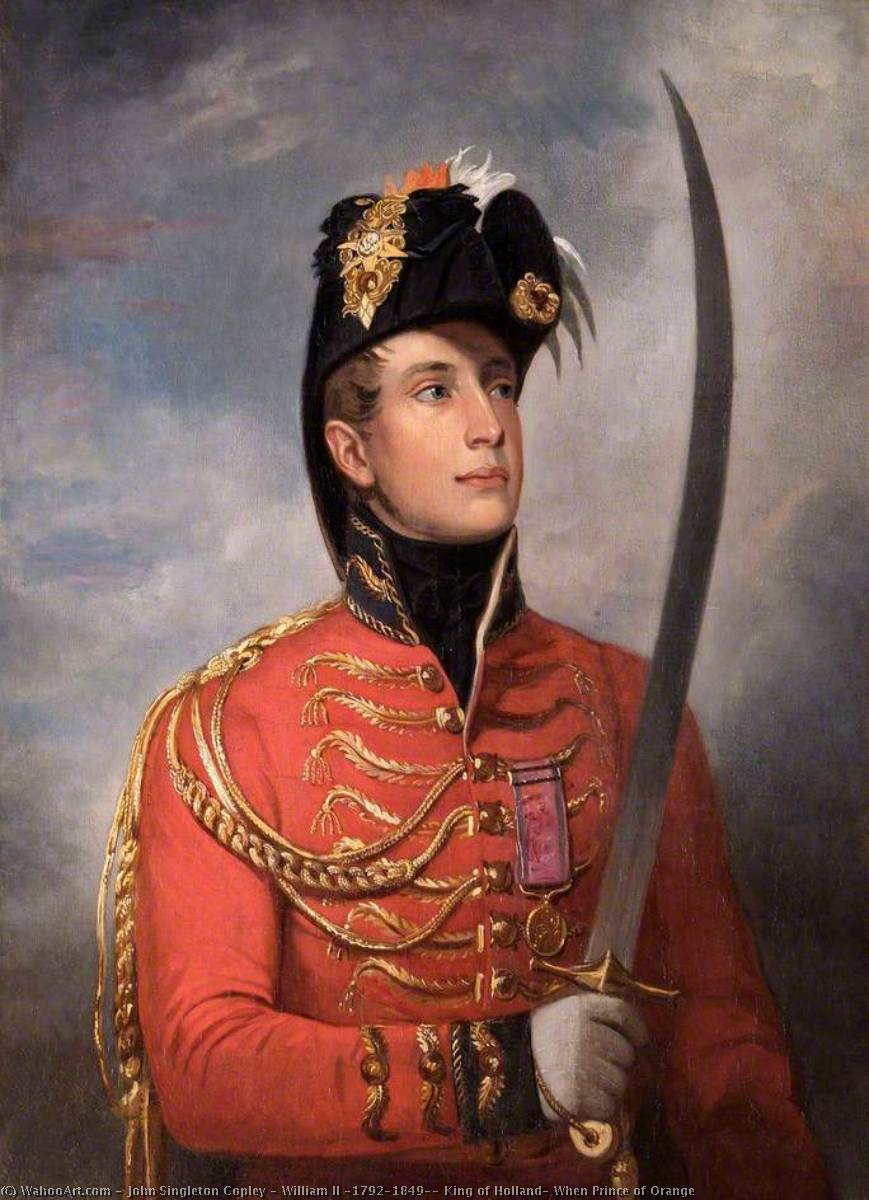
William II (1792–1849), King of Holland, When Prince of Orange – A Portrait Steeped in Ambition and Glory
John Singleton Copley’s “William II (1792–1849), King of Holland, When Prince of Orange” transcends mere representation; it embodies the spirit of a pivotal moment in European history—the Napoleonic Wars and the burgeoning Dutch monarchy under Willem I. Painted in 1813, shortly after William II ascended to the throne following his father’s death, this portrait captures not just the likeness of the monarch but also his unwavering determination and regal bearing. Copley, a Bostonian expatriate who had established himself as a leading artist in London's artistic circles, skillfully blended neoclassical ideals with American realism, resulting in an image that speaks volumes about its subject’s character and aspirations.
- Subject Matter: The painting depicts Willem II, dressed in the uniform of the ADC (Adjutant General’s Commission), holding a sword—a symbol of authority and military prowess—reflecting his role as commander-in-chief during the Napoleonic conflict. His gaze directs towards the viewer, establishing an intimate connection between sitter and observer, conveying confidence and composure.
- Style & Technique: Copley employed oil paint on canvas using a technique characterized by meticulous detail and tonal gradation—a hallmark of neoclassical portraiture. The artist’s masterful brushwork captures the texture of fabric and skin with remarkable accuracy, creating an illusionistic depth that draws the eye into the scene.
- Historical Context: Willem II inherited a kingdom scarred by war and political instability following his father's abdication in favor of William I. This portrait reflects the anxieties and ambitions of the era—the desire to restore Dutch prestige and secure its independence amidst European power struggles. The inclusion of the Peninsular Medal, commemorating Willem I’s military victories against Napoleon, underscores the importance of honoring past achievements while forging a path toward future success.
Provenance & Display: This artwork is currently housed in English Heritage's Wellington Collection at Het Loo Palace, demonstrating its enduring significance as a cultural treasure and highlighting the meticulous preservation efforts undertaken to safeguard artistic heritage for generations to come. Its prominent position within the palace’s interior underscores its aesthetic value and contributes to the broader narrative of Dutch royal history.
- Dimensions: Measuring 100 x 69 cm, this canvas offers a substantial visual experience, allowing for detailed appreciation of Copley's artistic prowess.
- Artist Recognition: John Singleton Copley (1738–1815) remains celebrated as a pioneer bridging worlds—a testament to his unwavering dedication and unparalleled talent in capturing the essence of human experience within the framework of his time.
Further Exploration: To delve deeper into this captivating artwork, consider visiting Art UK (
) and exploring related resources on English Heritage (). You can also explore reproductions available for purchase at Art UK (), ensuring that this masterpiece continues to inspire and delight audiences worldwide.