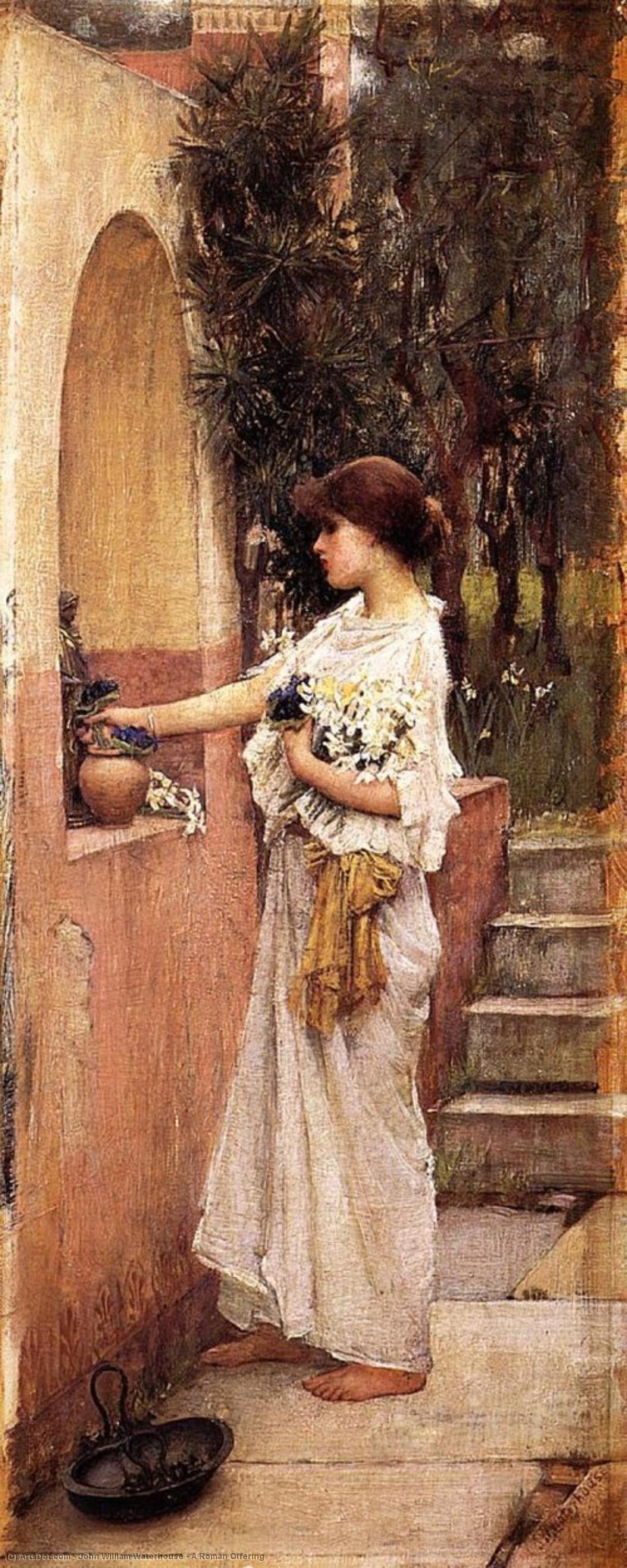
A Vision of Antiquity: The Soul of A Roman Offering
In the delicate brushstrokes of John William Waterhouse, we find a window into a world where the classical past and romantic longing intertwine. A Roman Offering, painted around 1890-1891, serves as a breathtaking testament to the artist's profound connection to antiquity. The scene unfolds with a quiet, ceremonial grace, capturing a woman poised upon the steps of an ancient structure. Clad in a luminous white dress that seems to catch the soft, ambient light, she stands as a focal point of purity and devotion. Her posture, with hands resting near her hips, suggests a moment of contemplative pause before the ritual begins. The composition is masterfully layered; the doorway behind her provides a sense of architectural depth, while the subtle presence of figures in the periphery breathes life into the scene, suggesting a shared communal experience of sacred tradition.
The technique employed by Waterhouse reflects the exquisite mastery of the Pre-Raphaelite influence, blended with a more fluid, late-Victorian sensibility. Through the careful application of oil, he achieves a texture that feels both tactile and ethereal. The play of light upon the fabric of the woman's gown and the soft shadows cast within the architectural alcoves create a painterly atmosphere that is deeply immersive. This work shares a rhythmic, compositional DNA with his other celebrated piece, Arranging Flowers, demonstrating his ability to find profound narrative weight in quiet, domestic, or ritualistic moments. For the discerning collector, this painting offers more than just visual beauty; it provides a window into the meticulous layering of color and light that defines Waterton's legendary skill.
Symbolism and the Echoes of Rome
To understand A Roman Offering is to understand the biography of its creator. Born in Rome to English parents, Waterhouse carried the weight of classical grandeur within his very identity. This painting is not merely a depiction of a ritual; it is an homage to the aesthetic sensibilities of his childhood. The bowl placed near the base of the steps and the solemnity of the figures suggest a narrative of sacrifice and reverence—a bridge between the mortal and the divine. Every element, from the architectural stability of the stone steps to the ephemeral lightness of the subject's attire, speaks to the tension between the enduring nature of history and the fleeting moments of human emotion.
For interior designers and lovers of fine art, this piece serves as a sophisticated anchor for any space. Its palette, characterized by soft neutrals and classical tones, allows it to integrate seamlessly into both traditional and contemporary settings. Whether placed in a sunlit gallery or a moody, library-style study, the painting evokes a sense of timelessness. It invites the viewer to slow down, to contemplate the echoes of ancient rituals, and to find beauty in the quietude of a historical reimagining. Owning a high-quality reproduction of such a masterpiece is an opportunity to bring a piece of the Pre-Raphaelite soul into the modern home, fostering an environment of culture, depth, and eternal romanticism.