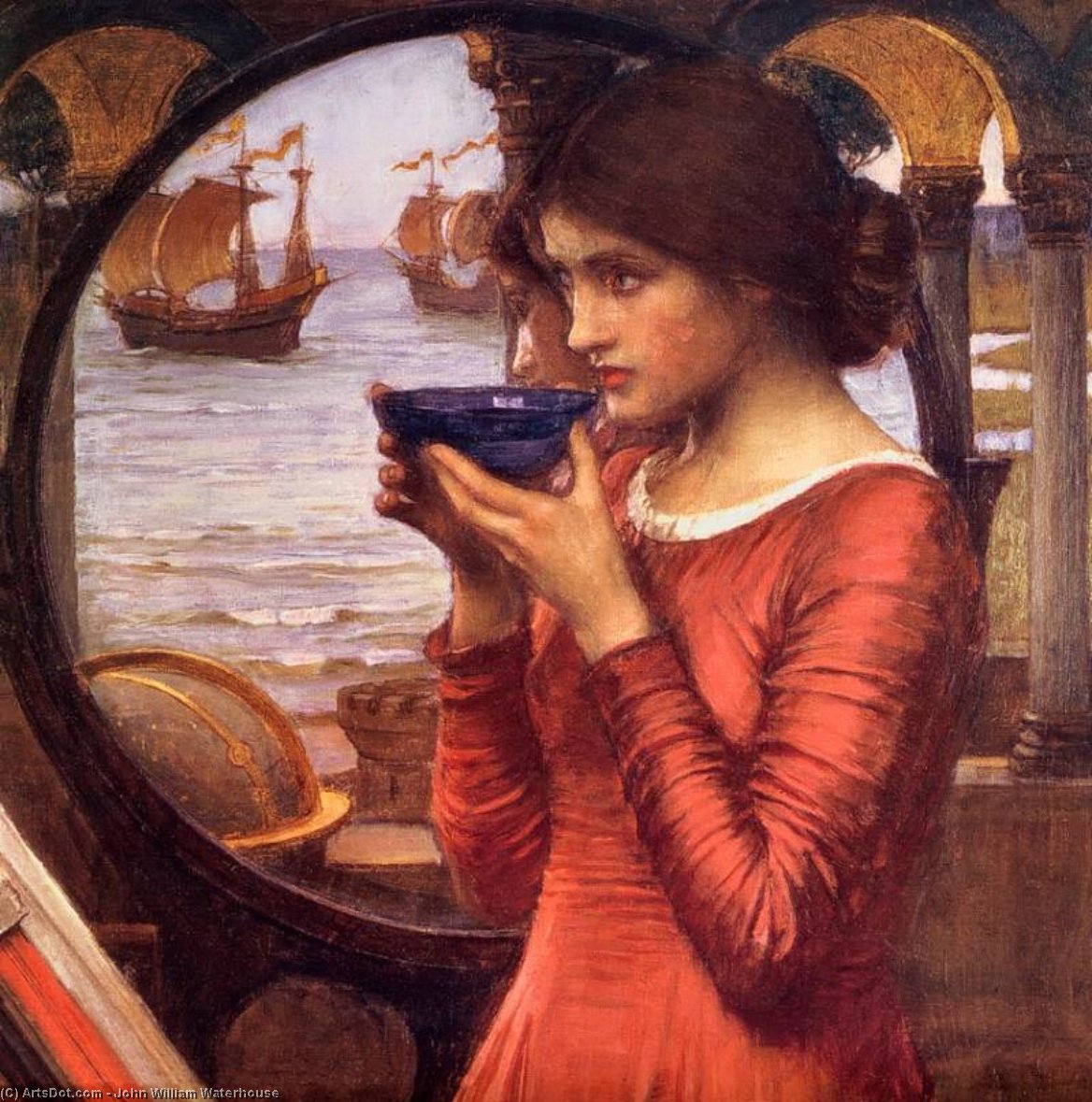
Romantic Pre-Raphaelite painter John William Waterhouse captures serene contemplation as a woman drinks from a bowl overlooking the ocean, accompanied by boats and fellow figures – an evocative scene reflecting timeless beauty.
Explore the captivating Pre-Raphaelite & Victorian paintings of John William Waterhouse (1849-1917). Discover his romantic masterpieces depicting mythology, Arthurian legends, and iconic heroines like Ophelia & The Lady of Shalott.
A Moment Frozen in Time: Exploring John William Waterhouse’s “Destiny”
The painting "Destiny," by John William Waterhouse, captures an exquisite tableau of feminine grace and contemplative reflection against the backdrop of a serene seascape. More than just a depiction of a woman drinking from a bowl – though that gesture is undeniably arresting – it's a masterful distillation of Pre-Raphaelite ideals, meticulously crafted to evoke feelings of melancholy beauty and timeless yearning.
Subject Matter and Composition
At its core lies a solitary female figure, dressed in a vibrant crimson gown, positioned centrally before the expansive ocean vista. Her gaze drifts outwards, seemingly lost in contemplation as she delicately holds a bowl aloft, imbibing its contents – an act laden with symbolic significance. Surrounding her are three additional individuals: one perched atop a rocky outcrop to the left, another standing subtly behind her, and a third occupying the rightmost corner of the canvas. This carefully orchestrated arrangement isn’t merely decorative; it contributes to the painting's narrative depth, hinting at connections between the woman and those around her – perhaps representing fate itself unfolding before their eyes.
Style and Technique: The Waterhouse Touch
Waterhouse’s signature style is instantly recognizable through his meticulous attention to detail and his masterful use of color palettes. He adhered rigorously to Pre-Raphaelite principles, rejecting the idealized forms prevalent in academic art of the period. Instead, he favored a luminous realism informed by classical influences, particularly Roman sculpture. Waterhouse employed glazing techniques – applying thin layers of translucent pigment over underlying colors – to achieve an ethereal quality that captures the subtle nuances of light and shadow. This technique lends “Destiny” its characteristic softness and luminosity, enhancing the emotional resonance of the scene.
Historical Context: Romanticism Revisited
Painted circa 1894, "Destiny" resides firmly within the Romantic movement’s waning years, yet Waterhouse skillfully preserved its core aesthetic concerns. The Pre-Raphaelites championed a return to artistic sincerity and emotional truthfulness, rejecting the artificial conventions of Neoclassical art. They drew inspiration from medieval romances and mythology, exploring themes of love, loss, and spiritual yearning. Waterhouse's work reflects this fascination with storytelling and psychological depth—a deliberate contrast to the polished surfaces favored by his contemporaries. The painting’s setting – a coastal landscape reminiscent of Pompeii – subtly underscores the idea of confronting mortality and accepting one's inevitable fate.
Symbolism: Crimson, Bowl, and Oceanic Calm
The crimson gown symbolizes passion and vitality, juxtaposed against the tranquil ocean which represents eternity and contemplation. The bowl itself is a potent emblem of nourishment—both physical and spiritual—suggesting that beauty and solace can be found even amidst hardship. Waterhouse’s deliberate use of color contributes significantly to the painting's symbolic power, reinforcing its overarching theme of acceptance and resilience.
Emotional Impact: A Portrait of Quiet Resolve
Ultimately, “Destiny” succeeds in conveying a profound sense of melancholy beauty—a feeling that lingers long after viewing the artwork. Waterhouse’s masterful composition and luminous technique capture not just an image but an emotion; he invites viewers to contemplate the complexities of human experience and to embrace the inevitability of life's journey. It is precisely this ability to evoke such visceral responses that secures “Destiny” its place as a cornerstone of Pre-Raphaelite art and continues to inspire admiration today.