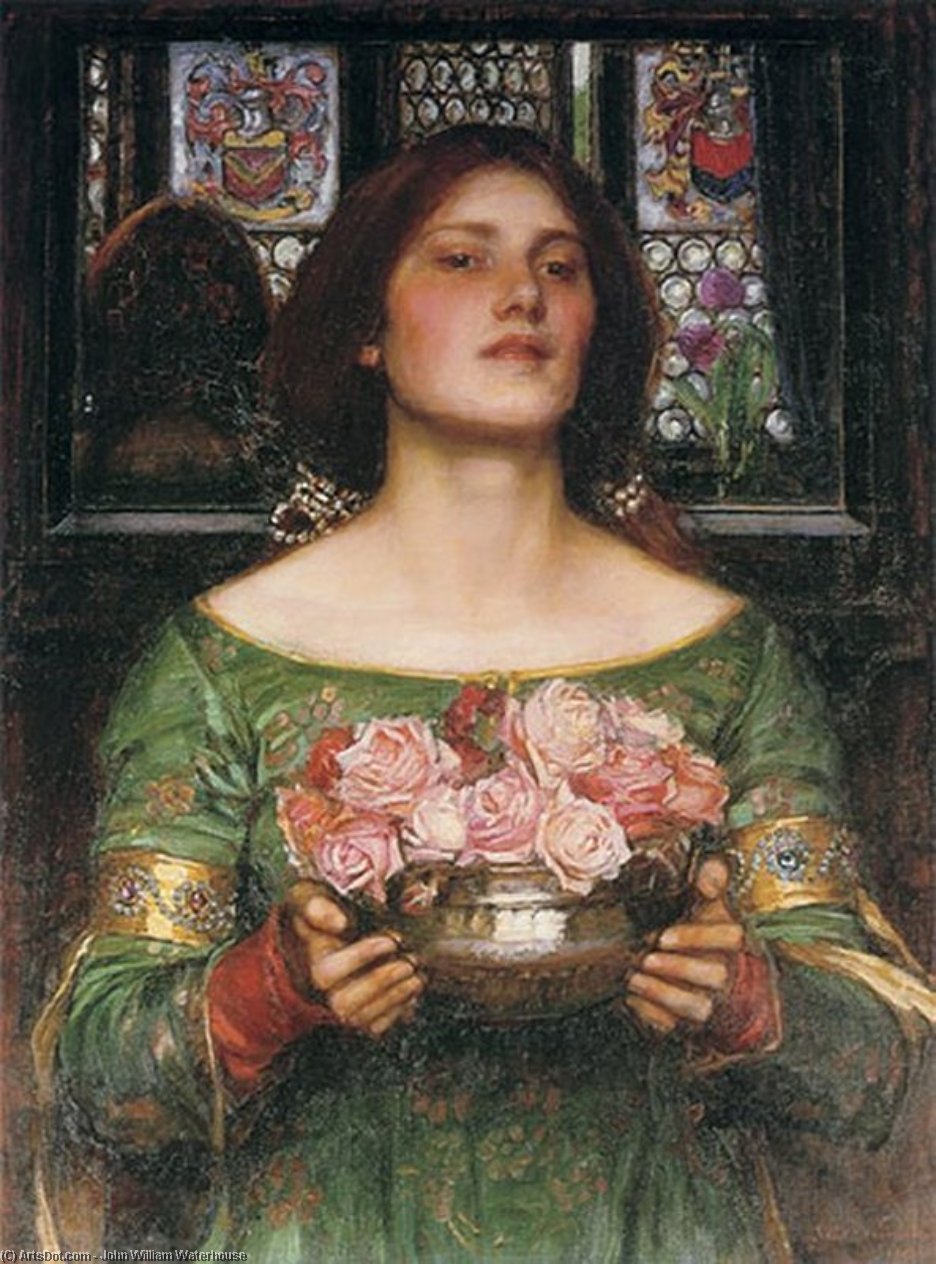
A Moment Preserved: Waterhouse's "Gather Ye Rosebuds While Ye May"
John William Waterhouse’s “Gather Ye Rosebuds While Ye May” is more than just a beautiful painting; it’s a carefully constructed meditation on time, beauty, and the poignant awareness of fleeting moments. Completed in 1908, this oil-on-canvas masterpiece exemplifies the enduring appeal of the Pre-Raphaelite movement, transporting us to a world where romanticism and classical influence intertwine with a profound sense of melancholy. The painting’s power lies not just in its exquisite detail but also in the evocative atmosphere it creates – a feeling of quiet contemplation punctuated by the undeniable allure of youth and beauty.
The Pre-Raphaelite Vision
Waterhouse, born in Rome in 1849 to English parents, was deeply influenced by his early exposure to Italian art and architecture. This heritage is immediately apparent in the painting’s meticulous attention to detail and its embrace of classical motifs. As a key figure within the Pre-Raphaelite Brotherhood, Waterhouse shared their commitment to realism, symbolism, and narrative storytelling – qualities that are vividly demonstrated here. The composition itself echoes the works of artists like Millais and Rossetti, utilizing a vertical format to emphasize the central figure and creating a sense of depth through carefully layered brushstrokes. Notice how the diffused lighting, reminiscent of a northern winter’s day, softens the edges and enhances the three-dimensionality of the scene.
Symbolism Woven into the Fabric
- The Roses: The overflowing bowl of pink roses is perhaps the most obvious symbol – representing love, beauty, and the ephemeral nature of youth. Herrick’s original poem directly references these blooms, urging viewers to seize the moment before they fade.
- Stained Glass Windows: The intricate stained glass panels depicting heraldic symbols—a shield and a banner—add layers of historical and symbolic meaning. These elements evoke notions of nobility, lineage, and the enduring legacy of the past.
- The Woman’s Gaze: The young woman's profile, gazing slightly upwards with a serene expression, invites introspection. Her contemplative posture suggests a moment of quiet reflection on the passage of time and the inevitability of change.
Technique and Texture – A Masterclass in Detail
Waterhouse’s technical skill is breathtakingly evident in every aspect of this painting. The meticulous brushwork, combined with a masterful understanding of color and light, creates a remarkable sense of realism. He skillfully renders the textures of the fabrics—the folds of the green dress, the velvet of the cushions—and the delicate petals of the roses, using layering techniques to build depth and richness. The use of line is equally important, guiding the viewer’s eye through the composition and emphasizing the structural elements within the scene. This level of detail, characteristic of Pre-Raphaelite painting, elevates “Gather Ye Rosebuds While Ye May” beyond a simple portrait; it's a testament to Waterhouse’s dedication to his craft.
An Emotional Resonance – A Timeless Appeal
Ultimately, "Gather Ye Rosebuds While Ye May" resonates with viewers on an emotional level. The painting evokes a sense of quiet dignity, romanticism, and perhaps even a touch of sadness or longing—a feeling that time is slipping away. It’s a scene frozen in time, inviting us to contemplate our own mortality and the importance of cherishing the beauty and moments that life offers. This enduring appeal has secured Waterhouse's place as one of the most beloved artists of the Pre-Raphaelite era.