A Vision of Flemish Elegance
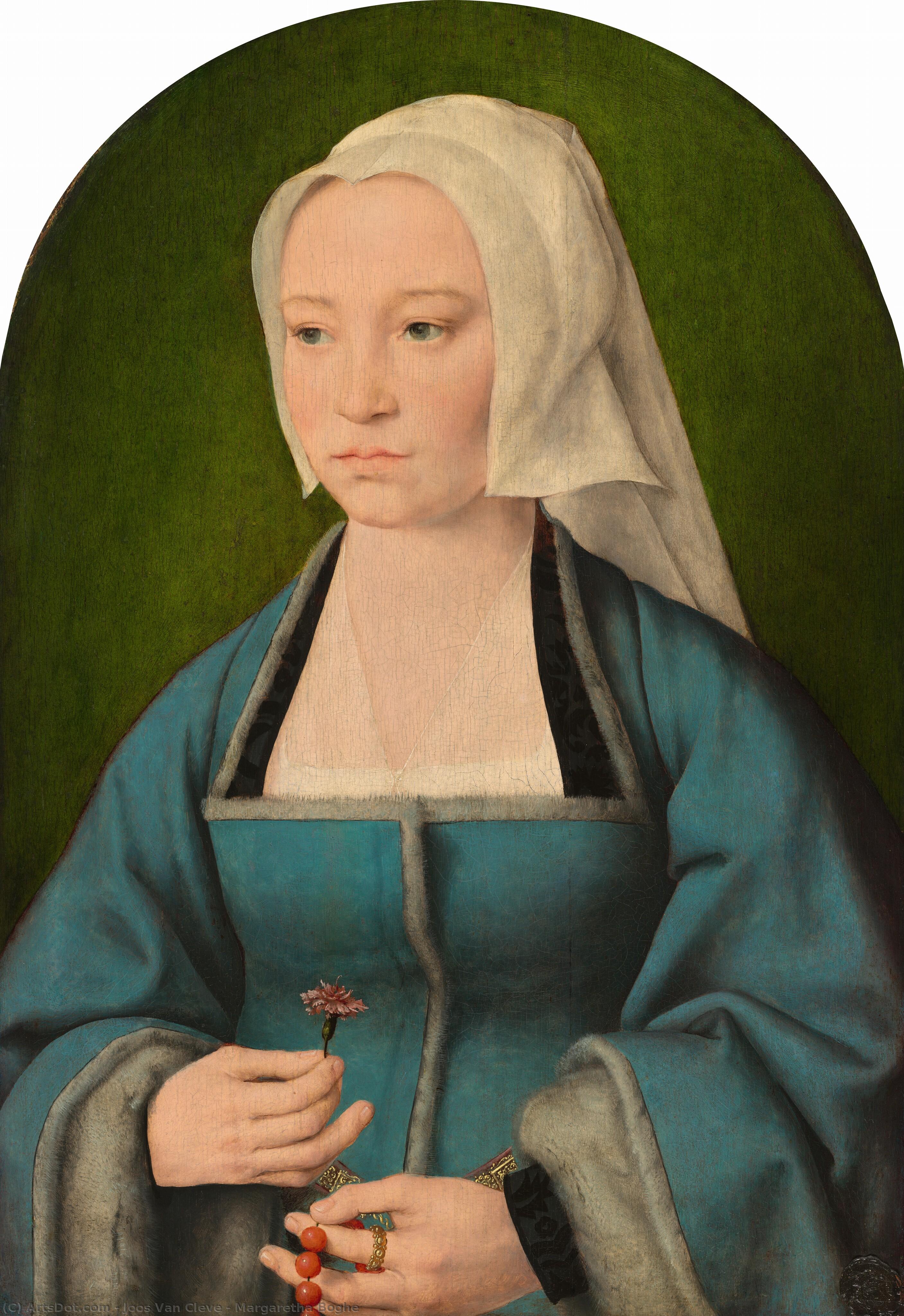
In the quiet, luminous depths of Joos van Cleve’s 1518 masterpiece, Margaretha Boghe, we encounter a moment frozen in the amber of the Northern Renaissance. This exquisite portrait, rendered with the meticulous precision characteristic of the Antwerp school, presents a young woman who seems to exist both within and beyond our time. Her presence is defined by a striking contrast of textures: the cool, smooth porcelain of her skin against the heavy, opulent folds of her peacock-blue gown. As she gazes softly toward the left, her gray eyes carry a hint of melancholic introspection, inviting the viewer into a silent dialogue that has endured for over five centuries. The composition, framed by a graceful arch, directs all focus to her heart-shaped face, creating an intimate encounter that feels remarkably personal even through the veil of history.
The technical brilliance of Van Cleve is on full display in the way light interacts with the various surfaces of the panel. Utilizing the traditional Netherlandish technique of layering thin, translucent glazes of oil paint, the artist achieves a breathtaking luminosity. This method allows light to penetrate the upper layers, reflecting off the white ground to create a glow that seems to emanate from within the subject herself. The subtle modeling of her features—the faint blush on her cheeks and the delicate contour of her lips—demonstrates a mastery of chiaroscuro that bridges the gap between the detailed realism of the North and the soft, atmospheric innovations emerging from Italy. For the discerning collector, this painting represents a pinnacle of Renaissance craftsmanship, where every brushstroke serves to build volume and life.
Symbolism and the Language of Beauty
Beyond its aesthetic splendor, Margaretha Boghe is a rich tapestry of symbolic meaning, common to the high-status portraiture of the sixteenth century. The single pink carnation held delicately in her right hand is far more than a mere botanical detail; in the iconographic language of the era, such a flower often served as a symbol of betrothal, purity, or divine love. This floral element, paired with the vibrant coral-red beads draped from her fingers, adds a rhythmic splash of color to the cool blues and greens of the composition. Even her attire—the heavy gray fur lining her sleeves and the intricate white headdress—speaks to her social standing and the prosperity of the Flemish merchant class during a period of immense cultural flourishing.
The emotional resonance of the piece lies in its restrained dignity. There is no grand gesture or dramatic movement; instead, the power of the work resides in its stillness. The deep moss-green background, which darkens toward the top of the arch, creates a sense of atmospheric depth that pushes the figure forward, making her appear almost sculptural. For interior designers and art enthusiasts alike, this painting offers a profound sense of tranquility and timelessness. A high-quality reproduction of this work does not merely decorate a space; it introduces a legacy of sophistication and a contemplative spirit, making it an ideal centerpiece for a gallery-inspired room or a refined study where history and beauty converge.