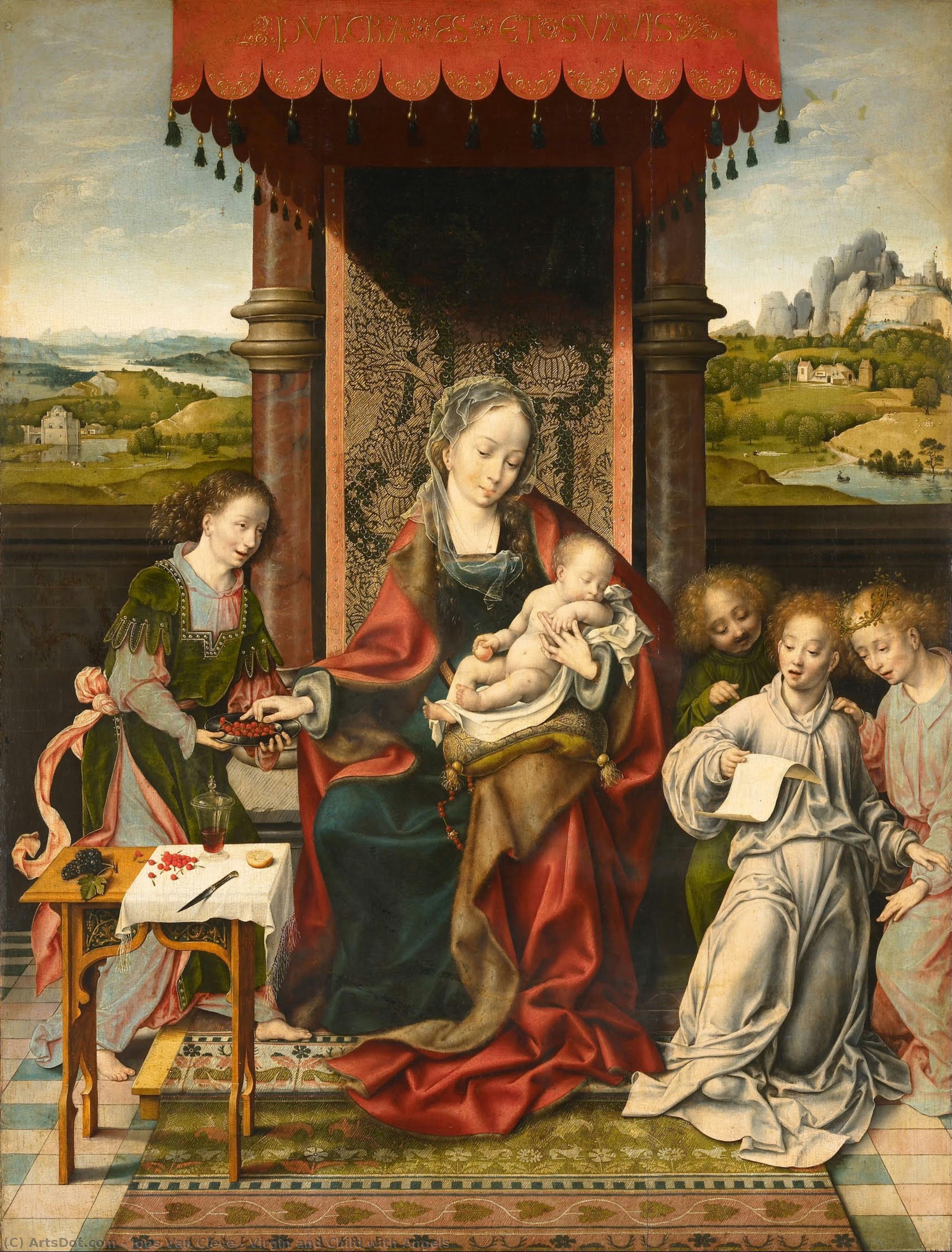
Joos van Cleve's 'Virgin and Child with Angels,' painted in 1525, exemplifies the pinnacle of Flemish Renaissance art. Executed on a monumental scale (655 x 855 cm), this triptych panel showcases Van Cleve’s masterful blending of Gothic and Early Renaissance styles—a hallmark of Antwerp's artistic milieu during his prolific period. Commissioned by influential patrons like Francis I and Henry VIII,
Explore the art of Joos van Cleve (c. 1485-1540), a key Flemish Renaissance painter known for portraits, religious scenes & landscapes. Discover his blend of traditional Netherlandish techniques with Italian influences.
Home to one of the world's finest Pre-Raphaelite collections, Liverpool's Walker Art Gallery offers an unmissable journey through Renaissance masters and British modernism that invites you to explore its timeless beauty.
A Masterpiece of Renaissance Faith: Joos van Cleve’s Virgin and Child with Angels
Joos van Cleve stands as a beacon of artistic innovation during Antwerp's golden age—a testament to the harmonious fusion of Gothic heritage and burgeoning Italian humanist ideals. This monumental panel painting, measuring 655 x 855 cm, transcends mere depiction; it embodies the spiritual fervor of its time and showcases Van Cleve’s unparalleled mastery of oil paint technique. Commissioned by influential patrons like Francis I and Henry VIII, this artwork wasn't merely decorative—it served as a powerful statement of Catholic dogma, reflecting the profound theological concerns that gripped Europe in the mid-16th century.
The Scene: A Symphony of Detail
The composition centers around Mary cradling Jesus, bathed in soft light emanating from an unseen source. Angels flank her, their drapery rendered with meticulous attention to texture—silk and gauze conveying a sense of ethereal beauty alongside polished marble surfaces that hint at regal dignity. The artist’s painstaking observation extends beyond mere visual representation; he captures the subtle nuances of gesture and expression, imbuing the figures with palpable emotion. Notably, Van Cleve skillfully juxtaposes contrasting textures – glass, fur, polished marble and translucent gauze – demonstrating his command over materiality and enhancing the overall impact of the artwork.
Technique and Innovation: The Alchemy of Oil Paint
Joos van Cleve’s technique exemplifies the advancements of Renaissance painting. Unlike tempera paints which rely on pigment bound in egg yolk, oil paint allows for layering colors gradually, achieving luminous hues and subtle gradations that were unattainable with earlier mediums. This painstaking process resulted in a surface sheen that captures light beautifully—a characteristic feature of Antwerp’s artistic milieu during this period. The artist's meticulous attention to detail is evident in every brushstroke, reflecting the prevailing belief in observation as a path to understanding God’s creation.
Symbolism: Layers of Meaning Beyond Beauty
Beyond its aesthetic splendor, “Virgin and Child with Angels” resonates with rich symbolic significance. The grapes and wine adorning the table symbolize Christ's blood and the Eucharist—the cornerstone of Catholic ritual—underscoring the painting’s theological purpose. Equally potent is the apple positioned beside the sleeping infant Jesus: a poignant allusion to Adam and Eve’s transgression, representing humanity’s fall from grace and hinting at redemption through Christ’s sacrifice. These carefully chosen emblems elevate the artwork beyond a simple depiction of motherhood; they invite contemplation on fundamental questions of faith and morality.
A Legacy Enduring Through Reproduction
Today, ArtsDot offers exceptional reproductions of Joos van Cleve's “Virgin and Child with Angels,” allowing art enthusiasts worldwide to experience the brilliance of this iconic masterpiece firsthand. Utilizing archival-quality pigments and printing methods, our reproductions faithfully capture the original artwork’s luminosity and textural richness—preserving its beauty for generations to come. Consider incorporating this stunning image into your interior design scheme; it embodies the elegance and spiritual depth that define the Renaissance spirit.