A Dialogue of Shadows and Silence
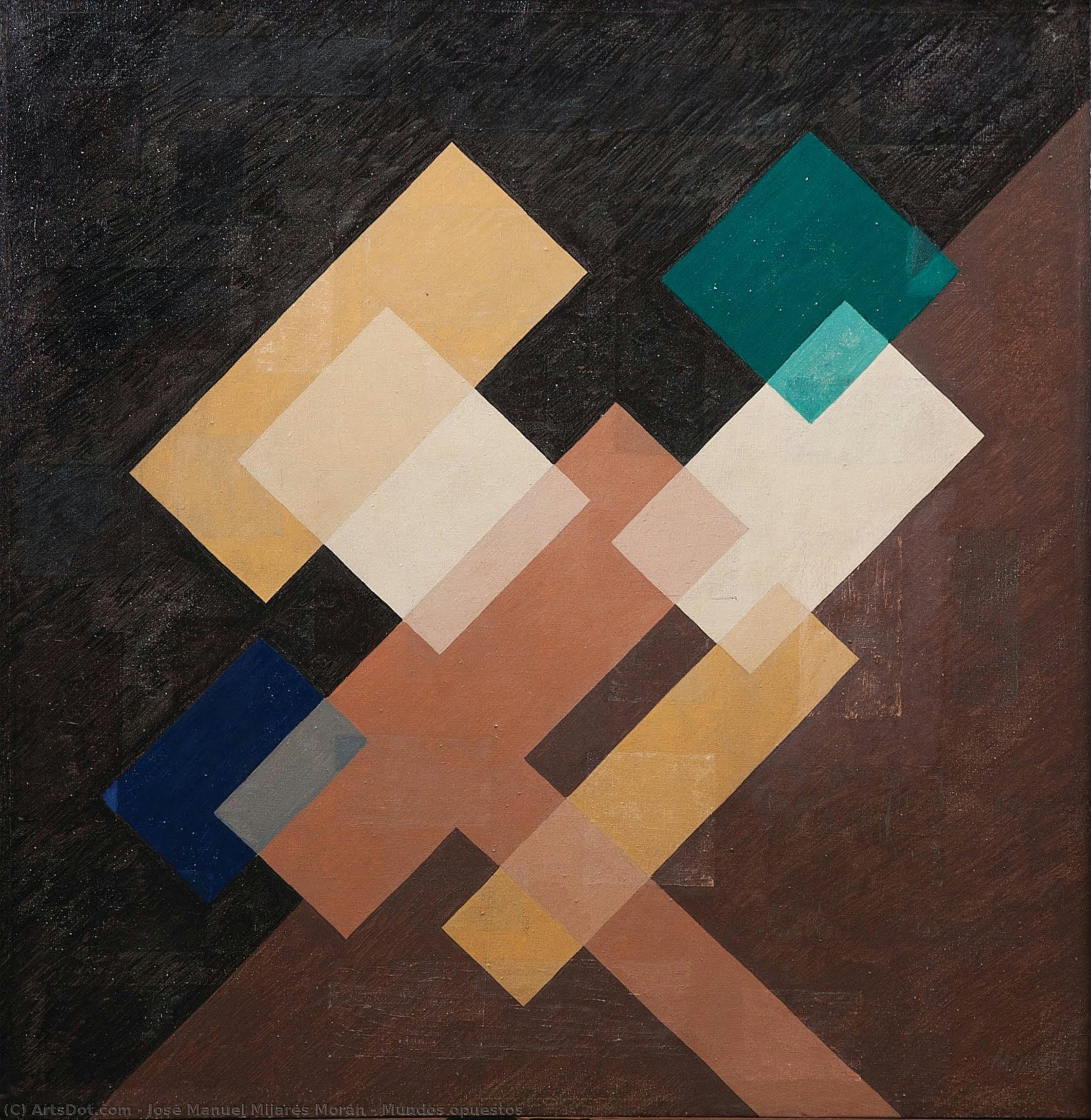
In the quietude of 1958, José Manuel Mijares Morán captured a moment that transcends mere observation, inviting us into a world where stillness speaks louder than words. His masterpiece, Mundos Opuestos—or "Opposing Worlds"—is far more than a depiction of figures; it is a profound meditation on the delicate tension between intimacy and distance. At first glance, the viewer is drawn to the central pair, a man and a woman standing in close proximity against a muted, earthy backdrop. Yet, there is a haunting quality to their arrangement. By turning their faces away from the observer, Mijares creates a veil of privacy, forcing us to become voyeurs of an unspoken connection. We are left to wonder what occupies their gaze beyond the frame, fostering a sense of mystery that lingers long after the initial encounter with the canvas.
The composition is masterfully layered, utilizing depth to suggest a much larger, breathing social landscape. While the central figures command our immediate attention, the subtle presence of other individuals positioned further back in the scene adds a layer of narrative complexity. This technique prevents the painting from feeling like a static portrait, instead imbuing it with the atmosphere of a lived-in moment, perhaps a fleeting encounter in a public space or a shared breath in a crowded room. The way these background figures are rendered allows for an understated drama, where the weight of the social context supports, rather than overwhelms, the central emotional core of the piece.
The Artistry of Light and Earth
Technically, Mundos Opuestos is a triumph of controlled emotion through color and light. Mijares employs a palette dominated by deep, resonant browns and subtle ochre tones, creating a somber yet warm environment that feels grounded in the earth. This monochromatic leaning serves to heighten the impact of his use of chiaroscuro. Through the dramatic interplay of light and shadow, the artist sculpts the forms of the subjects, giving their clothing and silhouettes a tangible, three-dimensional presence. The smooth, meticulous brushstrokes and seamless blending create an illusionistic surface that mimics the soft textures of reality, making the scene feel both dreamlike and strikingly present.
The stylistic essence of the work sits at a fascinating crossroads between the burgeoning Latin American Pop Art movement and the lingering, psychological depths of Surrealism. While the subject matter touches upon the everyday, the execution leans into the symbolic. The "opposing worlds" suggested by the title may refer to the internal landscapes of the lovers—their separate thoughts and histories—colliding in a single physical space. For the collector or interior designer, this painting offers a sophisticated anchor for a room. Its muted tones and profound emotional gravity make it an ideal centerpiece for spaces designed for contemplation, providing a sense of historical weight and artistic prestige that elevates any curated collection.