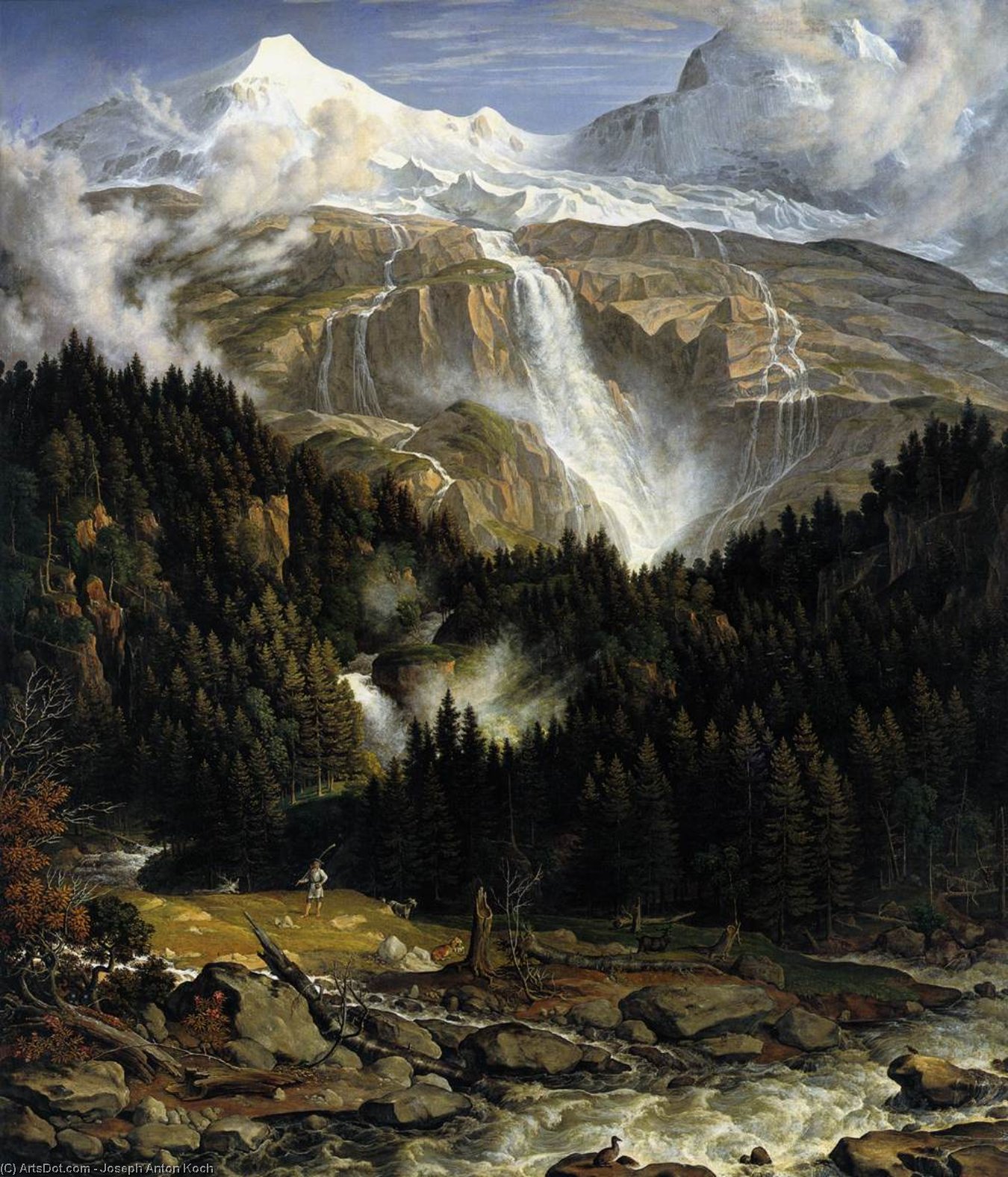
Joseph Anton Koch (1768-1839) was a pivotal Austrian painter bridging Neoclassicism & Romanticism. Known for his 'heroic' landscapes, mountainous scenes, and influence on German landscape art. Explore his dramatic compositions & legacy!
Explore European Art of the 18th & 19th Centuries at Munich's Neue Pinakothek, featuring masterpieces by Rembrandt, Monet, Klimt and more! Currently undergoing renovation until 2030.
Joseph Anton Koch: Bridging Neoclassicism and Romanticism
Joseph Anton Koch (1768-1839) stands as a singular figure in Austrian art history—a painter who deftly navigated the shifting currents of neoclassicism into the burgeoning fervor of German romanticism. Born in Elbigenalp, Austria, his early life was marked by pastoral simplicity; tending cattle instilled in him an appreciation for the natural world that would profoundly shape his artistic vision. A fortuitous recommendation from Bishop Umgelder secured him a prestigious academic education at Stuttgar’s Karlsschule, where discipline and intellectual pursuit converged. However, Koch's youthful spirit rebelled against such constraints, leading to a brief but formative wanderlust through France and Switzerland before he finally established himself in Rome in 1795.
Here, amidst the artistic crucible of the Roman Baroque, Koch found kinship with fellow painter Asmus Jacob Carstens, adopting Carstens’ “heroic” aesthetic—a conscious departure from the prevailing stylistic trends of his time. This embrace of grandeur and dramatic composition signaled a decisive move away from the restrained elegance championed by artists like Jacques-Louis David, marking him as one of the foremost practitioners of neoclassical landscape painting. Koch's canvases prioritized monumental scale and idealized beauty, reflecting the influence of classical sculpture and architecture—particularly Michelangelo’s Sistine Chapel ceiling—which had captivated European intellectuals and artists alike. He sought to capture not merely visual likeness but also an emotional response from the viewer, conveying a sense of awe and reverence for the sublime power of nature.
- Subject Matter: Koch's oeuvre is dominated by depictions of Alpine landscapes, capturing the majesty of towering peaks and cascading waterfalls with meticulous detail. He frequently chose dramatic vistas—often illuminated by twilight or dawn—to heighten the emotional impact of his compositions.
- Style: Koch’s style exemplifies Neoclassicism’s emphasis on clarity, balance, and idealized form. Unlike Romantic painters who prioritized expressive brushwork and subjective emotion, Koch adhered to strict compositional rules derived from classical principles.
- Technique: He employed a masterful technique of etching and mezzotint—a process that allowed for subtle tonal gradations and exceptional precision—to achieve remarkable realism in his landscapes. The artist’s use of stylus indentations and white highlighting further enhanced the textural qualities of his paintings, creating an illusion of depth and luminosity.
The Schmadribach Falls, painted in 1821, exemplifies Koch's commitment to capturing both visual accuracy and emotional resonance. Situated in Lauterbrunnen Valley, Switzerland—a region celebrated for its spectacular waterfalls—the scene depicts a panoramic view of the Schmadribach cascade against the backdrop of imposing mountains. Koch skillfully rendered the interplay of light and shadow, emphasizing the grandeur of the alpine terrain and conveying a sense of sublime beauty. The artist’s meticulous attention to detail—including the snow-capped peaks of Grosshorn and Breithorn—underscores his fascination with geological formations and their symbolic significance.
Symbolism: Koch's landscapes frequently served as vehicles for exploring philosophical ideas rooted in Kantian aesthetics, reflecting a belief that art could inspire contemplation and elevate the human spirit. The monumental scale of his paintings conveyed a sense of awe and humility before the forces of nature—a sentiment echoed by Romantic artists who sought to express the emotional experience of encountering sublime vistas. Koch’s work represents a pivotal moment in artistic history—a bridge between the rational idealism of Neoclassicism and the emotive fervor of Romanticism, securing his place as one of Austria's most influential landscape painters.
Historical Context: Koch’s artistic career coincided with the rise of German Romanticism, fueled by intellectual currents championed by figures like Goethe and Friedrich Nietzsche. This movement rejected Enlightenment rationalism in favor of intuition, imagination, and emotion—themes that found expression in landscapes imbued with spiritual grandeur. Koch's paintings resonated deeply with audiences eager to reconnect with nature’s power and beauty—a reaction against the urbanizing pressures of industrialization and a yearning for aesthetic ideals rooted in antiquity.
Koch’s legacy extends beyond his artistic achievements; he fostered an environment of intellectual exchange within Rome’s artistic community, nurturing collaborations with fellow painters like Carstens and establishing himself as a respected mentor. His influence can be discerned in the works of subsequent generations of Austrian landscape artists—artists who embraced Koch's heroic aesthetic and sought to capture the sublime grandeur of Alpine scenery. Today, reproductions of The Schmadribach Falls continue to inspire admiration for Koch’s artistic vision and his enduring contribution to European art history.