Symbolism and the Language of Devotion
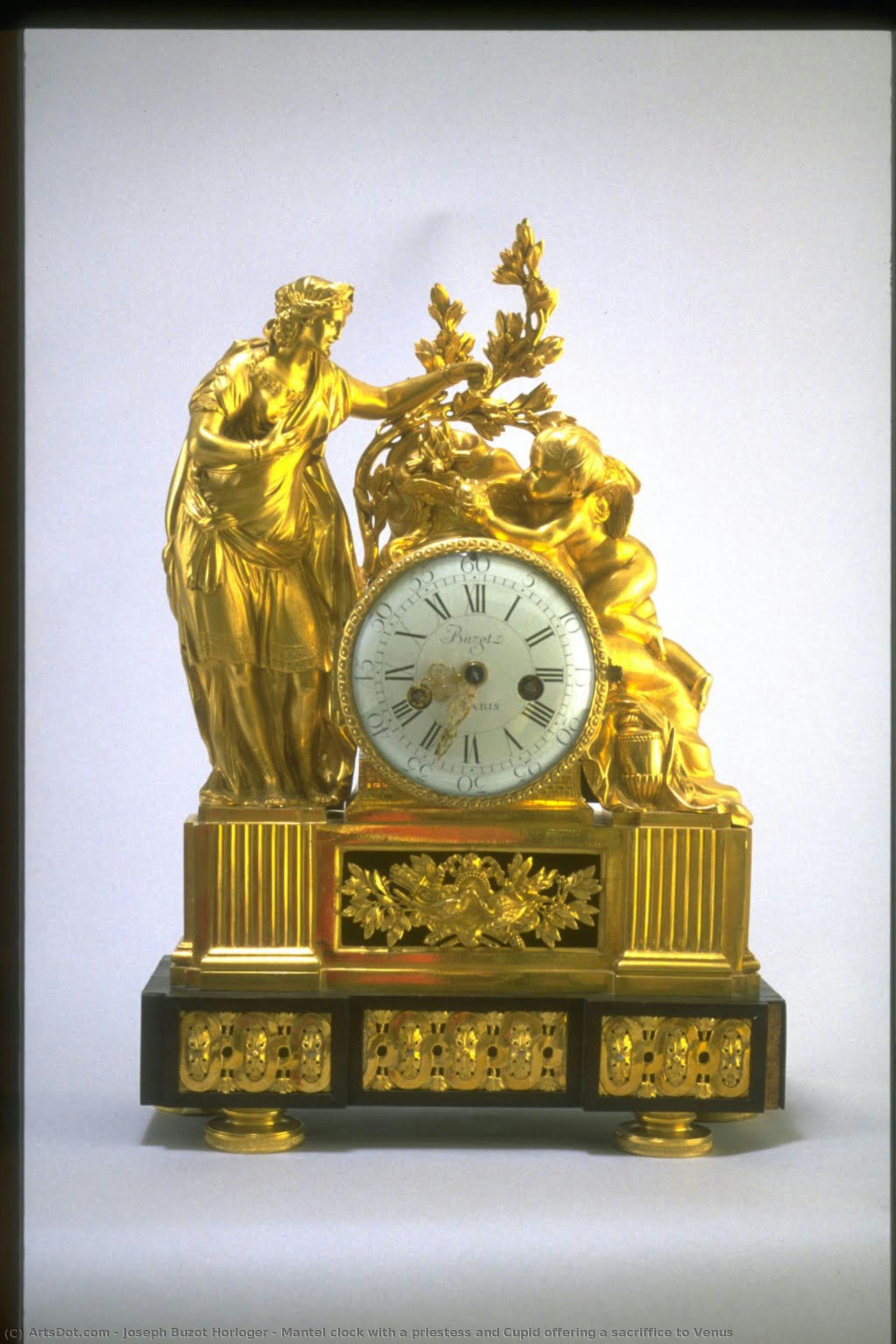
The composition of this exquisite timepiece is steeped in the symbolic language of the Enlightenment era. By depicting a priestess and Cupid—the winged messenger of desire—performing a sacrifice, the artist evokes themes of piety, passion, and the cyclical nature of time itself. The presence of Venus in the background acts as a celestial witness to the scene, grounding the movement of the clock's hands within a larger cosmic order. As the Roman numerals mark the passing hours, they do so amidst a tableau of mythological permanence. For the discerning collector, this piece offers a deep emotional resonance, representing the delicate balance between the fleeting moments of human life and the enduring legends of antiquity.
The interplay between the figures creates a sense of intimate drama. The interaction between the priestess and Cupid suggests a dialogue that transcends the physical medium, pulling the observer into their silent, sacred ceremony. This narrative depth makes the clock an extraordinary focal point for any curated space, offering a conversation piece that bridges the gap between historical storytelling and decorative splendor.
A Masterpiece for the Modern Interior
For interior designers and lovers of classical aesthetics, this reproduction offers an unparalleled opportunity to infuse a contemporary setting with historical soul. The warmth of the gold trim and the intricate sculptural elements provide a sophisticated texture that complements both opulent traditional mantels and minimalist modern consoles. Its small scale—measuring a delicate 4 x 1 cm in its original miniature form—belies the immense grandeur of its subject matter, making it an ideal accent for a library, a study, or a curated gallery wall.
Owning a high-quality reproduction of such a significant work from the era of Joseph Buzot allows one to possess a fragment of French history. It is an investment in atmosphere, bringing a sense of prestige and intellectual curiosity to any room. Whether placed as a centerpiece in a grand hall or tucked into a quiet corner of a reading nook, this clock serves as a luminous reminder of an age when even the most functional objects were treated as canvases for the sublime.