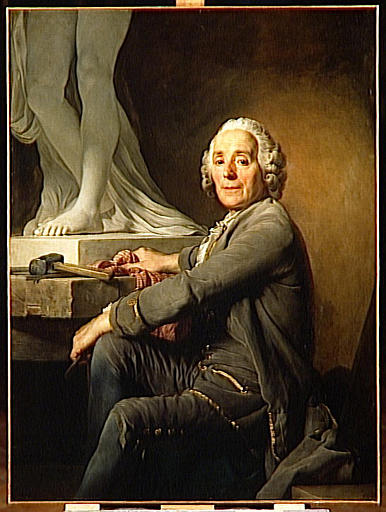
A Moment of Artistic Reverie: Christophe Gabriel Allegrain by Joseph Siffred Duplessis
The portrait of Christophe Gabriel Allegrain, sculpted by Joseph Siffred Duplessis and painted around 1774, isn’t merely a likeness; it's a carefully constructed tableau of intellectual pursuit and artistic confidence. It captures a pivotal moment in the life of a prominent French sculptor, inviting us into his studio—a space brimming with creative energy and quiet contemplation. The painting immediately establishes an atmosphere of thoughtful engagement, a scene both intimate and profoundly resonant with the spirit of the Enlightenment.
Duplessis, a master of capturing the nuances of personality within a formal portrait style, skillfully employs a muted palette dominated by grays, blues, and beiges—tones that lend a sense of dignified restraint to the composition. The lighting is dramatic, a strong directional source illuminating Allegrain’s face and upper body while leaving the background shrouded in shadow. This chiaroscuro effect not only sculpts the figure's form but also draws our attention directly to his expression – a subtle blend of concentration and self-assuredness. The artist has masterfully used light to highlight the textures of Allegrain’s clothing, from the smooth folds of his coat to the rough grain of the marble block behind him, grounding the scene in tangible reality.
The Sculptor's Studio: A World of Creation
Allegrain is seated within a richly appointed studio, a space that speaks volumes about his profession and status. The unfinished sculpture—a testament to his ongoing work—looms large in the background, providing a visual anchor and symbolizing the dynamic process of artistic creation. It’s not simply a backdrop; it's an integral part of the narrative, suggesting the sculptor’s dedication and the constant dialogue between conception and execution. The arrangement is carefully balanced: Allegrain, positioned slightly off-center to the right, commands attention while the statue subtly asserts its presence on the left, creating a harmonious yet dynamic asymmetry.
Duplessis's technique reveals a deep understanding of both portraiture and sculpture. He meticulously renders Allegrain’s features – the thoughtful gaze, the slightly furrowed brow—with remarkable precision. The soft, flowing lines defining his clothing and face contribute to an overall sense of elegance and refinement, characteristic of 18th-century French portraiture. The artist's ability to capture not just physical likeness but also a palpable sense of character is truly impressive.
Symbolism and Context: A Portrait of the Age
This painting transcends a simple depiction of a sculptor; it’s a window into the intellectual climate of 18th-century France. Allegrain's pose, relaxed yet engaged, reflects the confidence and optimism of an era marked by artistic flourishing and philosophical inquiry. The presence of the unfinished sculpture speaks to the importance of process and experimentation within the creative realm – values highly prized during this period. The work is firmly rooted in the Rococo style, known for its elegance, grace, and emphasis on beauty, yet it also anticipates the emerging Neoclassical movement with its focus on order, reason, and classical ideals.
Historical research reveals that Allegrain was a highly respected sculptor, celebrated for his ability to capture both the physical form and the inner spirit of his subjects. His work served as a visual record of an era, reflecting the values and aspirations of French society. The painting’s enduring appeal lies in its ability to transport us back to a time when art was not merely decoration but a powerful means of communication and self-expression.
A Timeless Masterpiece: Reproduction Possibilities
Reproductions of Duplessis's portrait offer an exceptional opportunity to bring this captivating scene into your home or office. Whether you choose a canvas print, a framed giclée, or a high-quality digital reproduction, you’ll experience the same rich colors, intricate details, and evocative atmosphere that captivated viewers in the 18th century. This artwork is more than just an image; it's a portal to a world of artistic brilliance—a testament to the enduring power of human creativity.