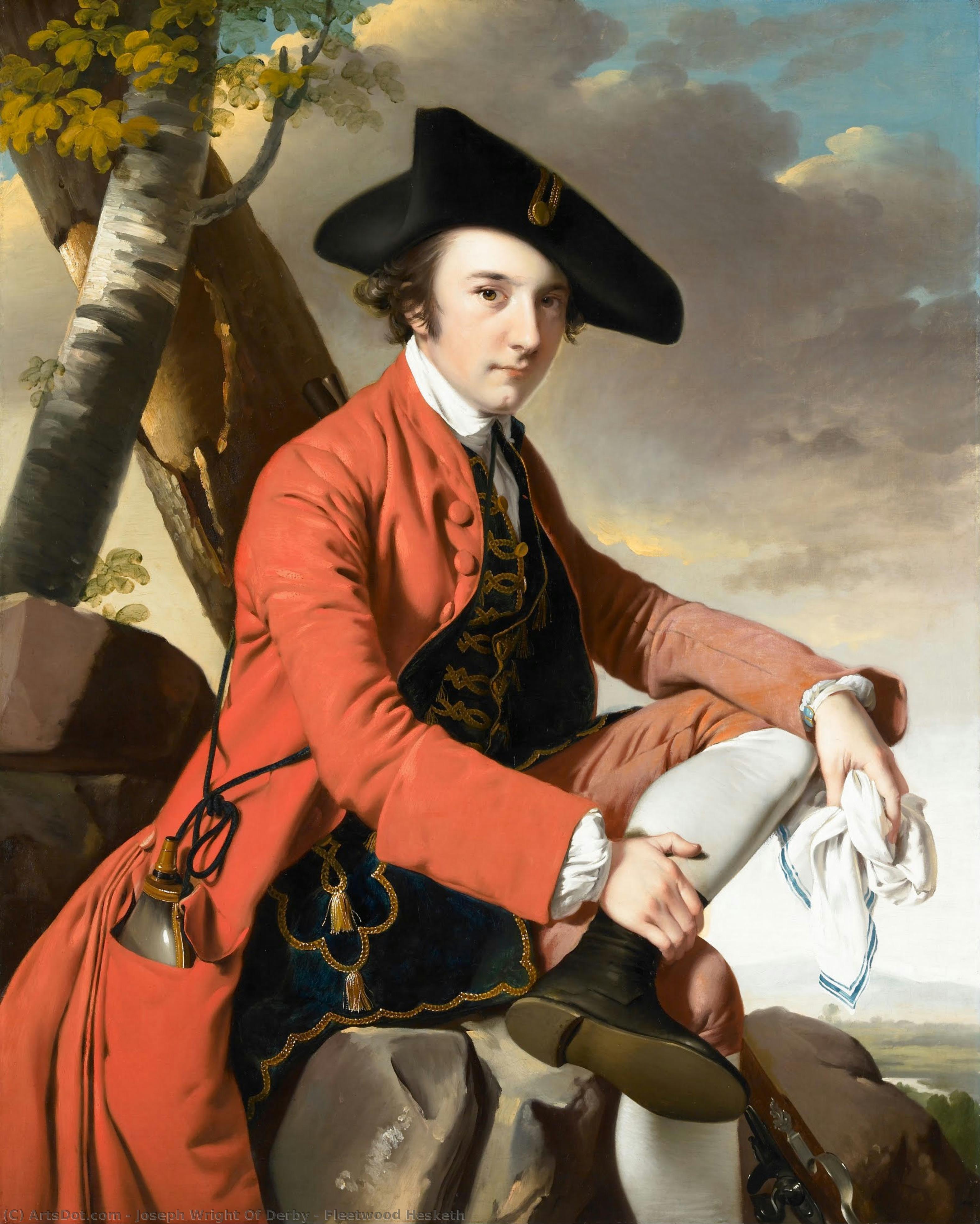
The Gaze and the Landscape – Joseph Wright’s Fleetwood Hesketh
Joseph Wright of Derby's “Fleetwood Hesketh,” painted in 1769, is more than a simple portrait; it’s a meticulously constructed tableau vivant, capturing a specific moment in time and revealing the burgeoning social dynamics of late 18th-century Lancashire. The subject, Fleetwood Hesketh, a young man from a family deeply rooted in both landed gentry and mercantile trade – his lineage tracing back to the influential Fleetwood family who had long controlled much of the coastal region – is presented with an arresting directness. He sits poised on a rugged outcrop, not entirely isolated but clearly occupying a space of quiet contemplation, his gaze fixed squarely upon the viewer. This isn’t a flattering elevation; Wright doesn't shy away from the subject’s physicality, presenting him as a man of substance and bearing, yet simultaneously imbued with an air of understated confidence.
The backdrop is equally significant. It’s not a grand vista or a meticulously rendered landscape, but rather a hazy, atmospheric expanse – a suggestion of distance achieved through subtle gradations of tone and the careful manipulation of light. This deliberate ambiguity invites speculation; we are left to imagine the rolling hills and coastal views that lie beyond the frame, anchoring the figure firmly within his local environment. The composition itself is remarkably balanced, drawing our eye directly to Hesketh’s face – a study in controlled expression, hinting at both intelligence and perhaps a touch of wry amusement.
Neoclassical Precision Meets Derby’s Dramatic Light
Wright's masterful technique seamlessly blends the conventions of Neoclassicism with his signature dramatic use of light. The painting is executed in oil on canvas, utilizing a layering technique that builds up rich textures and subtle gradations of color. Notice the meticulous detail applied to Hesketh’s clothing – the folds of his coat, the texture of his velvet waistcoat, all rendered with painstaking accuracy. Yet, this precision isn't cold or sterile; Wright employs a loose, expressive brushstroke, particularly evident in the background, creating an illusion of movement and depth.
Crucially, Wright’s use of light is what truly elevates the work. He masterfully utilizes chiaroscuro – the dramatic contrast between light and shadow – to sculpt Hesketh's form and imbue the scene with a palpable sense of drama. The strong light source, originating from the upper left corner, casts deep shadows that define his features and create an almost theatrical effect. This technique wasn’t entirely new at the time, but Wright harnessed it with exceptional skill, transforming a simple portrait into a compelling study of form and atmosphere.
A Portrait of Provincial Values and Mercantile Taste
“Fleetwood Hesketh” offers a fascinating glimpse into the evolving artistic landscape of 18th-century England. Wright’s presence in Liverpool between 1768 and 1771 had a profound impact on local artists, injecting a new dynamism into provincial art. The painting reflects this fusion of influences – the formal elegance of Neoclassicism coexisting with the burgeoning commercial spirit of the industrializing city. Hesketh’s attire—a testament to his family's landed wealth and mercantile connections—symbolizes both status and prosperity.
Furthermore, the painting speaks to a broader cultural shift. The subject’s direct gaze challenges traditional portrait conventions, inviting an intimate connection with the viewer. It suggests a confidence and self-awareness that was becoming increasingly valued in the era of Enlightenment thought. Wright wasn't simply depicting a man; he was capturing a personality, a spirit – a reflection of the changing values of a society on the cusp of transformation.
Research & Legacy