A Stark Portrait of Power and Providence
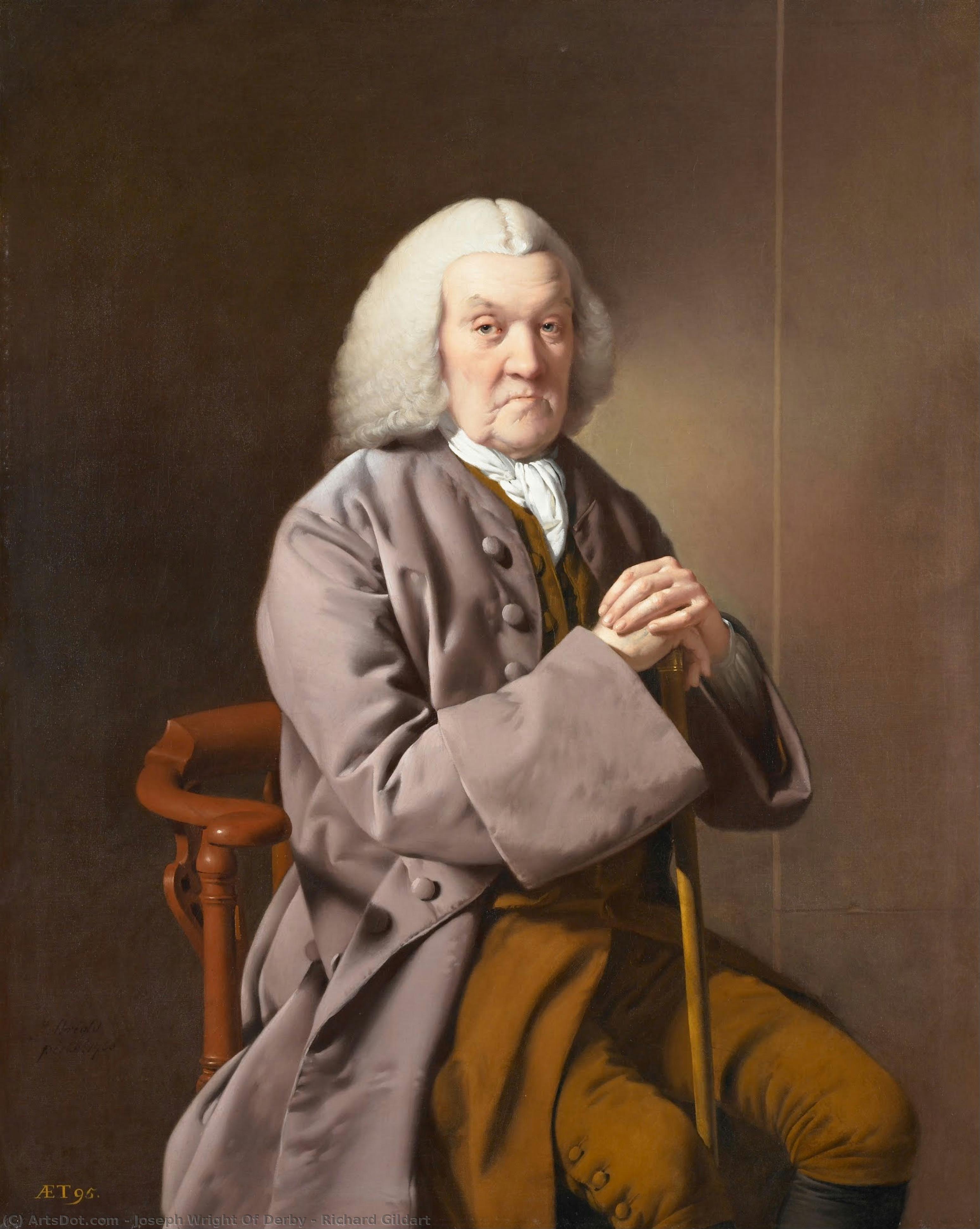
Joseph Wright of Derby’s 1768 portrait of Richard Gildart is more than a simple likeness; it's a meticulously constructed tableau brimming with quiet intensity and subtle, yet profound, symbolism. Captured during a pivotal moment in the burgeoning industrial landscape of Liverpool, this painting offers a rare glimpse into the life – and the complexities – of a man deeply entwined with both the wealth and the moral ambiguities of his era. Gildart, a prominent merchant involved in transatlantic trade, sits not as a triumphant figure flaunting his success, but rather as a dignified, almost austere presence within a carefully orchestrated space.
Wright’s masterful use of chiaroscuro – the dramatic interplay of light and shadow – immediately draws the viewer's eye to Gildart’s face. The stark illumination highlights every line etched by time and experience, revealing a weathered countenance that speaks volumes about his years navigating the turbulent currents of commerce and society. The muted tones surrounding him create an atmosphere of contemplative seriousness, suggesting a man wrestling with the weight of his responsibilities and perhaps even the consequences of his actions.
The Setting: A Stage for Reflection
The composition itself is remarkably deliberate. Gildart is seated in a simple wooden chair, its unadorned form contrasting sharply with the richly textured fabrics of his attire – a dark velvet jacket and a crisp white shirt. A walking stick rests at his feet, a subtle symbol of both age and authority. The background is deliberately sparse, consisting only of a plain wall, which serves to further isolate Gildart and intensify the focus on his character. This minimalist approach forces the viewer to confront him directly, demanding an honest assessment of his presence.
Notably, two figures are present in the periphery – a young man and a woman, seemingly engaged in conversation. Their inclusion introduces an element of domesticity and perhaps even familial connection, hinting at Gildart’s personal life beyond the world of trade. However, their relative smallness and muted colors suggest they occupy a secondary role within the portrait, reinforcing the central importance of the subject himself.
A Window into the Age of Enlightenment
Wright's painting is inextricably linked to the broader context of the late 18th century – an era marked by rapid industrial growth, scientific discovery, and a growing awareness of social inequalities. Liverpool, at this time, was a thriving port city fueled by the transatlantic slave trade, a morally fraught industry that provided immense wealth for merchants like Gildart. The painting doesn’t shy away from this reality; instead, it presents it with a measured restraint, inviting viewers to contemplate the ethical dilemmas inherent in such an enterprise.
Furthermore, Wright's work aligns with the philosophical currents of the Enlightenment, particularly the emphasis on observation and reason. His meticulous attention to detail – the texture of Gildart’s clothing, the subtle nuances of his expression – reflects a desire to capture not just a likeness but also the essence of the subject’s character. The painting can be interpreted as an exploration of human nature itself, examining the interplay between power, responsibility, and morality.
A Legacy of Dramatic Light
“Richard Gildart” stands as a testament to Joseph Wright's extraordinary talent for capturing the spirit of his time. It’s a portrait that transcends mere representation, offering a profound meditation on the complexities of human existence within a rapidly changing world. Reproductions of this iconic work continue to resonate with viewers today, prompting reflection on the enduring questions of wealth, power, and the legacy we leave behind.