An Intimate Encounter: The Soul of Motherhood
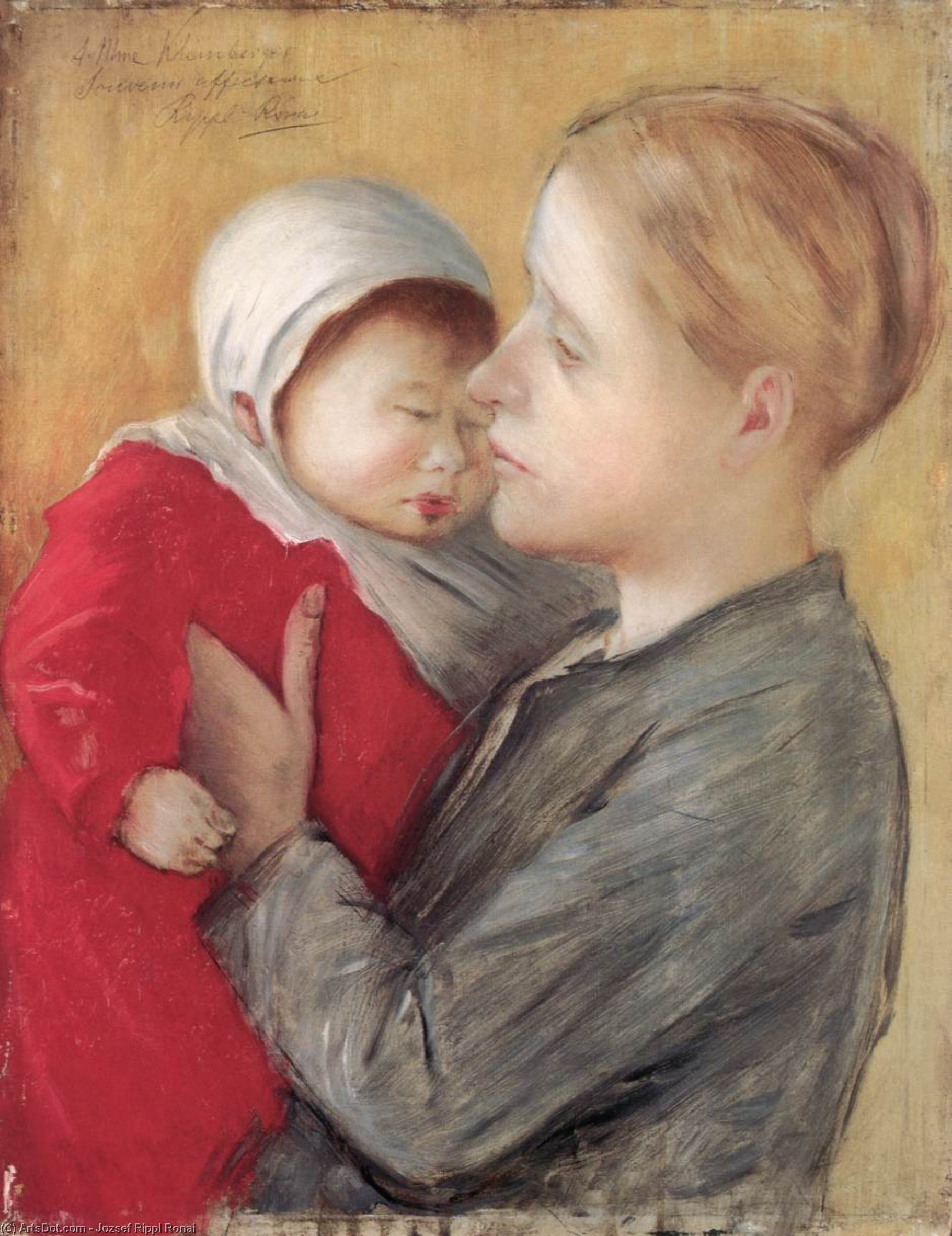
In the quiet, tender moments captured within József Rippl-Rónai’s Mother with Child, we are invited into a sanctuary of profound affection. Painted in 1890, this masterpiece transcends a mere portrait to become an evocative study of the primal bond between parent and infant. The composition centers on a woman cradling her child, their bodies entwined in a way that suggests a world existing only for the two of them. As the viewer gazes upon the scene, there is an immediate sense of warmth; the mother’s protective embrace and the baby's gentle orientation toward her create a closed loop of devotion. This intimacy is further enriched by the presence of subtle figures in the periphery, which ground this private moment within a larger, lived-in reality, adding layers of depth to the domestic narrative.
The atmosphere of the painting is defined by a luminous, golden hue that bathes the subjects in a soft, amber glow. This choice of palette does more than just illuminate the scene; it imbues the canvas with a sense of nostalgia and comfort, much like the warmth of sunlight filtering through a nursery window. The background, rendered in gentle yellowish tones, provides a dreamlike quality that allows the central figures to emerge with striking clarity. For collectors and interior designers alike, this use of light offers a versatile emotional anchor for any space, providing a sense of tranquility and timelessness that can transform a room into a place of reflection.
A Masterclass in Post-Impressionist Technique
As a pivotal figure in the Nabi movement, Rippl-Rónai brought a revolutionary approach to Hungarian modernism, and Mother with Child serves as a brilliant testament to his technical prowess. The artist moves away from the rigid realism of previous generations, instead embracing the expressive potential of bold colors and simplified forms. His brushwork is deliberate yet fluid, creating textures that feel alive under the light. By utilizing the principles of Post-Impressionism and Symbolism, he manages to capture not just the physical likeness of the mother and child, but the very essence of their emotional connection.
The technique employed here is a sophisticated balance of structure and spontaneity. While the forms are simplified to emphasize the emotional weight of the subjects, the application of paint retains a vibrant energy that prevents the scene from feeling static. This mastery of color and form makes the piece an exceptional choice for those seeking high-quality oil on canvas reproductions. A hand-painted version of this work allows the nuanced interplay of light and shadow to be felt physically, bringing the historical significance of the Magyar Nemzeti Galéria’s treasures directly into a contemporary home or gallery setting.
Historical Significance and Lasting Legacy
To understand Mother with Child is to understand a turning point in Hungarian art history. Created during a period of intense artistic experimentation, the painting reflects Rippl-Rónai’s journey through the prestigious academies of Munich and Paris. It stands as a bridge between the classical traditions of his predecessors and the avant-garde movements that would define the 20th century. The work is not merely a depiction of a family; it is a symbol of the shift toward subjectivity, where the artist's internal emotional response to the subject becomes as important as the subject itself.
Today, this painting remains a cornerstone of Hungarian modernism, celebrated for its ability to capture the beauty of everyday life through a lens of profound emotion. Whether viewed as an academic triumph or a piece of decorative inspiration, it continues to resonate with anyone moved by the themes of love, protection, and the enduring strength of human connection. For the discerning art lover, owning a reproduction of this work is an opportunity to possess a fragment of history—a window into a moment of pure, unadulterated tenderness that has survived well over a century.