Juan Carreño de Miranda’s “Assumption of the Virgin”: A Baroque Tapestry of Faith and Light
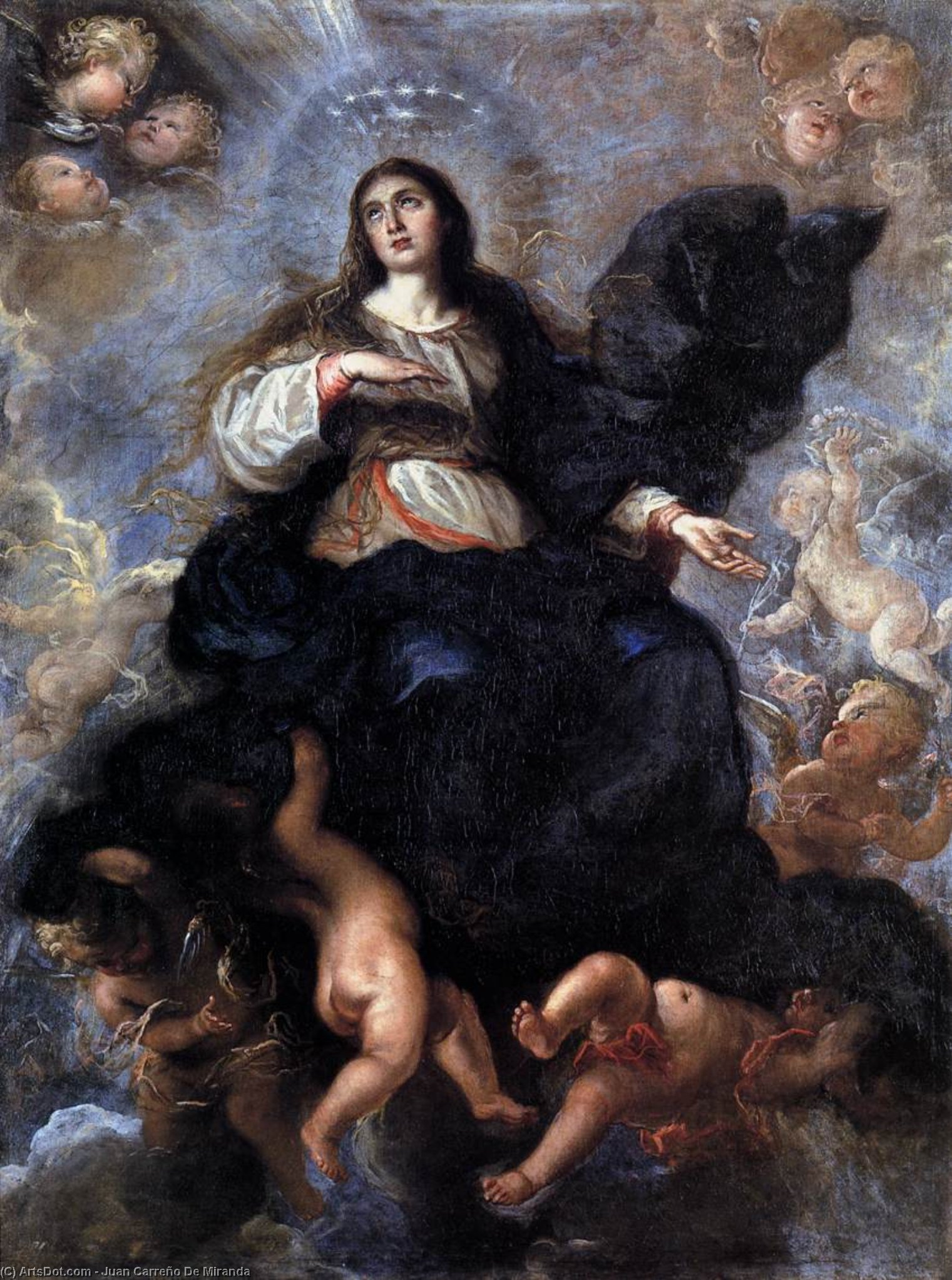
Juan Carreño de Miranda's "Assumption of the Virgin," painted in 1657, isn’t merely a depiction of a pivotal biblical event; it’s a profound meditation on faith, divine grace, and the exquisite artistry of the Spanish Baroque. This monumental canvas, measuring 167 x 125 cm, transcends its physical dimensions to envelop the viewer in a world of luminous color, dynamic movement, and deeply resonant symbolism. More than just a religious scene, it’s a testament to Carreño's mastery of light, composition, and his profound understanding of the emotional power inherent in portraying moments of spiritual transcendence.
The painting immediately draws the eye to the central figure – Mary, bathed in an ethereal glow that seems to emanate from within. She floats serenely amidst a swirling vortex of clouds, her hands raised in a gesture of supplication and acceptance. The composition is meticulously structured around a classical pyramidal form, with Mary at its apex, directing our gaze upwards towards the celestial realm. Below her, a multitude of cherubic angels – some reaching out to support her ascent, others gazing upward in awe – contribute to the sense of divine orchestration. The inclusion of the apostles, rendered with a subtle realism that contrasts beautifully with the idealized depiction of Mary, anchors the scene in earthly reality while simultaneously elevating it to a realm beyond human comprehension.
A Masterclass in Baroque Technique and Color
Carreño’s skill as a painter is evident in every brushstroke. The application of paint is remarkably rich and layered – an *impasto* technique that creates a palpable sense of texture and depth. Notice how the light seems to bounce off the voluminous drapery, sculpted with meticulous detail yet imbued with a fluidity that suggests movement and airiness. The color palette is both opulent and restrained; deep blues and golds dominate, creating a dramatic contrast against the softer hues of the clouds and the rosy tones of Mary’s garments. This masterful use of color isn't simply decorative; it serves to heighten the emotional impact of the scene, conveying a sense of majesty and spiritual grandeur.
The painting’s origins lie in the workshop of the renowned painter Juan de Valdés Leal, whose influence on Carreño is readily apparent. Carreño himself was deeply influenced by Velázquez, absorbing his techniques for capturing light and portraying human emotion with remarkable subtlety. The careful study of earlier works, particularly those of El Greco – as evidenced by the research available at the Metropolitan Museum of Art – reveals a shared interest in dramatic lighting and expressive gestures. However, Carreño’s interpretation is distinctly his own, characterized by a greater emphasis on realism and a more balanced composition.
Symbolism and Spiritual Resonance
The "Assumption of the Virgin" is laden with symbolic meaning. The act itself – Mary's ascension into heaven – represents her glorification as the Mother of God and a potent symbol of hope for believers. The twelve stars adorning her crown are a direct reference to the prophecies surrounding the birth of Jesus, signifying her divine status. The empty tomb below serves as a poignant reminder of Christ’s sacrifice and Mary's role in his redemption.
Furthermore, the painting reflects the broader cultural context of 17th-century Spain – a period marked by fervent religious devotion and a flourishing artistic tradition. The influence of the Catholic Church permeated all aspects of life, and art served as a powerful tool for conveying religious messages and reinforcing faith. The meticulous detail and emotional intensity of “Assumption of the Virgin” are indicative of this era’s commitment to creating works that would inspire awe and reverence.
A Timeless Masterpiece: Reproduction Possibilities
Carreño de Miranda's "Assumption of the Virgin" remains a profoundly moving work of art, captivating viewers with its beauty, drama, and spiritual depth. Today, high-quality reproductions offer an accessible way to experience this masterpiece in your own home or office. ArtsDot offers meticulously crafted hand-painted reproductions that faithfully capture the original’s luminosity, texture, and emotional resonance – a perfect addition for any art lover seeking to bring a touch of Baroque grandeur into their space.