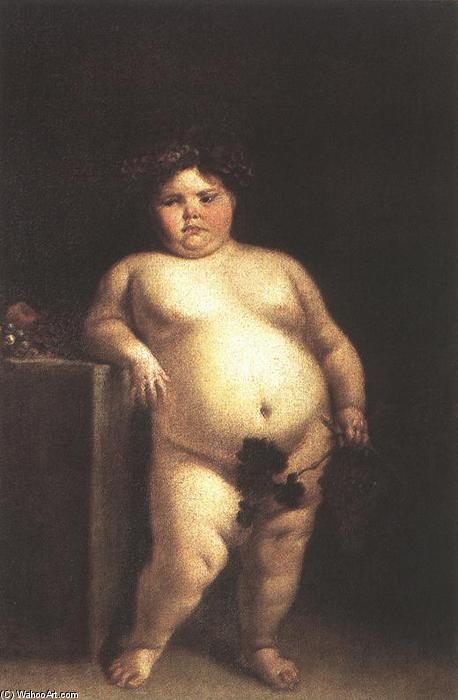
Juan Carreño de Miranda (1614-1685) was a prominent Spanish Baroque painter renowned for his elegant royal portraits, masterful use of light, and influence from Velázquez, capturing a significant era in Spanish art history.
Explore the Museo Nacional del Prado in Madrid! Discover masterpieces by Velázquez, Goya & El Greco, spanning centuries of European art. A must-see cultural landmark!
The Poise of Contemplation: An Encounter with Baroque Grace
To stand before this depiction of La Monstrua Desnuda is to step directly into the dramatic chiaroscuro of the Spanish Golden Age. The subject, rendered with an almost breathtaking verisimilitude, presents a figure caught in a moment of profound introspection. She stands against a deep, velvety darkness that serves not merely as a backdrop, but as a palpable void against which her luminous form seems to emerge by divine grace. The artist, Juan Carreño de Miranda, masterfully employs the dramatic interplay of light and shadow—a hallmark of the Baroque period—to sculpt every curve, every fold of skin, transforming the physical body into a study in spiritual contemplation.
Mastery of Form and Light: Technical Brilliance
Observe the meticulous attention paid to the texture of her skin; it possesses a soft, almost palpable luminescence that speaks volumes about the artist's technical prowess. The handling of the drapery, or perhaps the delicate object held in her right hand—be it a flower or mere fabric—shows an exquisite understanding of weight and flow. Carreño de Miranda was renowned for his ability to capture lifelike flesh tones, and here, that skill shines through. The musculature is suggested with an academic precision, yet never at the expense of sensual beauty. This level of detail suggests not just portraiture, but a deep engagement with the classical tradition of the nude study, elevated by the dramatic flair characteristic of 17th-century Spanish painting.
Historical Echoes and Emotional Resonance
The period in which this work was conceived—the height of Baroque artistic expression—was an era marked by intense emotion, religious fervor, and a fascination with human drama. While the subject is nude, the mood is far from mere sensuality; it is imbued with a quiet melancholy. Her expression suggests a mind wrestling with deep thoughts, inviting the viewer into her private emotional landscape. Owning a reproduction of this piece allows one to bring that sophisticated, contemplative atmosphere into a modern interior space, lending an air of timeless, cultured drama.
A Statement for the Discerning Collector
For the collector or designer seeking art with narrative depth, this painting offers unparalleled richness. It speaks to the grandeur of Spanish Baroque portraiture while maintaining a universal appeal through its focus on the human condition. The contrast between the ethereal subject and the dramatic darkness creates an immediate visual anchor for any room. To reproduce such a work is to acquire not just an image, but a piece of history's emotional vocabulary—a testament to Juan Carreño de Miranda’s enduring genius.