Juan Carreño de Miranda (1614-1685) was a prominent Spanish Baroque painter renowned for his elegant royal portraits, masterful use of light, and influence from Velázquez, capturing a significant era in Spanish art history.
Explore Biblioteca Museu Víctor Balaguer, Vilanova i la Geltrú – Catalonia’s oldest cultural institution! Admire stunning Catalan art & literature housed in a Neo-Egyptian temple, celebrating Balaguer's vision.
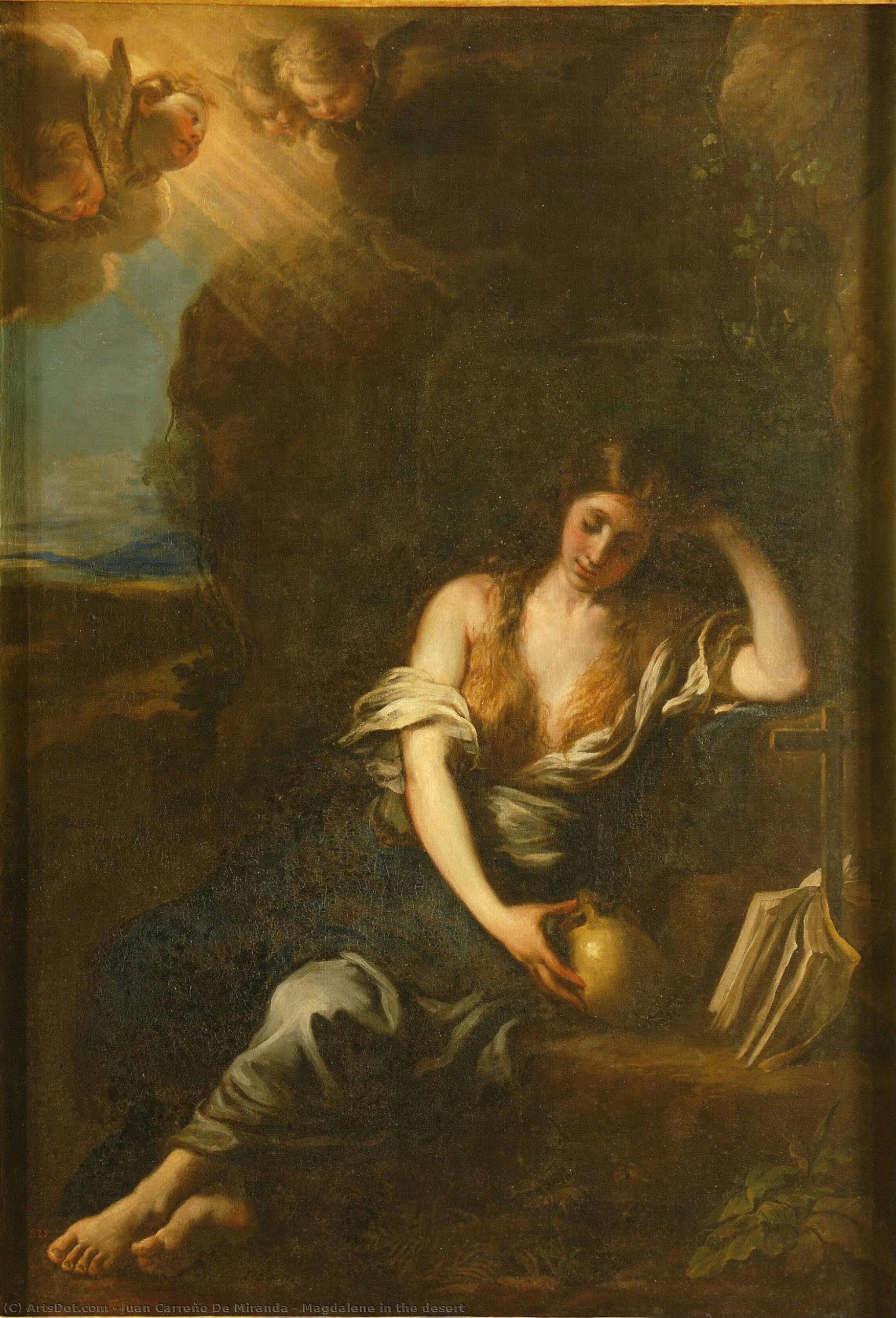
The Contemplative Stillness of Magdalene in the Desert
To gaze upon this depiction of Magdalene in the desert is to be drawn into a profound moment of spiritual reckoning. The composition immediately envelops the viewer in an atmosphere thick with quietude and introspection. The central figure, seated upon the arid ground, embodies a state of deep contemplation; her clasped hands suggest both prayer and enduring patience. It is a portrait not merely of a woman, but of the human spirit confronting solitude amidst the vastness of existence. The rocky landscape that forms the backdrop does more than simply set the scene; it acts as a visual metaphor for the trials and wilderness through which the soul must pass to find clarity.
Baroque Drama and Spanish Mastery
Painted around 1670, this work stands firmly within the rich tapestry of the Spanish Baroque period. The artist, Juan de Miranda, masterfully channels the dramatic intensity characteristic of his era while retaining a sense of devotional grace. While the surrounding figures—one standing watch in the background and another visible to the left—add narrative depth, the focus remains intensely personal, centered on Magdalene’s quiet communion with herself or the divine. The technique employed speaks to the high skill of Spanish masters: observe the subtle interplay of light catching the folds of her drapery against the rough texture of the desert stone. This contrast between polished humanity and raw nature is a hallmark of Baroque storytelling.
Symbolism of Isolation and Redemption
Magdalene herself has long been an archetype in art, representing repentance, devotion, and profound spiritual transformation. Her placement in the desert setting amplifies this symbolism; the wilderness traditionally serves as a crucible for purification. The presence of what appears to be a book or object near the lower right corner hints at scripture or learned contemplation, suggesting that her solitude is not one of despair, but rather one of intense study and eventual redemption. These elements invite the collector to consider the piece not just as decoration, but as a meditation aid for the modern home.
Bringing Sacred Serenity into Your Space
For those seeking art that speaks to depth, resilience, and quiet beauty, this reproduction offers an unparalleled opportunity. The emotional resonance of the painting—that perfect balance between melancholy and spiritual upliftment—makes it a powerful focal point for any room. Whether placed in a library corner, a private study, or a contemplative sitting area, its presence elevates the atmosphere, encouraging moments of pause amidst the daily clamor. Owning this piece is acquiring a tangible echo of Baroque devotion, rendered with exquisite detail that promises to captivate and soothe the discerning eye.