Juan Carreño de Miranda (1614-1685) was a prominent Spanish Baroque painter renowned for his elegant royal portraits, masterful use of light, and influence from Velázquez, capturing a significant era in Spanish art history.
Explore the Museo Nacional del Prado in Madrid! Discover masterpieces by Velázquez, Goya & El Greco, spanning centuries of European art. A must-see cultural landmark!
A Moment Suspended in Devotion: Queen Mariana as a Widow
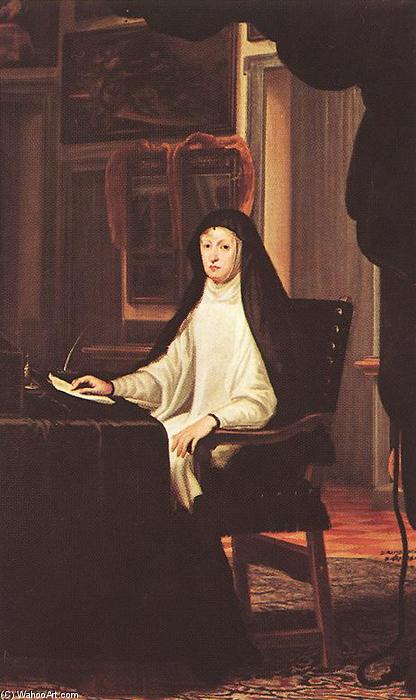
To gaze upon Juan Carreño de Miranda’s depiction of Queen Mariana de Austria as a Widow is to step across the threshold into a realm of profound, quiet contemplation. This masterful oil on canvas, dating from 1669, transcends a mere portrait; it is an elegy rendered in pigment, capturing the solemn dignity that settles upon royalty when worldly power gives way to spiritual devotion. The scene unfolds with an almost hushed reverence. The subject, clad in the immaculate white habit and shadowed veil of a nun, sits amidst the familiar trappings of scholarship—a desk bearing the weight of knowledge, her hands resting near the open pages of a manuscript. Her posture speaks volumes: one of resignation, yet also of enduring grace.
The Artistry of Baroque Realism
Carreño de Miranda, a titan of the Spanish Baroque school, imbues this work with an astonishing level of realism that belies its spiritual subject matter. Observe the meticulous detail in the rendering of her habit; the texture of the coarse wool contrasting with the soft folds of the linen speaks to the artist's supreme technical command. The lighting itself is a character in the painting—soft, diffused, and directional, it models the contours of her face and hands, drawing the viewer’s eye toward that contemplative gaze directed just beyond the frame. This masterful handling of light and shadow, characteristic of the period, lends an almost palpable depth to the interior setting, suggesting the quiet permanence of this sacred space.
Symbolism and the Weight of Piety
The symbolism woven into Queen Mariana de Austria as a Widow is rich and multilayered. The very choice of attire—the nun's habit—marks a profound transition from the glittering, political life of a queen to one dedicated entirely to piety. Her stillness suggests that true nobility resides not in earthly titles, but in the steadfast commitment to faith. The desk and book are potent symbols of learning and contemplation; they suggest that her widowhood has led her inward, toward the enduring wisdom found within scripture and study. It is a visual meditation on sacrifice.
A Timeless Atmosphere for Any Sanctuary
For those who appreciate art that speaks to the soul—be it in a grand hall, a private library, or a devotional space—this reproduction offers an unparalleled opportunity to possess such emotional depth. The subdued palette, dominated by earth tones and muted whites, ensures that this piece possesses a sophisticated gravitas. It does not shout for attention; rather, it invites the viewer into its quiet orbit. Owning this work is acquiring more than just decoration; it is curating a moment of profound reflection, allowing the serene narrative of devotion to enrich your living space.