A Still Life of Modern Intellect
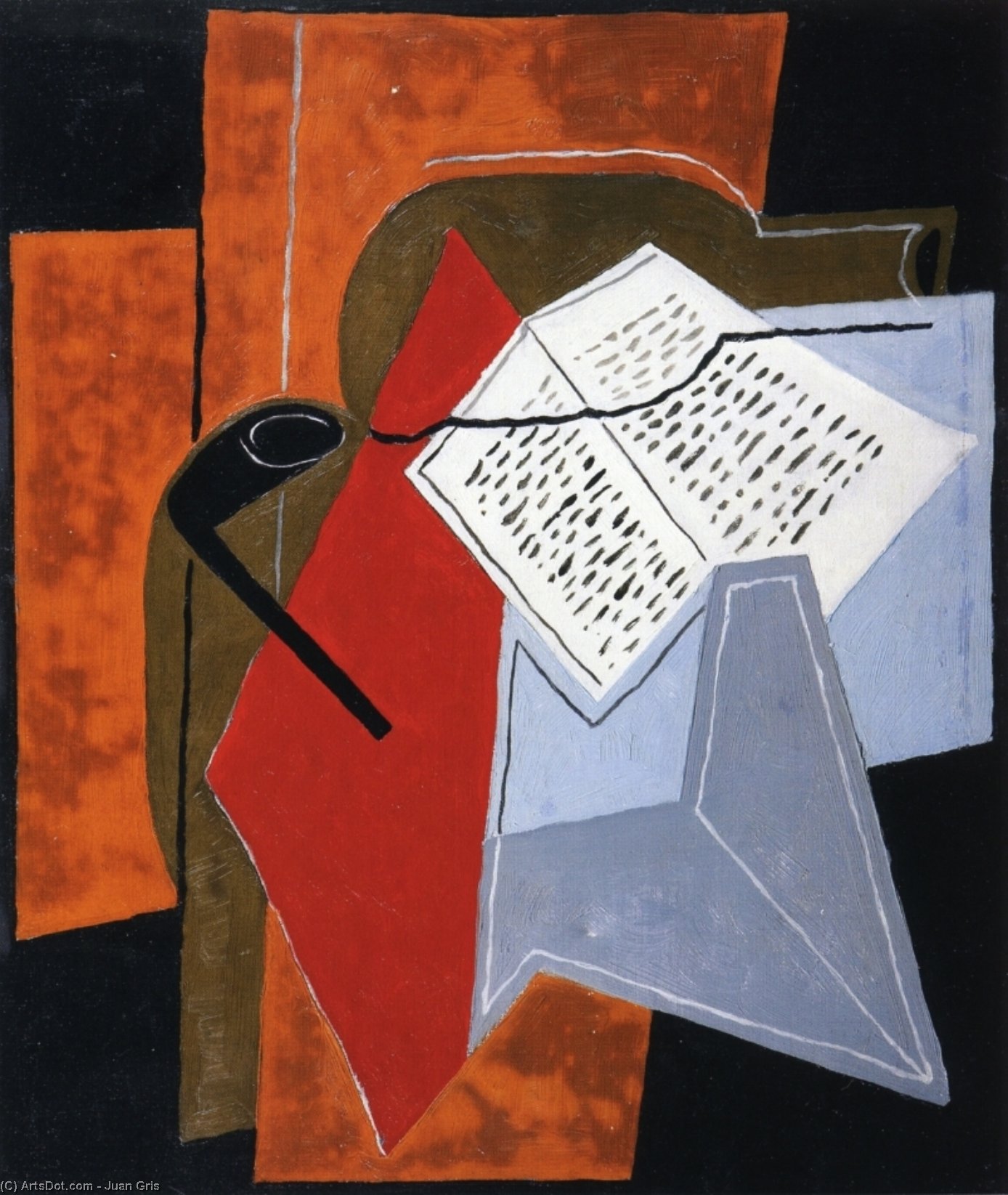
Juan Gris’s Bowl and Book, painted in 1927, is not merely an arrangement of objects upon a surface; it is a carefully constructed meditation on the nature of thought itself. The composition draws the viewer into an intimate, almost scholarly moment within a depicted room. At its heart lies a chair, draped with scattered papers—evidence of recent contemplation or interrupted study. Beside this nexus of intellectual activity rests a book, solid and promising untold narratives. These elements combine to create a tableau that speaks directly to the modern life lived between ideas.
Cubist Structure Meets Domestic Intimacy
Technically, the work is a quintessential example of Gris’s mature Cubism. While the fragmentation inherent in the style might suggest intellectual rigor and deconstruction, here it is softened by the subject matter. The careful placement of everyday items—the two cups flanking the scene, the pair of scissors resting casually on the chair—grounds the abstract geometry in tangible reality. Gris masterfully balances the analytical dissection of form with a palpable sense of domestic quietude. It invites us to look beyond the sharp planes and perceive the underlying harmony that binds these disparate objects together.
Symbolism of the Scattered Mind
The symbolism within Bowl and Book is rich for the discerning collector. The papers atop the chair suggest the process of creation—the necessary messiness accompanying genius. The book represents accumulated knowledge, while the cups might hint at conversation or solitary reflection over tea. These objects coalesce to form a visual allegory: the interplay between structured learning (the book), active thought (the scattered notes), and quiet contemplation (the stillness of the room). It is an ode to the creative process itself.
Bringing Parisian Modernism Home
For the interior designer or art enthusiast seeking a piece that elevates a space beyond mere decoration, this painting offers profound depth. A reproduction of Bowl and Book introduces a sophisticated dialogue between history and contemporary living. It suggests that intellectual pursuits are as beautiful and worthy of display as any exquisite piece of furniture. Owning this work is to curate an atmosphere—one marked by thoughtful engagement, artistic appreciation, and the enduring beauty found in the confluence of art and daily life.