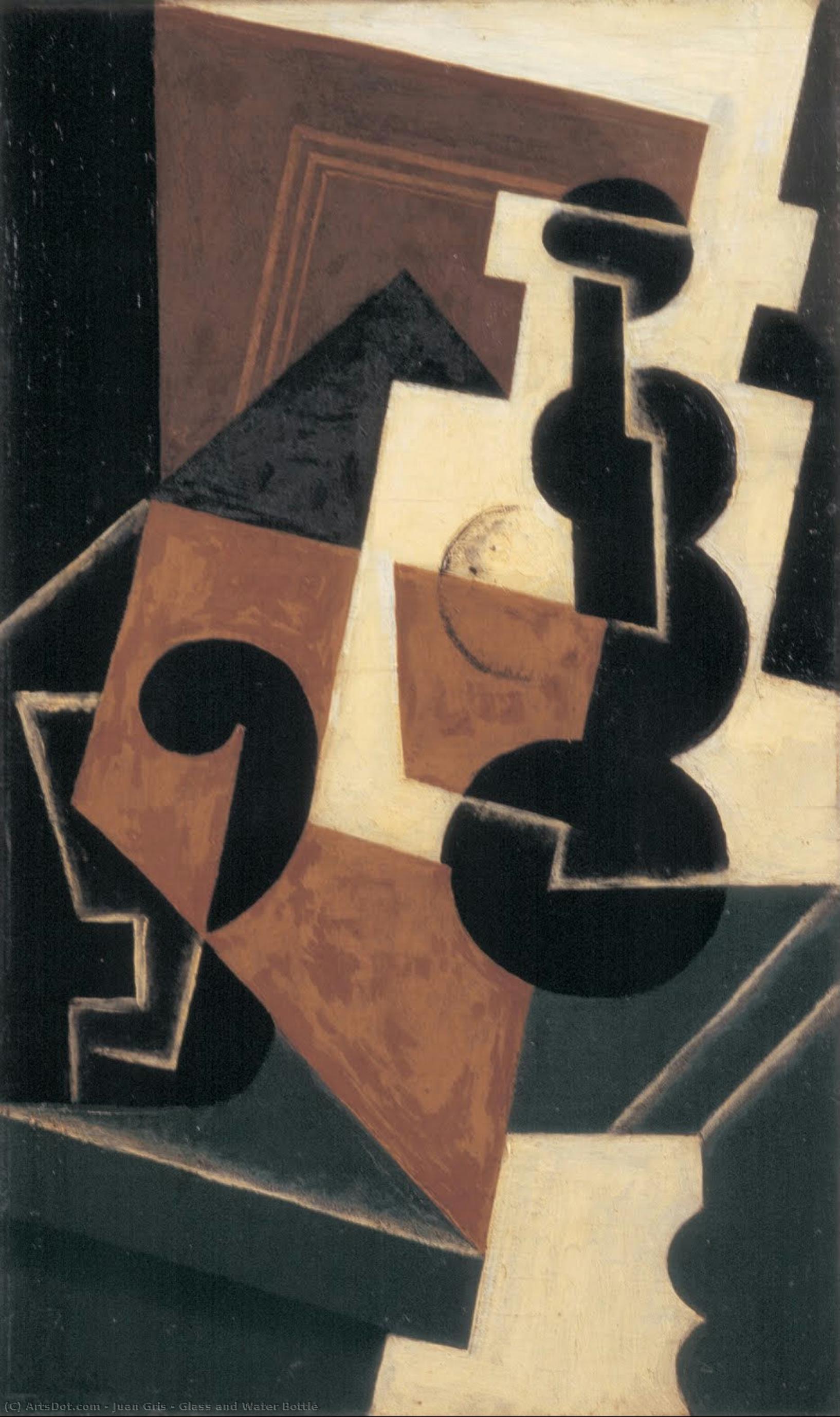
Explore Juan Gris’s 1917 Cubist masterpiece, ‘Glass and Water Bottle.’ Geometric abstraction, muted tones & a flattened perspective – a unique insight into early 20th-century art.
Explore Juan Gris (1887-1927), the Spanish Cubist master! Discover his geometric style, Synthetic Cubism & lasting influence on modern art. View artworks now.
Discover the Ohara Museum of Art in Kurashiki, home to an iconic collection of Western masterpieces by Monet and Picasso alongside exquisite Japanese crafts, offering a breathtaking journey through global artistic history.
A Fragmented Reflection of Modernity: Exploring Juan Gris’s “Glass and Water Bottle”
The artwork "Glass and Water Bottle," executed by Spanish artist Juan Gris in 1917, stands as a cornerstone of Cubist aesthetics—a movement that irrevocably altered the landscape of European art. More than just a depiction of everyday objects, it embodies a radical reimagining of perspective and representation, reflecting the intellectual ferment of its time and offering a profound meditation on form and space. This piece isn’t merely seen; it's experienced as an invitation to contemplate the complexities inherent in capturing reality through multiple viewpoints simultaneously.
The Genesis of Cubism: Breaking Down Reality
Cubism emerged from the artistic circles of Paris around 1907-1908, spearheaded by Pablo Picasso and Georges Braque—artists who challenged the conventions of traditional painting. Rejecting illusionistic depth and striving for a more truthful portrayal of visual experience, Cubists dissected objects into geometric planes and facets, presenting them alongside each other on a single canvas. Gris’s contribution to this groundbreaking movement was instrumental in establishing its distinctive visual language. He meticulously analyzed the interplay of light and shadow, attempting to convey not just what an object *looked* like but how it *felt*. This analytical approach distinguishes him from his contemporaries who often prioritized expressive emotion over intellectual rigor.
Technical Mastery: Oil on Canvas – A Delicate Balance
The painting itself is executed in oil on canvas—a medium favored by Gris for its ability to capture subtle tonal variations and textural nuances. Visible brushstrokes contribute to a surface that possesses both physicality and luminosity, hinting at the artist’s deliberate consideration of materiality. The muted color palette—primarily dark browns, blacks, and off-whites—serves as a counterpoint to the vibrant geometric forms dominating the composition. These colors aren't intended to create visual drama but rather to ground the artwork in a sense of understated elegance. Gris skillfully employs shading to define the planes of glass and water bottle, emphasizing their contours and conveying a palpable sense of solidity despite their fragmented appearance.
Symbolism Beyond Representation: Multiple Perspectives
Beyond its formal innovations, “Glass and Water Bottle” carries symbolic weight. The fractured depiction of the vessel—likely filled with water—represents an attempt to capture not just its visual form but also its essence, acknowledging that perception is inherently subjective. Like Picasso and Braque before him, Gris sought to transcend mere imitation, aiming instead for a deeper understanding of how objects interact with light and how our eyes perceive them from different angles. This intellectual pursuit aligns perfectly with the broader philosophical currents of the era—a period marked by anxieties about modernity and a desire to grapple with new epistemological challenges.
Emotional Resonance: A Quiet Contemplation
Despite its deliberate abstraction, “Glass and Water Bottle” possesses an unexpected emotional resonance. The subdued color scheme and lack of dramatic lighting foster a contemplative atmosphere, inviting viewers to engage in a dialogue with the artwork itself. It’s not a painting that shouts for attention; rather, it whispers—encouraging reflection on themes of fragmentation, perception, and the elusive nature of reality. This understated beauty speaks volumes about Gris's artistic vision—a vision rooted in intellectual curiosity but tempered by an appreciation for visual harmony.