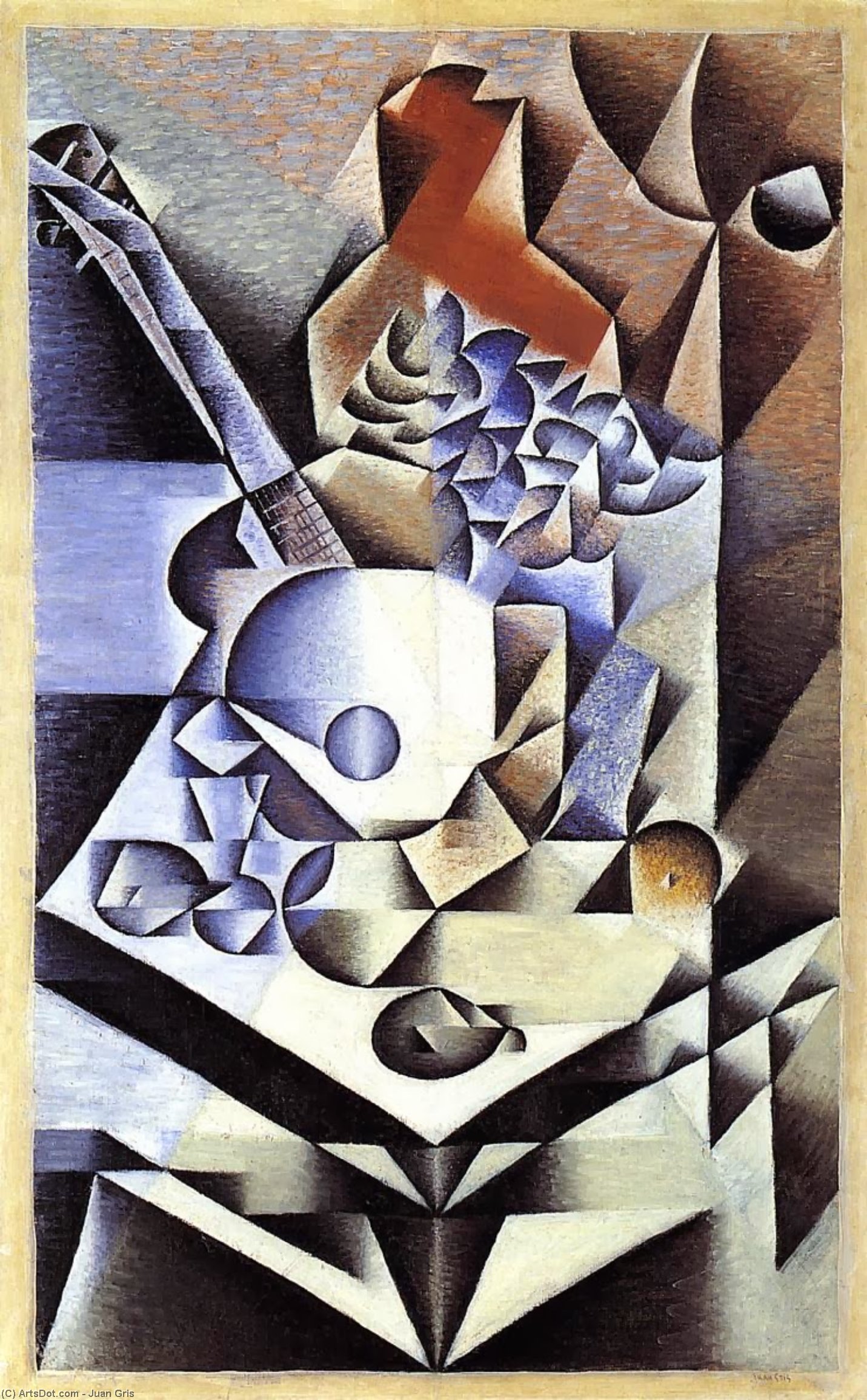
Explore Juan Gris’s groundbreaking Analytical Cubism masterpiece—Still Life with Flowers—a vibrant depiction of everyday objects rendered in geometric forms and earthy hues. Admire this iconic 1912 artwork and discover exquisite hand-painted reproductions at ArtsDot.
Explore Juan Gris (1887-1927), the Spanish Cubist master! Discover his geometric style, Synthetic Cubism & lasting influence on modern art. View artworks now.
Explore modern & contemporary art at MoMA! Discover iconic works by Van Gogh, Picasso, Warhol & more. Immerse yourself in groundbreaking exhibitions & design.
A Symphony in Geometric Forms: Exploring Juan Gris’s Still Life with Flowers
The painting “Still Life with Flowers” by Spanish artist Juan Gris stands as a cornerstone of Analytical Cubism, an artistic movement that irrevocably altered the landscape of early 20th-century art. Executed in 1912 and currently residing within the Museum of Modern Art’s collection in New York City, this oil on canvas transcends mere representation; it embodies a radical reimagining of how artists perceive and depict reality. Gris's masterful manipulation of form and color speaks volumes about the intellectual fervor of its time and continues to resonate with audiences today.
The Genesis of Cubism: Picasso and Braque’s Revolutionary Vision
Before Gris emerged onto the artistic scene, Pablo Picasso and Georges Braque spearheaded a seismic shift in painting practice. Their collaboration birthed Analytical Cubism – a style characterized by fragmentation and simultaneous viewpoints—challenging centuries of tradition. Rejecting illusionistic depth and perspective, these pioneers dissected objects into geometric planes, presenting multiple facets of each subject simultaneously on the canvas. This approach wasn’t simply stylistic; it reflected a broader philosophical preoccupation with dismantling preconceived notions about visual perception. The influence of Cézanne's explorations of volume and structure is palpable within Cubist endeavors, pushing artists to consider how objects exist in space rather than merely appearing as they seem.
Deconstructing Reality: Gris’s Technique and Composition
“Still Life with Flowers” exemplifies Analytical Cubism’s core tenets with breathtaking precision. Gris meticulously breaks down the guitar – a deliberate choice reflecting its prominence within the composition – into interlocking planes of brown, mirroring the fragmentation seen throughout the artwork. Alongside the guitar are a vase, bowl, apple, and banana, each rendered as abstracted geometric shapes. The muted palette—primarily earthy browns—creates an atmosphere of quiet contemplation, prioritizing tonal harmony over vibrant color contrasts. This restrained aesthetic underscores Gris’s commitment to conveying essence rather than surface appearance. Notice how the objects overlap subtly, hinting at multiple perspectives without resorting to conventional spatial illusion.
Symbolism Beyond Appearance: Interpreting the Floral Motif
While seemingly simple in its visual vocabulary, “Still Life with Flowers” carries significant symbolic weight. The inclusion of flowers—specifically lilies—often represents purity and resurrection within Western iconography. Their placement against the geometric backdrop serves as a counterpoint to the rigidity of form, suggesting an underlying tension between natural beauty and intellectual abstraction. Gris’s deliberate selection of these elements invites viewers to consider deeper meanings beyond the immediate visual experience. The stillness of the scene reinforces this contemplative mood, prompting reflection on themes of life cycle and transformation.
A Legacy Enduring Inspiration
Juan Gris's groundbreaking contribution to Cubism cemented his place as a pivotal figure in modern art history. His unwavering dedication to exploring new artistic possibilities paved the way for subsequent movements like Orphism and Purism—styles that further embraced abstraction and experimentation. Today, reproductions of “Still Life with Flowers” continue to captivate collectors and inspire interior designers seeking pieces that embody intellectual rigor alongside aesthetic beauty. It stands as a testament to Gris’s ability to distill complex ideas into powerfully evocative visual forms – a timeless masterpiece deserving of continued appreciation.