At the Piano: A Glimpse of Intimate Impressionism
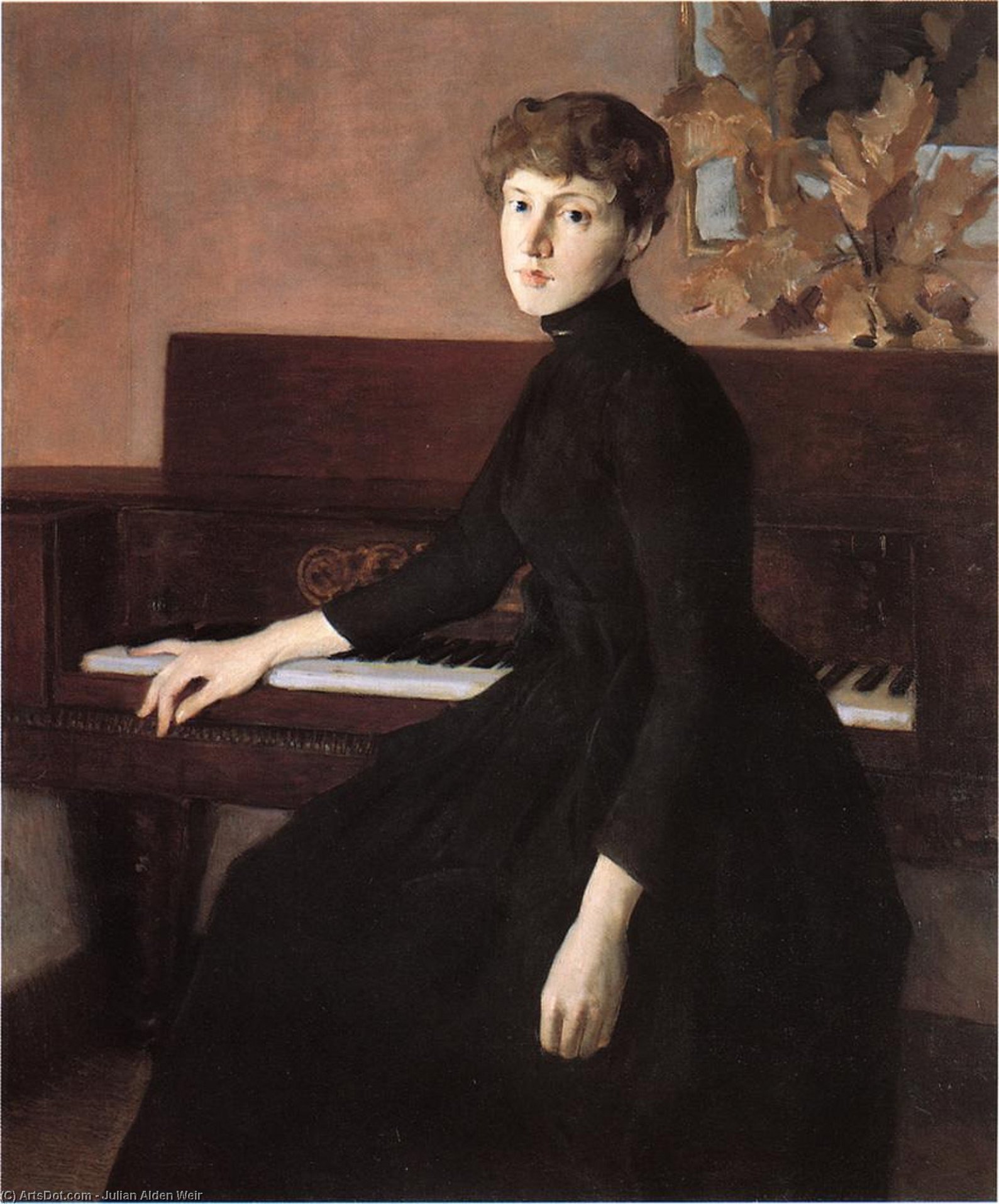
Julian Alden Weir's "At the Piano," created in 1903, is a captivating oil on canvas painting (measuring 119 x 99 cm) that exemplifies the serene beauty and intimate portrayal of everyday life characteristic of the Impressionist movement. This artwork, currently residing within the esteemed collection of the Hofstra University Museum in New York, offers a window into a moment of quiet contemplation and artistic expression.
Detailed Composition and Artistic Elements
The painting centers around a woman seated at a grand piano, her posture suggesting deep thought as she engages with the instrument. The room itself is elegantly furnished, featuring two chairs and a vase strategically placed near the top-right corner, adding to the overall sense of refined domesticity. A keyboard is subtly visible in the bottom-left portion of the image, reinforcing the musical theme that permeates the scene. Weir’s masterful use of soft colors and gentle brushstrokes creates an atmosphere of calmness and tranquility. The lighting appears diffused, gently illuminating the woman's face and highlighting the textures of her clothing and the piano's polished wood.
Style and Influences: A Tonalist Approach
Julian Alden Weir’s artistic style is deeply rooted in Impressionism but also reflects elements of Tonalism, a movement emphasizing atmospheric effects and harmonious color palettes. While initially critical of Impressionism, Weir later embraced its principles, incorporating them into his own unique vision. His work demonstrates influences from artists like Felix Vallotton, whose "Lady at the Piano" shares a similar focus on intimate domestic scenes and musical themes. Weir's ability to capture subtle nuances of light and shadow contributes significantly to the painting’s emotional depth.
Symbolism and Emotional Resonance
Beyond its aesthetic appeal, “At the Piano” carries symbolic weight. The piano itself represents artistry, intellectual pursuits, and refined culture. The woman’s introspective posture suggests a moment of personal reflection or creative inspiration. The overall composition evokes feelings of peace, tranquility, and quiet elegance. The painting invites viewers to contemplate themes of leisure, artistic expression, and the beauty found in everyday moments.
A Legacy of Impressionistic Beauty
“At the Piano” stands as a testament to Julian Alden Weir’s skill in capturing intimate moments with sensitivity and grace. Its enduring appeal lies in its ability to transport viewers to a world of quiet contemplation and artistic beauty. Handmade oil painting reproductions of "At the Piano" are available at ArtsDot.com, allowing art enthusiasts to experience this masterpiece firsthand.