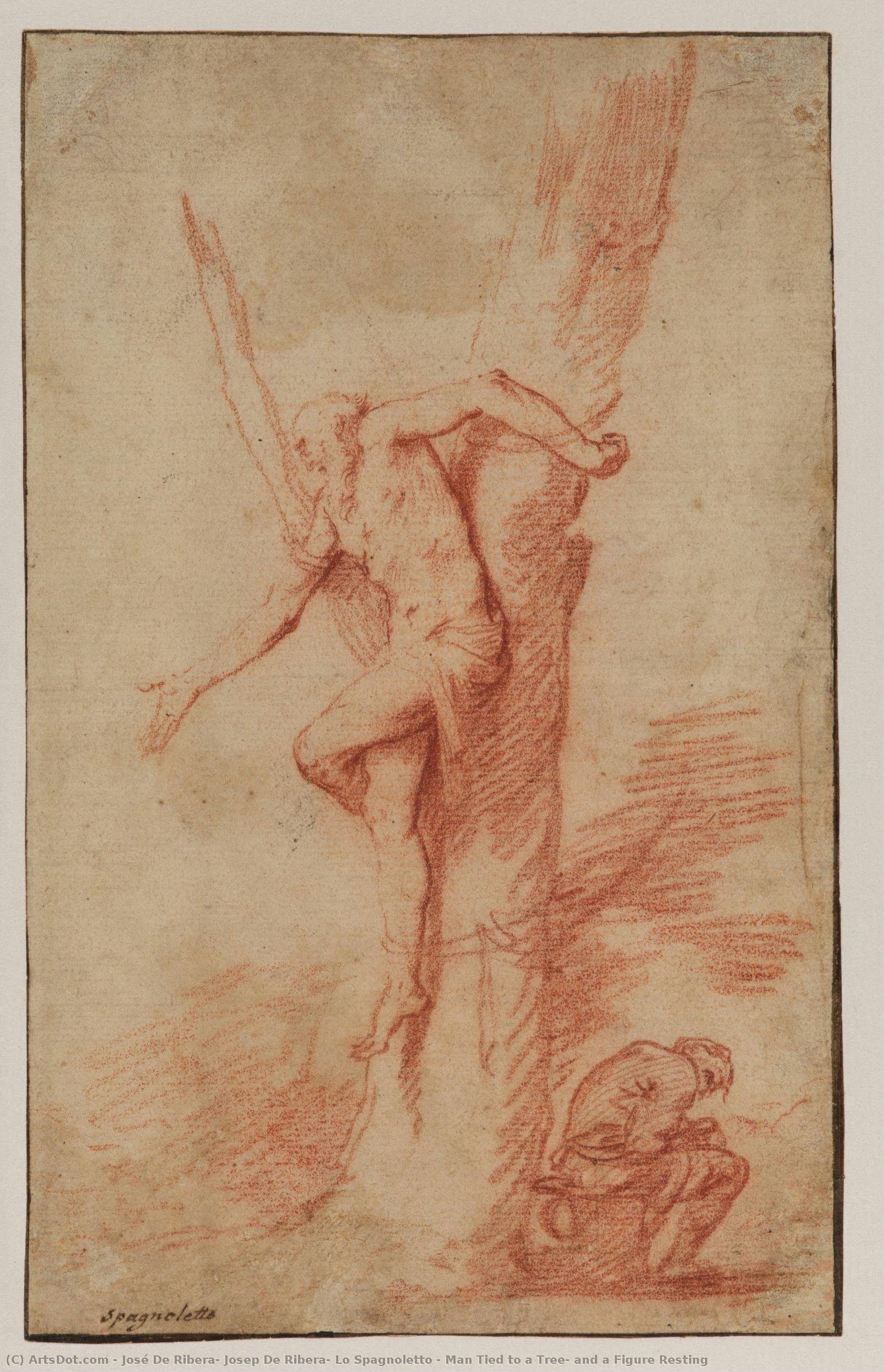
A Study in Human Suffering: Ribera's "Man Tied to a Tree, and a Figure Resting"
José de Ribera’s “Man Tied to a Tree, and a Figure Resting,” executed in 1635, is not merely a depiction of physical restraint; it’s a profoundly unsettling meditation on vulnerability, powerlessness, and the precariousness of human existence. Created during the height of the Baroque period, this drawing – measuring a modest 24 x 15 cm – reveals the extraordinary skill and emotional depth that characterized the work of Lo Spagnoletto, as he was known. The Courtauld Institute of Art in London currently holds this poignant piece, offering a rare glimpse into the artistic mind of a master who relentlessly pursued realism with an almost brutal honesty.
The Artist's Vision: Ribera and the Baroque
Born in Xativa, Spain, in 1591, Jusepe de Ribera’s life was inextricably linked to the dramatic currents of the Baroque. His early years were spent absorbing the influences of Flemish masters like Rubens and Van Dyck before forging his own distinct path, heavily influenced by the religious fervor and theatricality of Naples – a city he adopted as his artistic home in 1616. Ribera’s work is defined by its unflinching realism, often depicting scenes of suffering, death, and martyrdom with an almost photographic precision. He wasn't interested in idealized beauty; instead, he sought to capture the raw, visceral experience of human emotion, a characteristic that earned him both admiration and controversy during his lifetime.
A Scene of Distress: Composition and Technique
The composition of “Man Tied to a Tree, and a Figure Resting” immediately draws the viewer’s eye to the central figure – a man bound tightly to an oak tree, his hands raised in a gesture of desperate struggle. The posture is one of agonizing vulnerability, conveying a sense of profound distress. Beside him, a second figure lies seemingly at ease, perhaps a witness or a potential rescuer, adding another layer of complexity to the scene. Ribera’s technique is characterized by its meticulous attention to detail and his masterful use of chiaroscuro – the dramatic contrast between light and shadow – which intensifies the emotional impact of the image. The drawing itself highlights the artist's preliminary studies, revealing a process of intense observation and careful rendering.
Symbolism and Interpretation
The symbolism within this work is open to interpretation, yet undeniably powerful. The man tied to the tree can be seen as an allegory for human suffering, injustice, or perhaps even religious persecution – a common theme in Ribera’s oeuvre. The resting figure may represent indifference, apathy, or the limitations of human intervention in the face of overwhelming adversity. The choice of an oak tree, a symbol of strength and longevity, further amplifies the sense of tragic irony. This image resonates with viewers across centuries, prompting reflection on themes of power, vulnerability, and the enduring struggle against fate.
A Hand-Painted Reproduction – Bringing Ribera to Life
ArtsDot offers a meticulously hand-painted reproduction of “Man Tied to a Tree, and a Figure Resting,” capturing the essence of Ribera’s artistic vision. Each reproduction is created by skilled artisans who painstakingly recreate the original drawing's details, textures, and dramatic lighting. This ensures that you receive a faithful representation of this powerful artwork, perfect for adorning your home or office – a timeless piece that continues to provoke contemplation and evoke emotion.