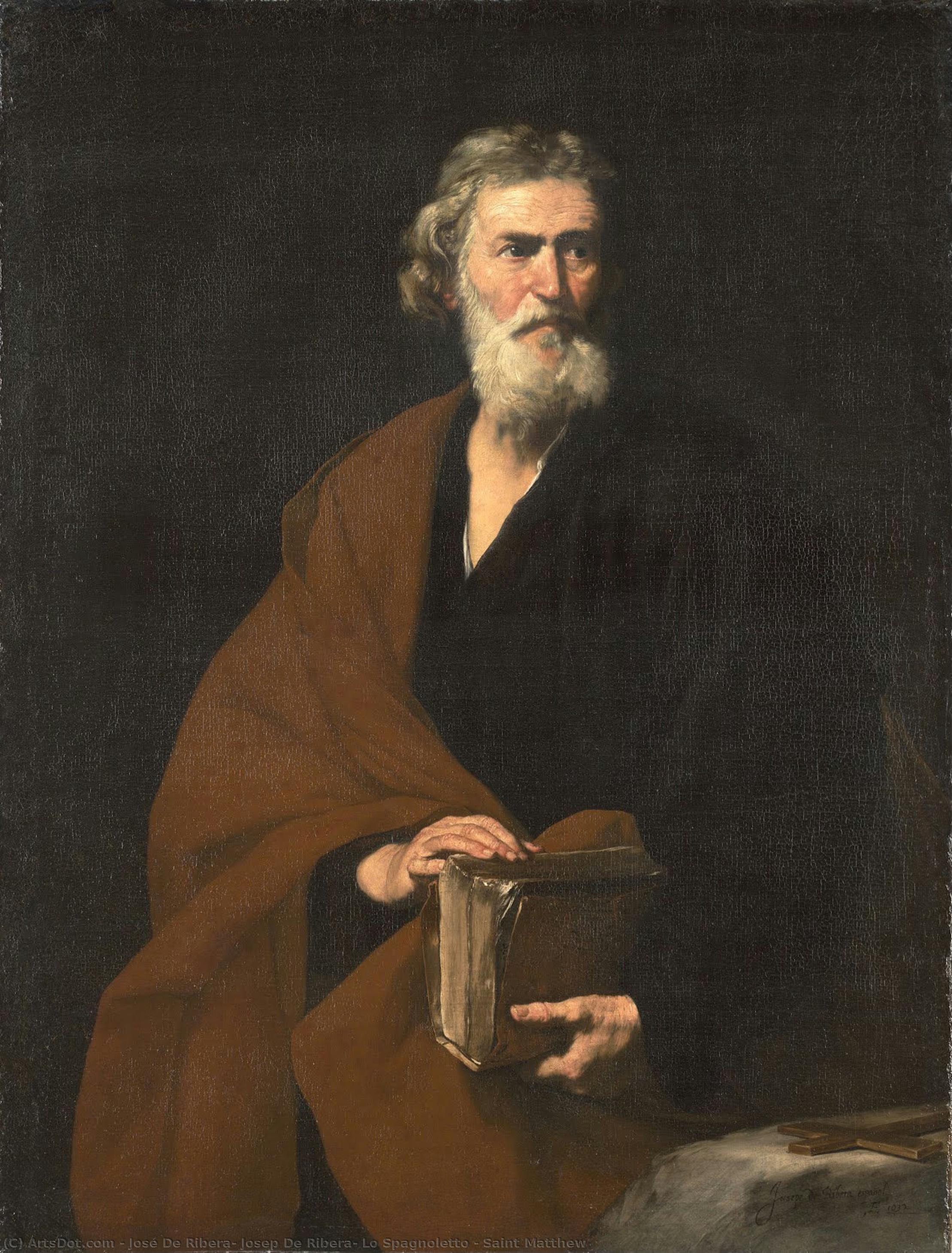
This evocative painting by Jusepe de Ribera depicts Saint Matthew holding a book, embodying spiritual contemplation amidst a dark, Caravaggio-inspired backdrop. Combining Renaissance elegance with Baroque fervor, it exemplifies Ribera's mastery of portraying human emotion and religious devotion.
Saint Matthew: A Masterpiece of Dramatic Realism
Jusepe de Ribera’s “The Calling of Saint Matthew” stands as an emblem of Baroque art—a testament to its ability to convey profound emotion through meticulous observation and masterful execution. Painted in 1632, shortly after Ribera established himself as a prominent artist in Naples under the patronage of the Spanish viceroys, this monumental canvas transcends mere depiction; it plunges viewers into the heart of biblical narrative with breathtaking immediacy.
A Caravaggio Influence: Light and Shadow
Ribera’s artistic vision owes considerable debt to Caravaggio—a revolutionary figure who shattered conventions by prioritizing dramatic chiaroscuro. Like Caravaggio's seminal work, “The Calling,” Ribera employs a stark contrast between luminous illumination and enveloping darkness. A single shaft of light descends upon Matthew’s face and outstretched hand, highlighting his gaze as he confronts Jesus Christ. This technique isn’t merely stylistic; it serves to heighten the psychological tension inherent in the scene—drawing attention to Matthew's vulnerability and conveying the divine presence with palpable force.
Detailed Observation: Anatomy and Texture
Ribera’s unparalleled skill lies in his anatomical precision and masterful rendering of texture. Every muscle, vein, and wrinkle on Matthew’s face is rendered with painstaking accuracy—a characteristic born from Ribera's rigorous study of human anatomy alongside Bolognese artists who championed classical ideals. Furthermore, Ribera employs impasto—thickly applied paint—to create a palpable surface quality that mimics the roughness of skin and fabric. This textural richness contributes significantly to the painting’s emotional impact, inviting viewers to contemplate the physicality of faith.
Historical Context: Naples Under Spanish Rule
“The Calling” emerged during a period of significant artistic ferment in Naples—a city under Spanish dominion that fostered a vibrant cultural landscape. The patronage system prevalent at the time fueled creativity and encouraged artists like Ribera to explore ambitious themes and innovative techniques. This painting reflects the broader Baroque preoccupation with portraying human emotion within religious contexts—a tradition rooted in Renaissance humanist thought but amplified by the fervor of Catholic piety.
Symbolism: Faith and Divine Revelation
Beyond its technical brilliance, “The Calling” is laden with symbolic significance. Matthew’s gesture represents an invitation to spiritual enlightenment—a willingness to abandon worldly concerns and embrace divine grace. The book held by Matthew symbolizes scripture—the Word of God that illuminates the path toward salvation. Ribera's masterful composition reinforces these themes—creating a visual narrative that speaks directly to the viewer’s soul.
Emotional Impact: A Moment of Profound Revelation
Ultimately, “The Calling” succeeds in capturing the essence of human experience—the transformative power of faith and the sublime beauty of divine revelation. Ribera's unflinching realism combined with Caravaggio’s dramatic lighting compels viewers to confront uncomfortable truths about mortality and vulnerability—yet simultaneously offers solace in the promise of eternal life. It remains a timeless masterpiece, continuing to inspire awe and contemplation centuries after its creation.