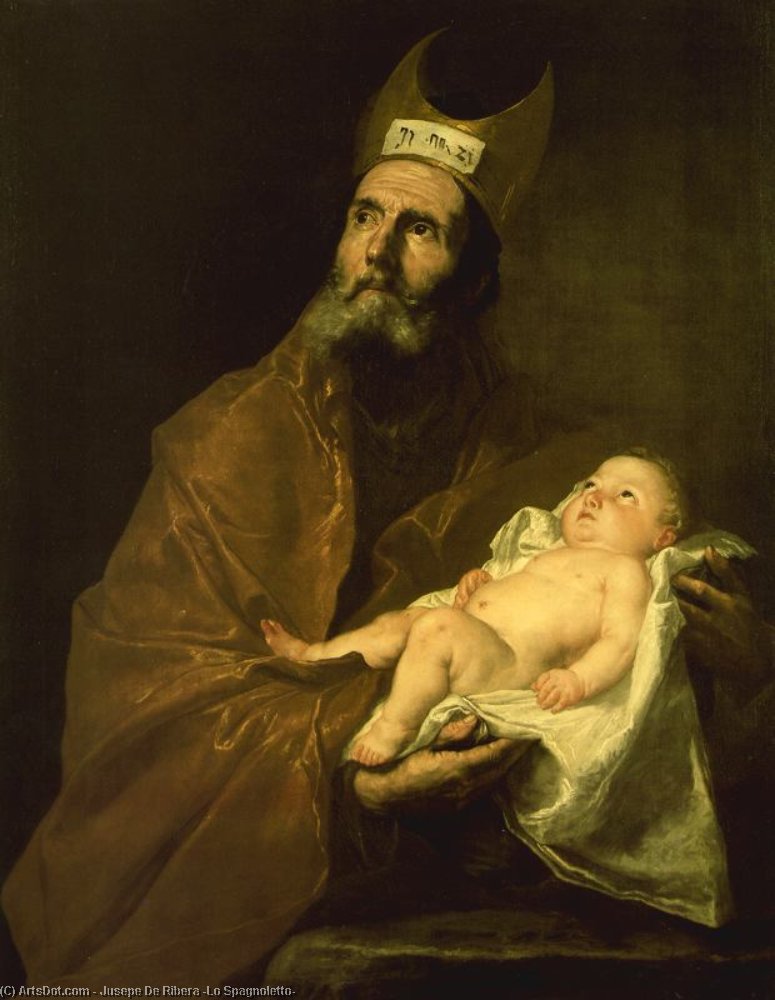
St. Simeon with a Child: A Baroque Masterpiece by Jusepe de Ribera
- Artist: Jusepe de Ribera (Lo Spagnoletto)
- Date: Unknown
- Style: Baroque, Tenebrism
Subject and Historical Context
This evocative artwork depicts a poignant moment from Christian tradition: St. Simeon holding the infant Jesus in his arms. According to the Gospel of Luke, Simeon was an elderly man living in Jerusalem who had been promised by the Holy Spirit that he would not die before seeing the Messiah. Upon entering the Temple with Mary and Joseph after Jesus' birth, Simeon recognized him as the savior and delivered a prophetic blessing, foretelling both the glory and the suffering that awaited the child.
Jusepe de Ribera, known as Lo Spagnoletto ("the Little Spaniard"), was a prominent Spanish painter who spent much of his career in Naples, Italy. His work flourished during the Baroque period (roughly 1600-1750), an era characterized by dramatic compositions, intense emotions, and dynamic movement. Ribera’s style reflects the Counter-Reformation's emphasis on religious devotion and emotional resonance, aiming to inspire faith through powerful imagery.
Style and Technique: The Power of Tenebrism
Ribera masterfully employs the Baroque technique of tenebrism – a dramatic form of chiaroscuro characterized by extreme contrasts between light and dark. In "St. Simeon with a Child," a strong, unseen light source illuminates the faces and upper bodies of St. Simeon and the infant Jesus, while the background remains shrouded in deep shadow. This stark contrast intensifies the emotional impact of the scene, drawing the viewer's eye to the central figures and creating a sense of heightened drama.
The artist’s use of oil paint on canvas or panel allows for rich color variations within the earthy palette of browns, ochres, and creams. Noticeable brushstrokes contribute to the texture of the work – rough and weathered skin on St. Simeon's face contrasts with the smooth, delicate complexion of the baby. The diagonal lines created by the folds of fabric add dynamism to the composition, preventing it from feeling static.
Symbolism and Emotional Impact
Beyond its narrative depiction, "St. Simeon with a Child" is rich in symbolic meaning. St. Simeon, an aged figure representing faith and prophecy, cradles the innocent infant Jesus, symbolizing hope and divine grace. The contrast between their ages highlights themes of time, destiny, and the cyclical nature of life.
The image evokes feelings of tenderness, piety, and a touch of melancholy. Simeon’s prophecy foretold that Jesus would suffer greatly, adding a layer of poignant awareness to this tender moment. Ribera captures not only the physical likeness of his subjects but also their inner states – Simeon's quiet contemplation and the baby’s serene innocence create a deeply moving and unforgettable scene.
Compositional Elements
- Pyramidal Structure: The composition is structured around a pyramid, with St. Simeon forming the base and apex, emphasizing stability and importance.
- Cropped View: The cropped nature of the image creates intimacy and immediacy, drawing the viewer into the scene.
- Organic Shapes: Predominantly organic shapes are used for the figures, contrasting with the angular shape of St. Simeon’s headdress.
- Limited Depth of Field: This contributes to the intimacy of the scene, focusing attention on the two central figures.