A Study in Shadow and Resilience
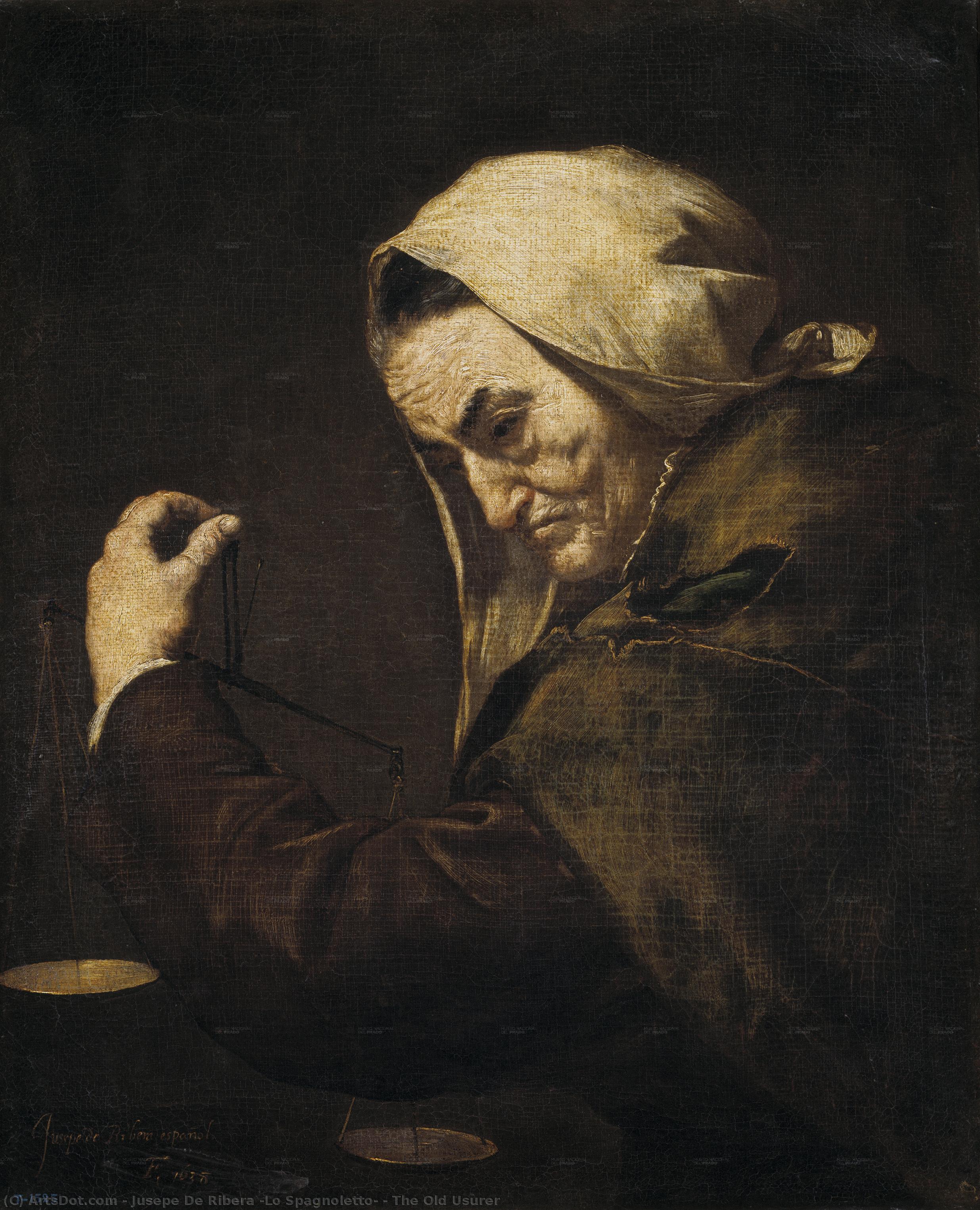
In the profound stillness of Jusepe de Ribera’s 1638 masterpiece, The Old Usurer, the viewer is invited into a private moment of intense psychological depth. This portrait is far more than a mere depiction of an elderly figure; it is a visceral exploration of the human condition, captured through the masterful application of tenebrism. As the eye meets the subject, one is immediately struck by the dramatic interplay of light and void. Ribera, often celebrated as the "Little Spaniard" who brought a gritty, Neapolitan realism to the Spanish Baroque, utilizes deep, enveloping blacks to swallow the periphery of the canvas. This darkness does not merely serve as a backdrop but acts as a heavy, atmospheric shroud that pushes the subject forward, forcing an intimate confrontation between the observer and the observed.
The composition is dominated by the weathered face of the woman, whose features are etched with the profound topography of time. A single, decisive shaft of light pierces the gloom, illuminating the delicate textures of her skin—the fine lines, the heavy lids, and the silvered strands of her hair. This lighting technique, reminiscent of Caravaggio’s influence, creates a sculptural quality that breathes life into the canvas. As she gazes downward, her expression remains enigmatic; there is a sense of solemnity, perhaps even a quiet mourning or a deep, inward-looking contemplation. Whether she is lost in a memory or focused on the small object held within her hands, her downward gaze symbolizes a turning away from the external world toward the sanctuary of the soul.
Technique and the Texture of Life
Ribera’s technical prowess is most evident in his tactile approach to paint. He was an artist who understood that emotion could be conveyed through the very thickness of the medium. In The Old Usutrer, he employs impasto—the thick, textured application of pigment—to recreate the ruggedness of aged skin and the heavy folds of a brown robe. This meticulous layering gives the painting a palpable presence, making the subject feel as though she occupies the same physical space as the viewer. The contrast between the soft, luminous highlights on her forehead and the rough, matte textures of her clothing creates a sensory experience that transcends visual observation.
Beyond the technical execution, the historical and symbolic weight of the piece offers immense value to collectors and enthusiasts of fine art. During the 17th century, such portraits often served as allegories for complex human virtues or vices. While some interpretations suggest an allegory of avarice through the presence of coins or ledgers, there is an undeniable dignity in Ribera's rendering. He finds beauty in the weathered and the worn, suggesting that wisdom and resilience are forged in the shadows of hardship. For the interior designer or the discerning collector, this artwork serves as a profound focal point—a piece that commands attention not through loud colors, but through its quiet, commanding gravity and its ability to anchor a room with a sense of history and soulful introspection.