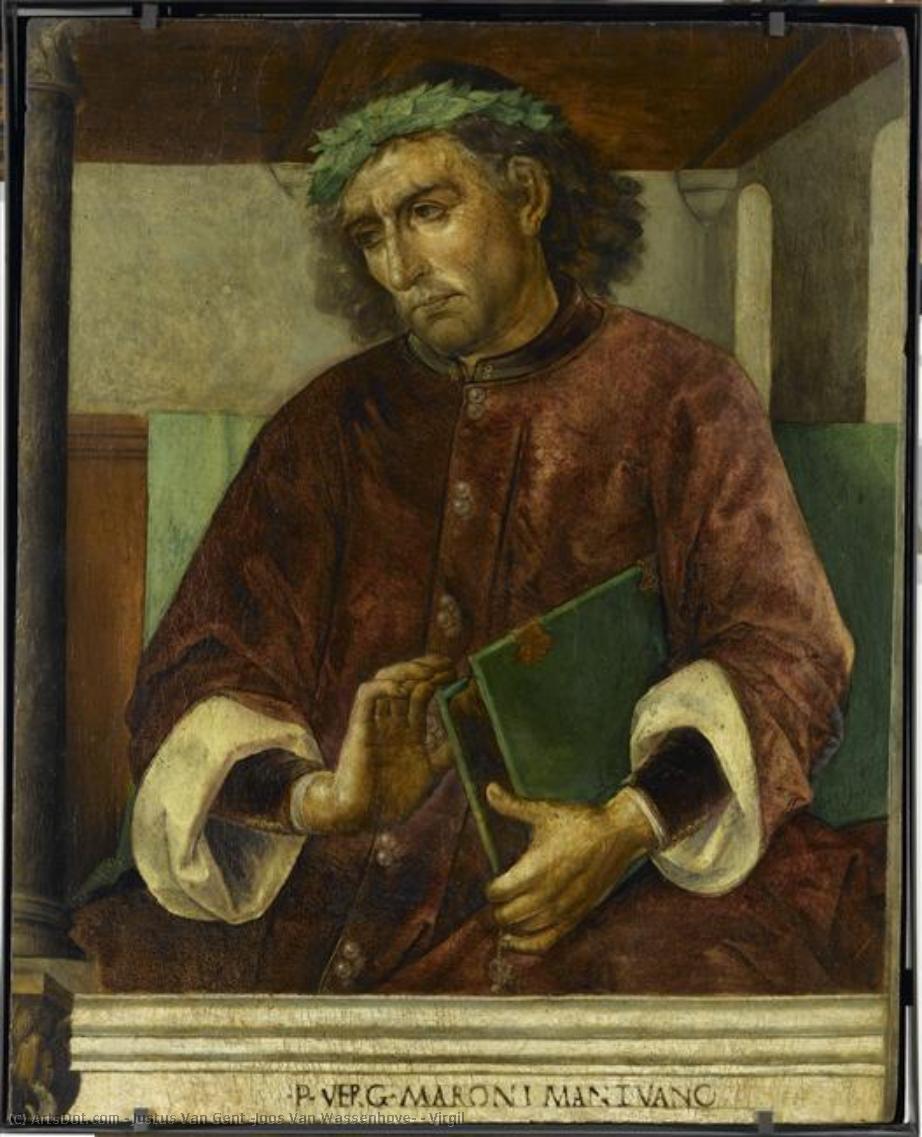
A Contemplation of Poetic Genius: Virgil by Justus van Gent
To gaze upon this portrait of Virgil is to step directly into the richly textured atmosphere of late Quattrocento Netherlandish art. Painted in 1476 by Justus van Gent, the work transcends a mere likeness; it is a profound meditation on genius itself. The subject, the celebrated Roman poet, is captured in a moment of quiet introspection, seated within an environment that speaks of learned contemplation. Van Gent masterfully renders the figure with an almost palpable realism, inviting the viewer to share in his thoughtful silence. The overall mood is one of dignified melancholy, suggesting the weight and enduring legacy of profound artistic achievement.
Mastery in Oil on Panel: Technique and Detail
The technical brilliance evident in this piece speaks volumes about Justus van Gent’s skill as a practitioner of oil painting on wood panel. The artist employed techniques that allowed for an astonishing depth of color and luminosity, particularly visible in the subtle gradations across the drapery folds and the delicate tones of the skin. Observe how light seems to emanate from an unseen source, striking Virgil from above and slightly to the left, thereby sculpting his form with exquisite three-dimensionality. The precision characteristic of Early Netherlandish painting is on full display; every fold in the fabric, every strand of hair, has been rendered with meticulous care. This attention to surface detail elevates the portrait beyond simple representation into a realm of near-photographic verisimilitude.
Symbolism Woven into the Composition
The symbolism surrounding Virgil enriches the narrative tapestry of the painting. The laurel wreath adorning his head is not merely an ornament, but a potent emblem of poetic victory and immortal fame—a visual testament to his enduring cultural impact. Furthermore, the open book resting near him serves as a universal signifier of literature, wisdom, and the accumulated knowledge that poetry seeks to capture. These elements work in concert with the classical setting, grounding the poet within a tradition of high culture. The entire composition suggests that true genius is both an internal state of contemplation and an external monument of lasting art.
A Touch of Renaissance Spirit for Modern Spaces
For those seeking to infuse a space—be it a library, a study, or a grand hall—with the gravitas of history and the elegance of Old World artistry, this reproduction offers unparalleled depth. The warm earth tones—the deep browns, rich ochres, and muted reds—create an immediate sense of enveloping warmth, making it a perfect focal point for sophisticated interior design schemes. Owning a piece echoing Van Gent’s hand is not just acquiring art; it is curating an atmosphere steeped in intellectual history, offering a quiet, contemplative anchor to any room.