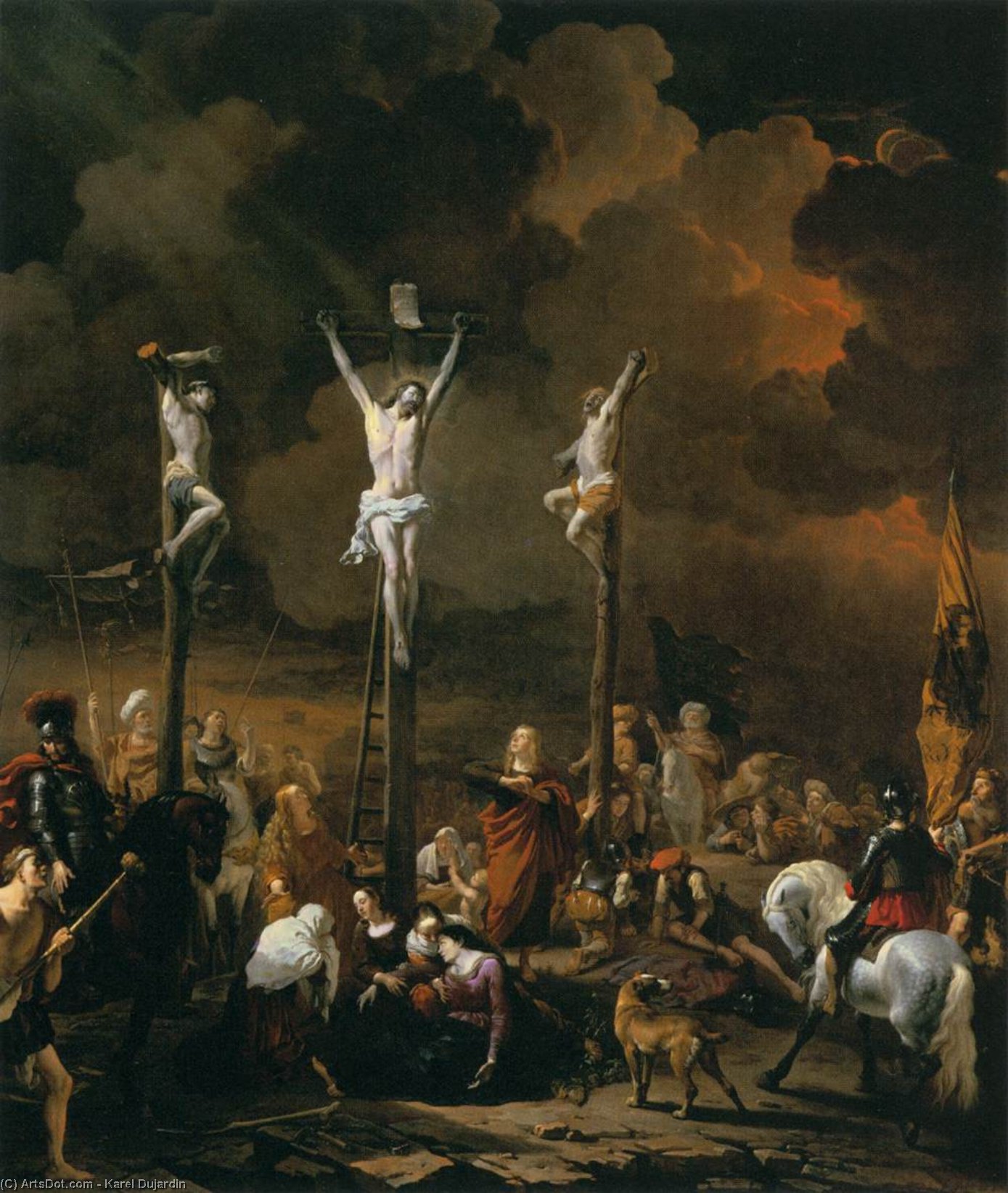
Experience the solemn drama of Karel Dujardin's 1661 Calvary, a Baroque masterpiece blending illusionistic depth with profound themes of suffering and redemption; discover this timeless piece today.
Discover Karel Dujardin (1626-1678), a Dutch Golden Age master renowned for idyllic Italian landscapes, charming genre scenes & detailed animal studies.
Explore the Louvre Museum in Paris! Home to iconic masterpieces like the Mona Lisa & Venus de Milo, journey through art history from ancient Egypt to Renaissance icons. Plan your visit today!
A Meditation on Suffering and Redemption: Exploring Karel Dujardin’s Calvary
The painting “Calvary,” executed by Karel Dujardin in 1661, stands as a poignant testament to the Baroque artistic tradition's preoccupation with profound themes – suffering, faith, and ultimately, redemption. More than just a depiction of Christ’s crucifixion, it’s an immersive experience for the viewer, inviting contemplation on humanity’s relationship with divine grace amidst earthly hardship. Dujardin’s masterful handling of light and color elevates this biblical scene beyond mere representation into a deeply emotive statement about the human condition.
The Landscape as Spiritual Echo
Dujardin's artistic approach is fundamentally rooted in his training under Nicolaes Berchem, whose landscapes served as an exemplar of idealized beauty infused with symbolic meaning. This influence manifests powerfully in “Calvary,” where a vast expanse of muted greens and browns dominates the background – not merely providing visual context but actively shaping the painting’s spiritual atmosphere. The landscape isn't simply decorative; it represents the earthly realm against which Christ’s sacrifice is contrasted, symbolizing the fragility of human existence confronted by God’s unwavering compassion. The subtle gradations of color contribute to a sense of melancholy and solemn reverence, mirroring the gravity of the depicted event.
Technique: Trompe-l'œil and Atmospheric Depth
Dujardin employed innovative techniques that were characteristic of his era – notably trompe-l'œil, or illusionistic painting—to achieve remarkable atmospheric depth and create a convincing sense of realism. Layers upon layers of thinly applied paint are skillfully blended to simulate the textures of stone and foliage, blurring the boundaries between painted surface and observed reality. This technique isn’t merely about visual accuracy; it serves as a conduit for conveying emotion. The diffused light filtering through the trees casts shadows that deepen the scene's emotional resonance, emphasizing the solemnity of the crucifixion. Careful attention to detail—the folds of drapery, the expressions on the faces of the figures—further enhances the painting’s impact.
Historical Context: Baroque Piety and Artistic Innovation
“Calvary” emerged during the height of the Dutch Golden Age, a period marked by intellectual ferment and artistic experimentation. The Baroque style, prevalent throughout Europe at the time, prioritized dramatic emotion and grandeur – qualities perfectly embodied in Dujardin’s work. Unlike earlier Renaissance depictions of Christ's suffering, which often focused on idealized beauty and serene contemplation, Baroque artists sought to evoke visceral responses from their audience. This painting reflects a broader artistic trend toward confronting difficult truths about human mortality and faith, demonstrating the profound influence of religious belief on artistic expression.
Symbolism: The Horse and the Crucifixion’s Significance
The inclusion of a horse in the background is particularly noteworthy. Traditionally interpreted as representing royalty and divine power—a visual allusion to Christ's incarnation—the animal underscores the majesty of God’s intervention in human affairs. Its presence reinforces the painting’s central message: that even amidst despair, salvation remains attainable through faith. The crucifix itself serves as a focal point for contemplation, symbolizing Christ’s sacrifice as atonement for sins and offering hope for eternal life. Dujardin's meticulous rendering of the cross—its weathered wood and draped cloth—emphasizes its enduring significance as an emblem of Christian piety.
Emotional Impact: A Portrait of Sorrowful Contemplation
Ultimately, “Calvary” succeeds in capturing a profound emotional state – sorrowful contemplation. The faces of the figures are rendered with sensitivity and nuance, conveying expressions of grief and reverence. Dujardin’s masterful use of light and shadow contributes to an atmosphere of solemn stillness, inviting viewers to engage in introspection and consider the universal themes of suffering and redemption. It is a painting that transcends its historical context, continuing to resonate with audiences today as a timeless meditation on faith and human compassion.