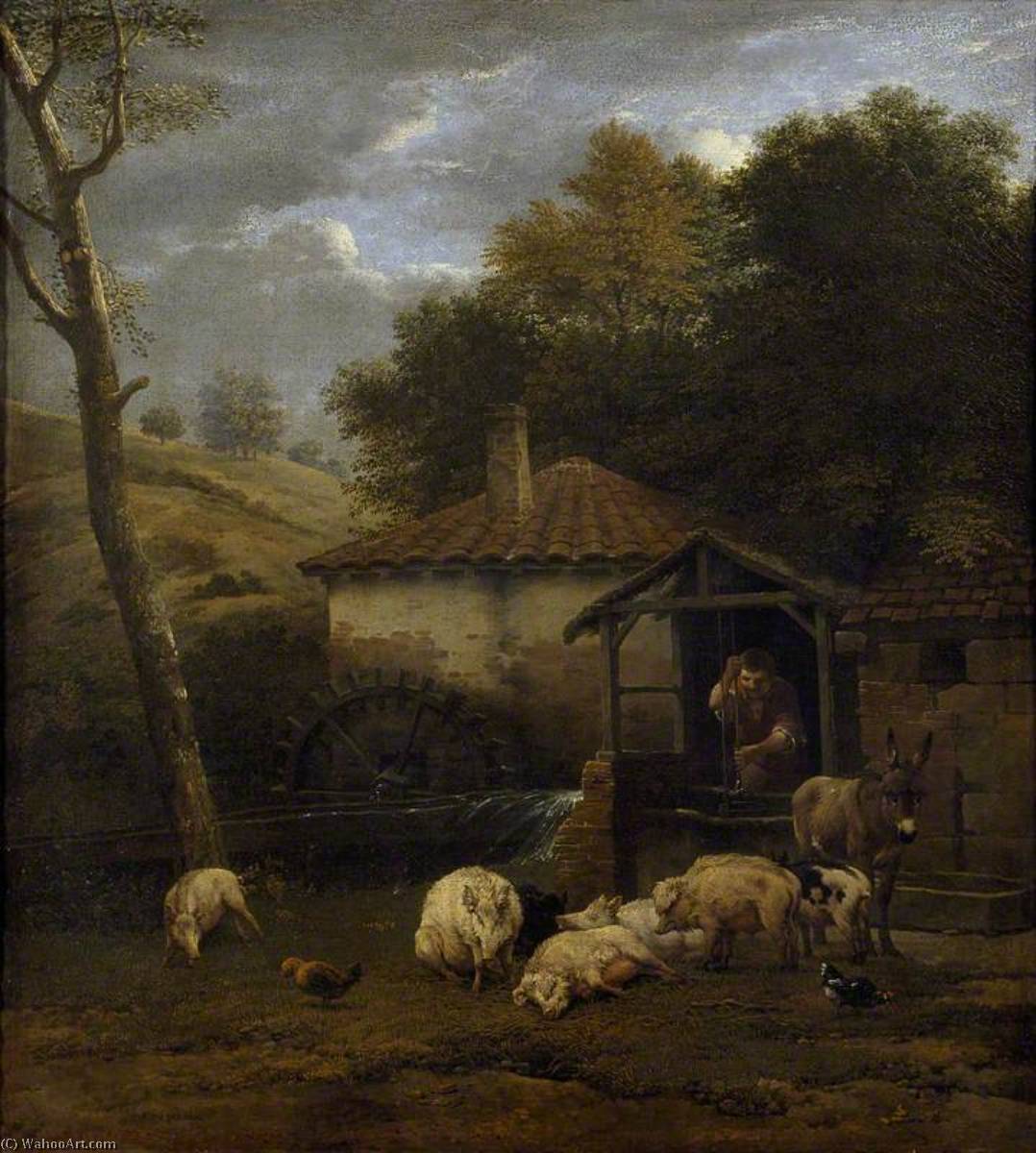
Explore Karel Dujardin's serene Farmyard with Animals (c. 1650-1659), a captivating Dutch Golden Age landscape featuring sheep, cows, and a farmer amidst a misty countryside.
A Pastoral Vision Captured in Light and Texture
“Farmyard with Animals,” painted by Karel Dujardin around 1650–1659, stands as a quintessential example of Dutch Golden Age landscape painting—a genre that flourished during the seventeenth century and cemented its place as one of Europe’s most influential artistic traditions. Originating from the Ashmolean Museum in Oxford, this artwork offers more than just a picturesque depiction of rural life; it embodies a profound philosophical contemplation on humanity's relationship with nature.
Dujardin’s stylistic approach aligns closely with Berchem’s influence, prioritizing meticulous observation and masterful rendering of light—a hallmark of the era. The scene unfolds against a backdrop of hazy skies punctuated by fluffy clouds, skillfully conveying an atmosphere of tranquil contemplation. Unlike earlier depictions of pastoral landscapes that often idealized nature as purely benevolent, Dujardin presents a more nuanced portrayal, acknowledging both beauty and hardship.
- Style: Baroque Landscape
- Technique: Oil on Canvas – Employing glazing techniques to achieve luminous effects and subtle tonal variations.
- Composition: The artist utilizes a pyramidal structure, anchoring the eye towards the central cow while distributing the sheep and plow across the canvas with careful consideration.
The symbolism embedded within “Farmyard with Animals” speaks to broader humanist concerns prevalent during the period. The presence of livestock—sheep and cows—represents fertility and sustenance, mirroring the agricultural realities of Dutch society. However, the inclusion of a plow symbolizes labor and industriousness – virtues valued by intellectuals and artists alike. Furthermore, the muted palette contributes to an overall feeling of serenity and invites viewers to reflect on the harmony between humankind and the natural world.
Beyond its aesthetic qualities, “Farmyard with Animals” resonates emotionally with audiences today. Its tranquil atmosphere evokes memories of simpler times—a connection to rural traditions that continues to inspire artists and designers alike. Reproductions of this masterpiece offer a tangible link to a bygone era, allowing contemporary viewers to experience the grandeur and contemplative spirit of the Dutch Golden Age.
- Emotional Impact: Tranquility, Reflection, Appreciation for Natural Beauty
- Interior Design Considerations: The muted color palette lends itself beautifully to creating calming spaces—particularly in bedrooms or living areas seeking a connection with nature’s serenity.
Ultimately, Karel Dujardin's “Farmyard with Animals” transcends mere visual representation; it is an invitation to contemplate the enduring values of observation, diligence, and harmonious coexistence – themes that continue to captivate art lovers and collectors centuries after its creation.