A Divine Encounter Captured in Light
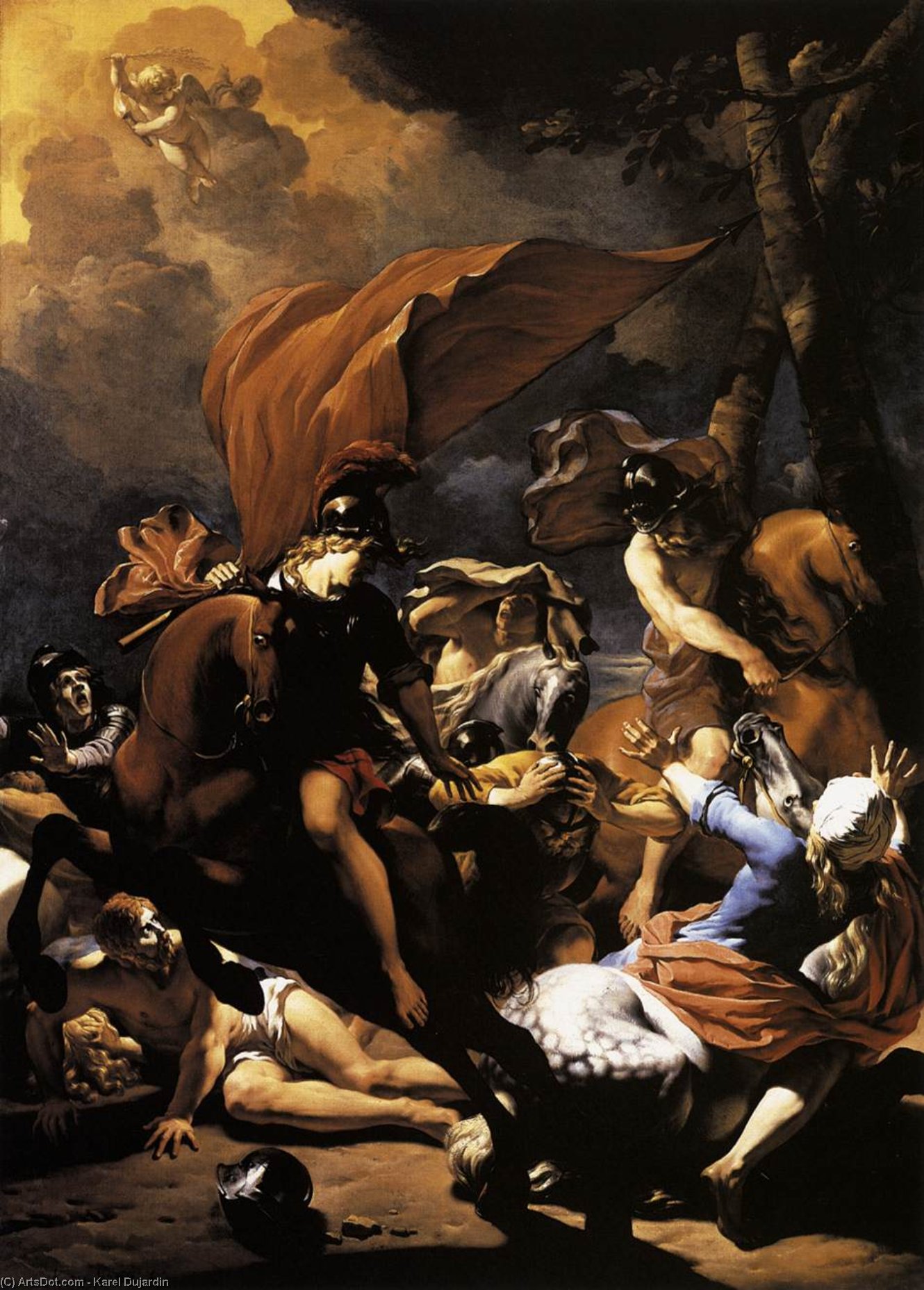
In the heart of the Dutch Golden Age, a period defined by an unparalleled mastery of light and atmosphere, Karel Dujardin captured a moment of profound spiritual upheaval. The Conversion of Paul is not merely a depiction of a biblical event; it is a visceral window into the soul's transformation. Painted in 1662, this masterpiece brings to life the dramatic encounter on the road to Damascus, where the persecutor Saul was struck by divine illumination. Dujardin moves beyond simple storytelling, using the canvas to explore the tension between earthly struggle and heavenly grace. The viewer is not just an observer but a witness to a celestial intervention that reshapes the course of history.
The composition is masterfully orchestrated to guide the eye through a journey of faith. A lone horseman dominates the central frame, positioned diagonally to create a sense of dynamic movement and resolute determination. As his arms reach upward toward a hovering angelic figure, a palpable connection is forged between the terrestrial and the divine. This verticality is balanced by the presence of figures kneeling in prayer around him, their postures embodying humility and devotion. Even the smallest details contribute to the narrative depth; a dog sits calmly at the base of the horseman, a silent symbol of loyalty and steadfastness that mirrors Paul’s own burgeoning conviction amidst the chaos of his conversion.
Technique, Symbolism, and the Golden Age Legacy
Dujardin’s technique reveals the profound influence of his mentor, Nicolaes Berchem, and his exposure to the Italianate landscapes of Rome. While he was celebrated for his ability to capture the subtle nuances of light in animalier scenes, here he applies that same sensitivity to a monumental history painting. The brushwork is deliberate yet fluid, allowing the light to seem as though it is emanating from within the scene itself. This use of chiaroscuro—the dramatic contrast between light and shadow—serves to highlight the divine radiance descending upon the traveler, making the spiritual light feel physically present within the frame.
Beyond the central drama, Dujardin weaves subtle temporal symbols into the fabric of the painting. A clock visible on the wall serves as a poignant memento mori, a reminder of the relentless passage of time and the fleeting nature of human existence, contrasted against the eternal moment of spiritual awakening. For collectors and interior designers, this piece offers more than just aesthetic beauty; it provides a profound intellectual and emotional anchor for any space. Whether placed in a grand gallery or a curated private study, The Conversion of Paul invites contemplation, offering a timeless reflection on change, resilience, and the enduring power of belief.