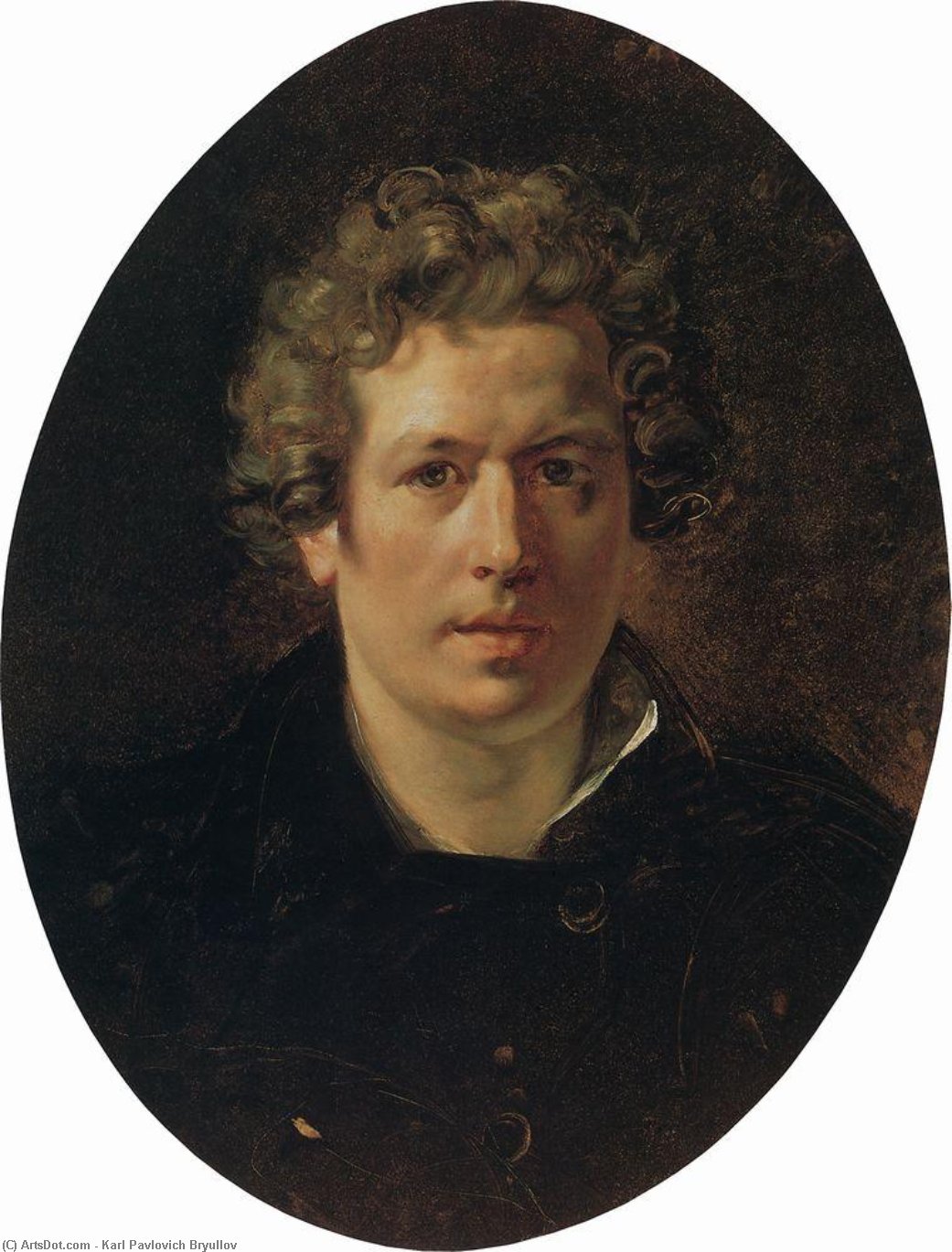
The Self-Portrait by
Karl Pavlovich Bryullov is a stunning oil on canvas painting that showcases the artist's exceptional skill and artistry. Created in 1833, this masterpiece embodies the essence of Romanticism, a style that emphasizes strong emotions and imagination. As a key figure in the transition from Russian neoclassicism to Romanticism, Bryullov's work has had a profound impact on the art world.
Artistic Style and Technique
Bryullov's Self-Portrait is characterized by its use of bold colors and expressive brushstrokes, which create a sense of energy and movement. The painting measures 64 x 54 cm and is a testament to the artist's ability to capture the subtleties of human emotion. The subject of the painting, presumably Bryullov himself, is depicted with a sense of introspection and contemplation, inviting the viewer to reflect on their own emotions and experiences.
Key Features of the painting include:
- The use of chiaroscuro, which creates a sense of depth and volume
- The expressive brushstrokes, which convey a sense of energy and movement
- The bold colors, which add to the overall sense of drama and emotion
BR For more information on Bryullov's work, visit the
Ulster University museum, which features an extensive collection of artworks from various artists and movements. You can also explore the
Self-Portrait by Karl Pavlovich Bryullov on ArtsDot.com, where you can find high-quality reproductions of this masterpiece.
Conclusion
The Self-Portrait by
Karl Pavlovich Bryullov is a masterpiece of Romanticism that continues to inspire and captivate art lovers around the world. With its bold colors, expressive brushstrokes, and sense of introspection, this painting is a must-see for anyone interested in art and history. Visit ArtsDot.com to learn more about Bryullov's work and to explore other
paintings by this renowned artist.