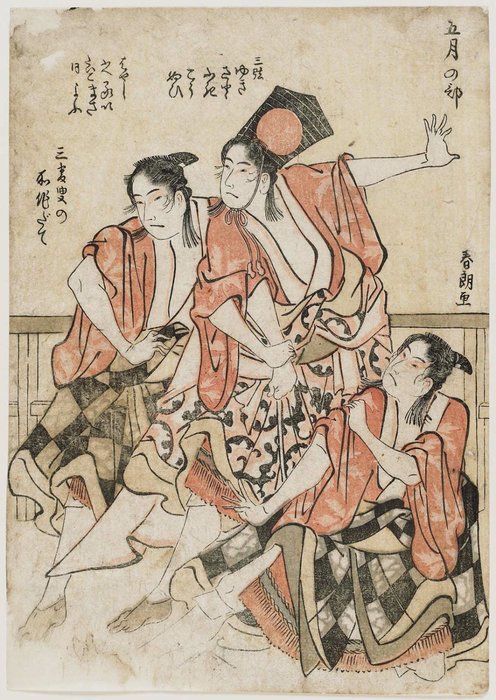
Katsushika Hokusai’s ‘A Dashing Sanbasô Dance Play,’ created in 1793, exemplifies the dynamism of Edo period ukiyo-e art. This print depicts a spirited Niwaka festival dance scene featuring performers adorned in striking red costumes and intricate choreography. Published by Tsutaya Jűzaburô, it showcases Hokusai’s masterful use of bold lines and vibrant colors to convey movement and excitement—a h
A Journey Through Edo Era Spectacle: Katsushika Hokusai’s “Fifth Month”
Katsushika Hokusai, a titan of Japanese art whose legacy extends far beyond the iconic *Great Wave off Kanagawa*, remains an artist perpetually captivating audiences with his masterful depiction of everyday life interwoven with profound symbolism. “Fifth Month: A Dashing Sanbasô Dance Play,” created in 1793 during Hokusai’s prolific output, offers a glimpse into the vibrant theatrical traditions of Edo Japan—a window into a society brimming with artistic innovation and cultural dynamism.
- Subject Matter: The print captures a lively Niwaka festival dance performance, showcasing a group of performers engaged in spirited movement before an appreciative audience. This wasn’t merely entertainment; it was a cornerstone of Edo culture, reflecting seasonal celebrations and communal bonds.
- Style & Technique: Executed as a woodblock print (Nishiki-e), “Fifth Month” exemplifies Hokusai's signature style—bold lines delineating forms against a luminous monochrome palette punctuated by splashes of vibrant color. The artist’s meticulous attention to detail, particularly in capturing the expressive faces and costumes of the dancers, speaks volumes about his dedication to realism blended with artistic interpretation.
Historical Context: Edo Period Performance Traditions
The Edo period (1603-1868) witnessed an unprecedented flourishing of arts and crafts in Japan—a golden age fueled by economic prosperity and a stable political system. Theatre, specifically Kyogen—comic dance dramas—held immense social significance, serving as both entertainment and vehicles for moral instruction. Hokusai’s observation of these performances wasn't accidental; it reflects the artist’s broader fascination with capturing the essence of human experience within the framework of his time.
- Influence: Hokusai’s work profoundly impacted subsequent generations of artists, notably Impressionists like Vincent van Gogh and Claude Monet who sought to emulate his masterful use of color and composition.
- Symbolism: The dance itself symbolizes renewal and prosperity—themes central to the Niwaka festival and reflecting the hopes for a bountiful harvest. Hokusai’s skillful rendering conveys not just visual beauty but also deeper cultural values.
Emotional Resonance & Artistic Legacy
"Fifth Month" transcends mere representation; it evokes a palpable sense of energy and excitement—a snapshot of a moment brimming with life and communal joy. Hokusai’s ability to convey emotion through visual means solidified his position as one of Japan's greatest artists, establishing him as an enduring symbol of artistic brilliance and cultural heritage.
- Notable Artworks: Alongside “Fifth Month,” Hokusai produced a monumental series of prints depicting Mount Fuji—a testament to his unwavering pursuit of artistic excellence.
- Continuing Influence: His innovative approach to landscape painting continues to inspire artists today, demonstrating the timeless relevance of his vision.