A Moment of Serenity: Katsushika Hokusai’s Lacquered Washbasin and Ewer
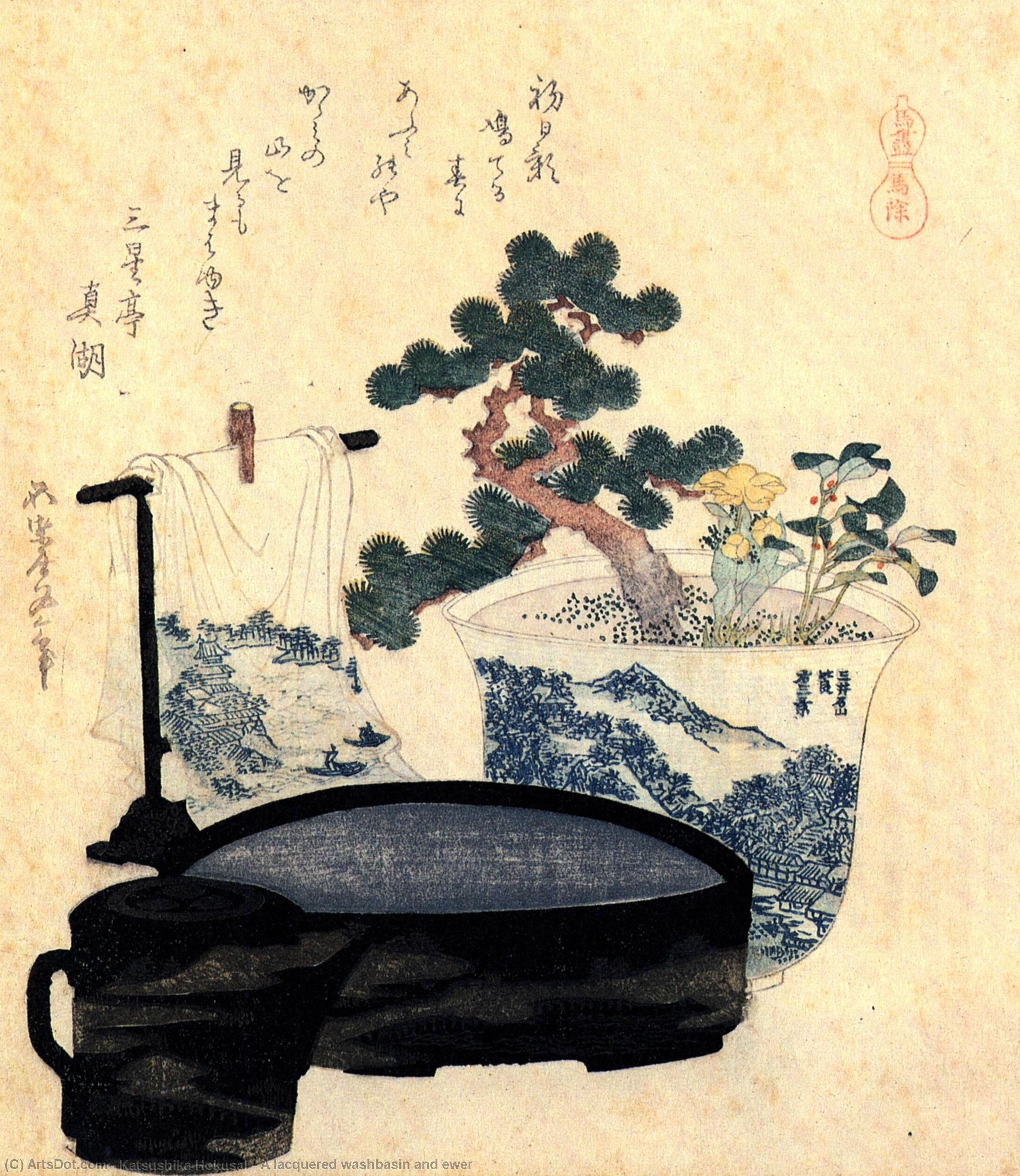
Katsushika Hokusai's A lacquered washbasin and ewer is more than a depiction of a meticulously arranged bonsai; it’s a distilled essence of Japanese aesthetic philosophy, a testament to the power of observation, and a window into the mind of one of Japan’s greatest artistic innovators. This Ukiyo-e print, executed with the characteristic precision and evocative beauty of Hokusai's hand, invites us to contemplate the harmony between nature and human artistry – a central tenet of Japanese culture. The scene unfolds with quiet grace: a bonsai tree, a symbol of longevity and resilience, rests within a ceramic pot, its branches reaching upwards in a gesture of aspiration. A circular stone tray grounds the composition, while delicate flowers add an element of transient beauty, acknowledging the cyclical nature of life.
- The Ukiyo-e Tradition: Hokusai was a pivotal figure in the development of Ukiyo-e, a genre of Japanese woodblock prints that flourished during the Edo period (1603–1868). These prints, initially popular among the merchant class, depicted scenes from everyday life, landscapes, and historical events.
- Technical Mastery: The print’s remarkable detail is achieved through Hokusai's masterful use of woodblock printing techniques. Multiple blocks were carved to create varying shades of ink – black and grey – which were then meticulously layered onto the paper. This process, known as *bokashi*, allowed for a subtle gradations of tone that would have been impossible with a single brushstroke.
Decoding the Symbolism
Every element within this print carries profound symbolic weight. The bonsai tree itself is a potent emblem – representing not just beauty, but also concepts like perseverance, balance, and harmony. Its carefully cultivated form reflects the Japanese ideal of achieving perfection through disciplined effort. The water, often associated with purity and life-giving forces, subtly suggests the nurturing environment in which the bonsai thrives. Even the cloth, a simple domestic element, adds to the scene’s quiet dignity, grounding the viewer in a sense of everyday reality.
- The Bonsai: Represents longevity, resilience, and refined beauty – core values within Japanese culture.
- Water: Symbolizes life, purity, and the flow of time.
- Cloth: Adds a touch of domesticity and reinforces the connection between nature and human activity.
Hokusai’s Vision & The Historical Context
Born in Tokyo around 1760, Katsushika Hokusai dedicated his life to artistic exploration, constantly reinventing himself and pushing the boundaries of traditional Japanese art. His work reflects a deep understanding of both Western influences (particularly European perspective) and deeply rooted Japanese aesthetics. This print exemplifies his ability to synthesize these diverse elements into a uniquely compelling vision. The muted color palette – primarily black and white – is characteristic of Ukiyo-e prints, emphasizing form and composition over vibrant hues. The flattened perspective, a deliberate stylistic choice, prioritizes clarity and symbolic representation, aligning with the genre’s focus on conveying meaning rather than creating an illusion of three-dimensional space.
Emotional Resonance & Artistic Value
A lacquered washbasin and ewer is more than just a beautiful image; it's an invitation to pause, reflect, and appreciate the quiet beauty of nature. The print evokes feelings of tranquility, contemplation, and a deep respect for Japanese artistic traditions. As a work by one of Japan’s most celebrated artists, this reproduction offers a unique opportunity to own a piece of art history – a tangible connection to a legacy of innovation, skill, and profound aesthetic sensibility. Its timeless appeal ensures that it will remain a cherished addition to any collection or a captivating element within your interior design.