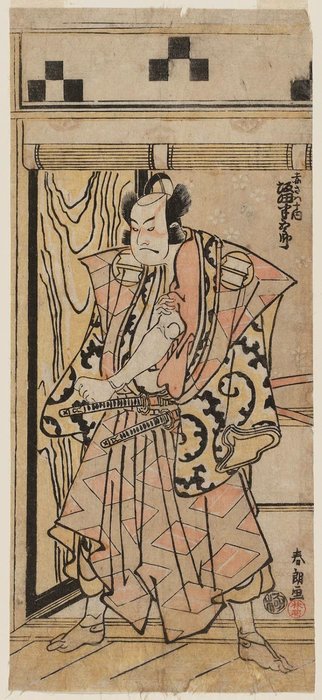
A Dramatic Portrait: Sakata Hangorô as Akazawa Jûnai
This captivating watercolor painting by the celebrated Japanese *ukiyo-e* master Katsushika Hokusai (1760-1849) presents a striking portrayal of the renowned Kabuki actor, Sakata Hangorô, in his role as Akazawa Jûnai. The work is a vibrant example of *yakusha-e*, or “pictures of actors,” a popular genre during the Edo period that celebrated the stars of Japan’s dynamic theatrical culture.
Decoding the Scene: Subject and Setting
The image focuses intently on Hangorô, depicted mid-performance. He stands poised, seemingly ready for action, with what appears to be a sword – though its precise form is partially obscured – hinting at a dramatic scene unfolding onstage. His elaborate kimono speaks volumes about his character’s status and the play's narrative. The inclusion of two figures in the background suggests an audience or fellow performers, grounding the image within the context of a live theatrical event. A doorway to the left adds depth and implies a wider stage setting, inviting the viewer into this fleeting moment of performance.
Hokusai’s Technique & Artistic Style
Hokusai's masterful use of watercolor lends a delicate yet powerful quality to the artwork. The fluidity of the medium allows for subtle gradations in color and texture, bringing Hangorô’s costume and expression to life. While known globally for his landscapes like *The Great Wave*, Hokusai was equally adept at portraiture, demonstrating a keen understanding of human anatomy and dramatic composition. This piece showcases his ability to capture not just likeness but also the essence of a character – the power, intensity, and charisma of Akazawa Jûnai as embodied by Sakata Hangorô.
Historical & Cultural Significance
The Edo period (1603-1868) witnessed an explosion of popular culture, with Kabuki theatre at its heart. Actors like Sakata Hangorô were immensely popular figures, akin to modern-day celebrities. *Ukiyo-e* prints and paintings served as a crucial form of visual media, disseminating images of these stars to a wide audience. This artwork isn’t merely a portrait; it's a document of its time – a window into the tastes, values, and entertainment preferences of Edo society. The subject matter reflects the period’s fascination with heroism, honor, and dramatic storytelling.
Symbolism & Emotional Impact
The pose and expression of Hangorô convey a sense of controlled energy and impending action. Akazawa Jûnai was often portrayed as a stoic and honorable character, and Hokusai’s depiction captures this essence perfectly. The careful attention to detail in the costume – its patterns, colors, and textures – further emphasizes the character's importance and social standing.
The painting evokes a feeling of anticipation, drawing the viewer into the narrative and prompting questions about the play itself.
It’s a testament to Hokusai’s skill that he can convey such depth of emotion through a single, carefully composed image.
Collecting & Interior Design Considerations
A reproduction of “Actor Sakata Hangorô As Akazawa Jûnai” would be a stunning addition to any art collection. Its rich colors and dynamic composition make it a focal point in a variety of interior design schemes.
- Consider pairing it with minimalist décor to allow the artwork’s details to shine.
- Its Japanese aesthetic complements both traditional and contemporary spaces.
- The dramatic subject matter adds a touch of sophistication and intrigue to any room.
This piece offers not only artistic beauty but also a tangible connection to Japan's rich cultural heritage.