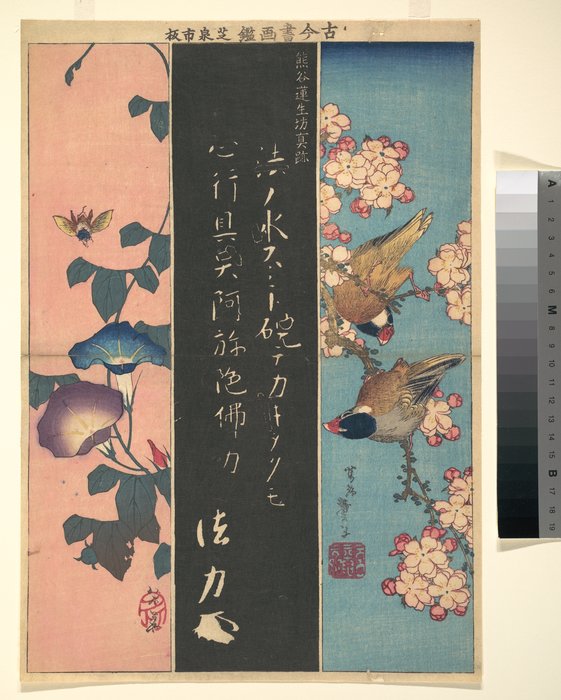
Katsushika Hokusai
Bird And Flower
A Life Etched in Ink: The World of Katsushika Hokusai
Hokusai, a name synonymous with Japanese art and the iconic image of *The Great Wave off Kanagawa*, was far more than just a printmaker. Born in Edo (modern-day Tokyo) around 1760, his life was a restless pursuit of artistic mastery, a constant evolution marked by shifting names and an insatiable curiosity.
Discover Katsushika Hokusai (1760-1849), Japan's ukiyo-e master! Explore 'The Great Wave,' landscapes, manga & woodblock prints. Influenced Impressionism & more!
A Symphony of Blooms and Flight: Decoding Katsushika Hokusai’s “Bird And Flower”
Katsushika Hokusai, a titan amongst ukiyo-e artists, wasn't merely capturing landscapes; he was distilling the essence of Japanese perception into visual poetry. His oeuvre transcends simple representation, delving into themes of impermanence and beauty—concepts deeply ingrained in Buddhist philosophy and informing his artistic vision. “Bird And Flower,” arguably one of his most celebrated prints from *Thirty-Six Views of Mount Fuji*, exemplifies this profound engagement with nature’s rhythms and spiritual significance. This exquisite woodblock print isn't just a depiction of flora and fauna; it’s an invitation to contemplate the fleeting grace of existence itself.
The Visual Narrative: Composition and Color Palette
The artwork unfolds in three carefully orchestrated sections, each contributing to a cohesive narrative that speaks volumes about Hokusai’s artistic sensibilities. The topmost panel presents a serene pinkish-beige backdrop punctuated by a dominant dark blue flower—a deliberate choice mirroring the hues of Mount Fuji itself, symbolizing stability amidst change. Hovering delicately above is a bee, meticulously rendered with painstaking detail, representing industriousness and pollination – vital processes sustaining life and mirroring the cyclical nature of seasons. To the right, two birds perched on a twig embody freedom and aspiration, their white plumage contrasting sharply against the brown body, conveying purity and upward movement. The subtle red spot adorning one bird’s head adds an element of vibrancy and perhaps hints at spiritual enlightenment—a motif frequently found in Buddhist iconography.
Technique and Craftsmanship: Mastering Ukiyo-e Precision
Hokusai's mastery of ukiyo-e technique is palpable throughout “Bird And Flower.” The printmaker employed a layered approach, utilizing multiple blocks of wood inked with varying shades to achieve astonishing tonal gradation—a hallmark of this artistic style. Each linework is executed with unwavering precision, capturing the textures of petals and feathers with remarkable accuracy. Furthermore, the artist skillfully utilized *bokashi*, shading technique achieved by applying ink unevenly across the surface, creating subtle variations in color and enhancing the illusion of depth. This meticulous craftsmanship underscores Hokusai’s dedication to elevating ukiyo-e beyond mere decorative art into a form of contemplative visual experience.
Historical Context: Edo Period Aesthetics and Philosophical Influence
“Bird And Flower” emerged during Japan's Edo period (1603–1868), a time characterized by relative peace and prosperity under Tokugawa rule—a period that fostered artistic innovation and encouraged exploration of natural beauty. The print reflects the broader aesthetic sensibilities of the era, prioritizing understated elegance and capturing fleeting moments in nature with remarkable sensitivity. More importantly, it embodies the influence of Buddhist thought, particularly concepts of impermanence (*mujō*) – the understanding that all things are transient—a central theme resonating throughout Hokusai’s artistic output. The print serves as a poignant reminder of the beauty inherent in accepting change and embracing the ephemeral nature of life.
Emotional Resonance: Capturing Tranquility and Wonder
Ultimately, “Bird And Flower” transcends its formal elements to evoke a profound emotional response. Its tranquil composition invites contemplation—encouraging viewers to pause and appreciate the delicate balance between stillness and movement. The vibrant colors – particularly the deep blue of the flower – stimulate the senses, transporting us to a serene landscape bathed in sunlight. Like many masterpieces of ukiyo-e, this print speaks to our innate desire for connection with the natural world and prompts reflection on themes of beauty, resilience, and acceptance. Owning a high-quality reproduction allows you to immerse yourself in Hokusai’s artistic legacy—a testament to his enduring power to inspire awe and contemplation.